

Room-by-room cooling guide · Texas
Why Upstairs Rooms Stay Hot
Find out why a second floor can lag behind, which airflow clues matter, and how to improve comfort without guessing at the AC size.
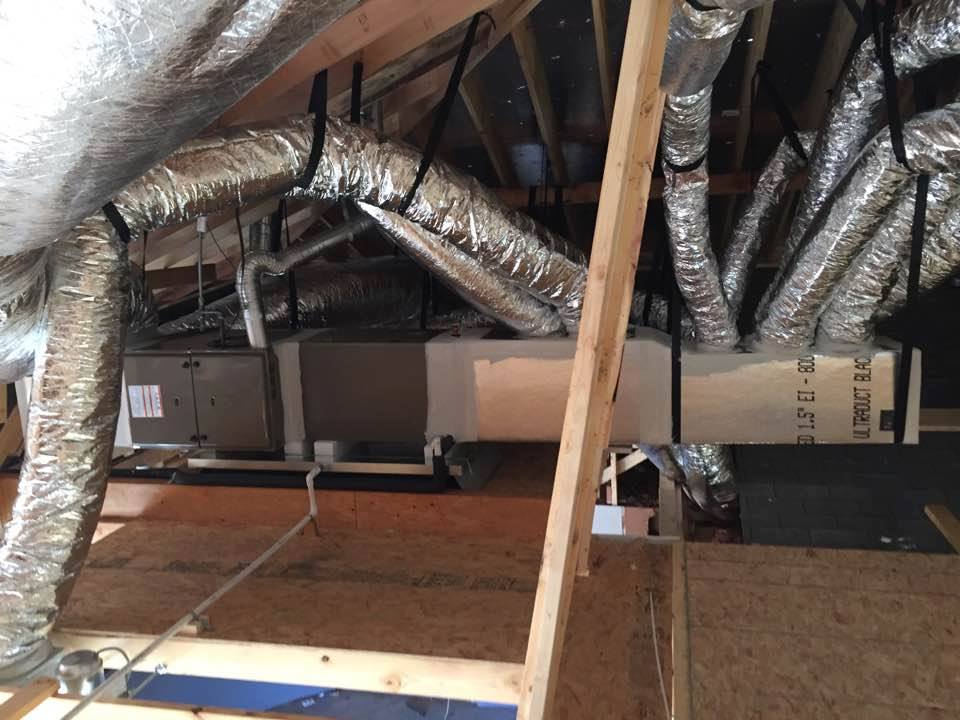
A cool downstairs thermostat reading does not guarantee that the upstairs bedrooms are comfortable. The thermostat only senses the air around its location. A second floor can gain heat through the roof and attic while the AC is delivering too little air to the rooms above.
That difference is common in older homes, additions, and houses where the duct layout has changed. It can also show up in newer homes if the upstairs system is not balanced or if a return path is limited. The useful first step is to identify when and where the problem occurs.
Does the bedroom get warmer only in late afternoon? Is airflow weak at every upstairs register or just one? Does opening the bedroom door help? Those observations narrow the possibilities. For more on older-home cooling problems, read the ASC older-home AC repair guide.
Why the second floor can gain more heat
A roof receives direct sun and transfers heat into the attic. The ceiling below can absorb that heat, and ducts routed through the attic can pick up heat before supply air reaches a bedroom. West-facing walls and windows also receive strong afternoon sun. In San Antonio, those outdoor conditions can coincide with long AC run times.
Warm air rises, but that phrase alone does not diagnose the problem. Heat enters through roof surfaces, windows, and air leaks. Cooling depends on the room’s heat gain, the airflow delivered to it, the return route, and the system’s capacity under current conditions.
Insulation and air sealing can help when they address a real building issue. They do not fix a kinked attic duct or a bedroom without a return-air path. The house and the mechanical system should be considered together rather than treated as competing explanations.
Roof and attic heat
Sun-heated roof surfaces and uneven insulation can raise the load in rooms below.
Supply airflow
Leaking, restricted, or poorly supported ducts can reduce air delivered upstairs.
Return airflow
Without a return path, air may not circulate well when bedroom doors are closed.
Check the supply and return path
A supply register sends conditioned air into a room. A return grille or return duct gives room air a path back to the air handler. Some bedrooms have a supply register but no return grille of their own. They may rely on the gap under the door, a transfer grille, or another designed path.
If the door is closed and the return path is small, pressure in the room can change and supply delivery may be affected. Opening the door can be a clue, but it is not a final test. A technician can compare airflow or pressure with the door in different positions and determine whether the system needs an adjustment.
In our experience, homeowners sometimes treat a warm bedroom as a reason to close vents downstairs. That can alter system pressure and lower airflow overall. The goal is not to move air by guessing; it is to understand where air enters, how it returns, and whether the duct system can deliver the intended amount.
What can cause weak upstairs airflow?
Leaky or disconnected attic ducts
A loose connection may send cooled air into the attic. A tear in flexible duct, a failed support strap, or a detached branch can leave one or more registers weak. The leak may not be visible from the attic opening, so a technician should inspect accessible runs and show the condition before proposing work.
For a repairable issue, ASC provides air duct repair. If multiple runs are damaged or poorly routed, the contractor may compare targeted repairs with duct replacement. The estimate should identify the sections and state how airflow will be checked afterward.
Kinks, crushed sections, or closed dampers
Flexible ducts can be pinched where they pass framing or stored items. A sharp bend can restrict air even when the duct is not torn. A damper may also be partly closed, incorrectly placed, or hard to reach. The technician should trace the branch serving the affected room and check for a physical restriction before changing system size.
A filter, coil, or blower problem
A dirty filter can reduce airflow throughout the system. A dirty indoor coil, blower issue, or motor problem can also affect delivery. If all registers feel weak, the cause may be closer to the equipment than to one upstairs branch. An AC repair evaluation can check the equipment and the air path.
Thermostat placement and control
If a thermostat sits downstairs, it may satisfy the setting before upstairs rooms are comfortable. A thermostat placed near a sunny window, kitchen, or draft can also sense conditions that do not represent the whole home. Moving the thermostat is not an automatic solution; first find out whether airflow and room loads are appropriate.
How to record the problem
A small log helps separate a persistent design issue from a time-of-day pattern. Use the same thermometer and measure in the same part of each room, away from direct sun and supply air. Record the thermostat setting and whether doors were open.
| Time | Room or condition | What to note |
|---|---|---|
| Morning | Upstairs bedroom and downstairs thermostat area | Temperature difference before peak sun |
| Late afternoon | Rooms under roof or facing west | Whether heat gain or weak airflow is more noticeable |
| Door open vs. closed | Problem bedroom | Whether circulation or comfort changes |
| System running | Each upstairs register | Airflow feel compared with nearby rooms |
| After filter change | Whole home | Whether air delivery improves or stays weak |
A home thermometer is not a substitute for HVAC measurements, but a repeatable pattern gives the technician a place to start. Share whether the problem began after a remodel, insulation work, a new roof, or a system repair.
What a technician may measure
A proper comfort check can include reviewing the filter and coil, inspecting the blower and accessible ducts, checking thermostat operation, and measuring airflow or pressure where useful. The technician may compare supply-air temperatures, room conditions, and system static pressure. The readings depend on the complaint and the equipment type.
For a retrofit or new system, ACCA’s residential design process ties room loads to equipment selection and duct design. Its Manual J overview explains residential load calculations. A single larger air conditioner may not solve an upstairs issue if the duct system cannot move air to that floor.
- Confirm the complaint. Identify the rooms, time of day, thermostat setting, and recent home changes.
- Check equipment basics. Inspect filter, coil, blower, controls, drainage, and operating condition.
- Trace the affected branch. Look for blocked registers, dampers, kinks, loose joints, or missing insulation.
- Review the return route. Check how room air gets back, especially with doors closed.
- Explain options. Connect the measurement or observation to a repair, adjustment, or design change.
Which comfort fixes may make sense?
The correct fix depends on what the inspection finds. A filter change is straightforward if the filter is dirty and airflow improves. A disconnected branch may need reconnection. A system that serves a changed layout may need air balancing, duct redesign, a separate zone, or a replacement plan. Each has a different scope and should be supported by findings.
| Finding | Possible next step | What to verify |
|---|---|---|
| Dirty filter or blocked grille | Replace filter or clear obstruction | Does airflow improve after the accessible issue is corrected? |
| Damaged attic branch | Repair, reconnect, or replace the damaged section | Was the run supported and checked after repair? |
| Closed room has limited return path | Evaluate transfer or return-air options | Does the proposed path fit the home’s layout and safety requirements? |
| Room loads differ from current duct design | Air-balance or redesign the distribution | What were the readings and design assumptions? |
| Repeated comfort issues and aging equipment | Compare repair with replacement or zoning options | Were current loads and duct limits considered? |
Air balancing means evaluating how air is distributed and making appropriate adjustments. It may include measuring the branches, adjusting accessible dampers, correcting restrictions, or improving a return path. It is not simply closing registers in rooms that already feel cool.
In homes with a persistent isolated room problem, a separate ductless zone can sometimes be considered. ENERGY STAR explains that mini-splits may suit additions and rooms with hot or cold spots, but the indoor unit must be placed where it can serve the intended area. A closed bedroom down the hall may not receive enough air from one living-room head.
Safe checks and common mistakes
Safe homeowner checks
- Confirm the thermostat is set to cool and its schedule is correct.
- Replace a visibly dirty filter with the specified size.
- Move furniture away from supply registers and returns.
- Make a note of room temperatures and door positions.
- Keep attic access clear for the technician; do not walk on drywall or ceiling joists.
Avoid these shortcuts
- Do not close many downstairs vents to force air upstairs.
- Do not increase the thermostat setting repeatedly as a “test.”
- Do not cut a new return grille without checking structure and safety concerns.
- Do not assume the outdoor unit is undersized from one hot room.
- Do not handle refrigerant, wiring, or capacitors.
When to call for service
Schedule a contractor if upstairs rooms stay hot day after day, several registers have weak airflow, the system runs unusually long, a room became uncomfortable after renovation, or the AC does not cool during normal summer conditions. A technician can distinguish building heat gain from duct or equipment problems.
Turn the AC off and contact a qualified professional promptly if you smell burning, a breaker trips repeatedly, water reaches electrical components, or you see ice on the refrigerant line. Do not open panels or climb into an unsafe attic to investigate.
ASC serves San Antonio homes with AC repair, duct repair, and maintenance. If you’re comparing broader choices, see our guide to AC solutions for historic homes and our article on old ductwork and energy bills.
Need help with a hot upstairs room?
Tell us which rooms are warm, when it happens, and whether opening the door changes the airflow. ASC Heating & Air can inspect the equipment and air path and explain the findings.
Frequently asked questions
Why is my upstairs hotter than downstairs?
Attic heat, roof exposure, leaky or restricted ducts, limited return airflow, and thermostat placement can all contribute. Compare room patterns and have both supply and return paths checked.
Will closing downstairs vents send more air upstairs?
Not necessarily. Closing several registers can raise duct pressure or reduce system airflow. Have the system measured and balanced instead of making broad vent changes.
Can a dirty filter make upstairs rooms hot?
Yes, a dirty filter can restrict airflow across the system. It may reduce delivery to distant rooms, but if the issue remains after replacement, other causes need inspection.
Will a bigger AC fix uneven cooling?
It may not. A larger unit cannot repair a duct leak or create a return-air path. Check airflow, room loads, and equipment performance before changing size.
Can a mini-split cool a hot upstairs bedroom?
It can be an option for an isolated space, depending on room layout, placement, load, and outdoor-unit location. The contractor should explain what areas the system is designed to serve.
Should bedroom doors stay open when the AC runs?
If opening the door changes comfort, the return-air path may deserve inspection. Keeping the door open is a clue, not always a permanent solution.
Start with the room pattern, then choose a fix
Upstairs heat is not one failure with one cure. The room may receive too little air, gain more heat through the roof, or lack a good return route. The thermostat may also respond to a different part of the home than the room that bothers you most.
Keep notes on time, room, airflow, and door position. Ask the technician to show you what they measured and how that result connects to the recommendation. A specific repair or balance adjustment is easier to evaluate than a general promise that a larger AC will solve everything.
See the older-home AC repair page, read why older homes struggle to stay cool in Texas, and review whether to repair or replace an older HVAC system. For local service, visit the ASC Heating & Air homepage.