

Older Home AC Repair Specialist in San Antonio
Uneven rooms, weak airflow, or high summer bills can come from the way an older home and its cooling system work together. Start with a diagnosis of both.
Schedule ServiceCall (210) 761-5130AC trouble in an older home can come from a worn component, restricted return air, damaged or leaking ducts, attic heat, insulation gaps, or a system that no longer fits the home. A technician should connect inspection findings to the rooms that feel uncomfortable before recommending a repair, air balancing, ductwork, or replacement.
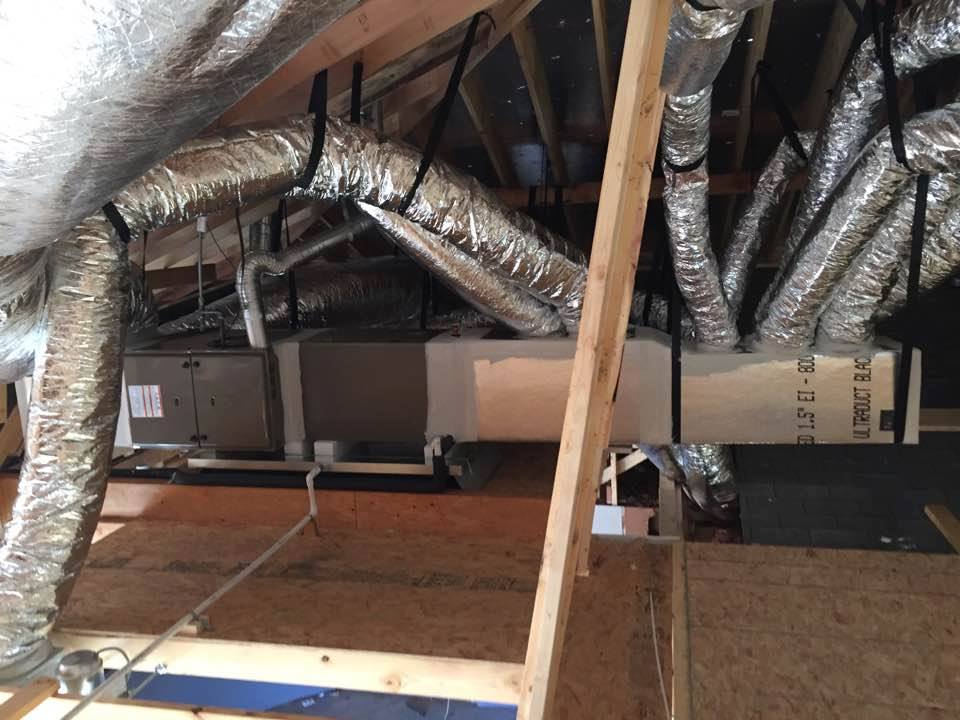
Older homes can be comfortable in San Antonio, but their layouts can make cooling less straightforward. Additions, enclosed porches, converted garages, replacement windows, and insulation changes may alter how heat moves through the house or how air reaches each room.
If the AC runs while an upstairs bedroom stays warm, that symptom does not identify the failed part by itself. The cause may be in the equipment, duct path, return-air route, thermostat location, or a combination of conditions.
Why can older homes have AC problems?
The air conditioner does not cool a house in isolation. It must remove heat from rooms, move air through the duct system, and return that air to the equipment. Changes to any part of that path can affect comfort.
The house has changed
A remodel or addition can change the cooling load. New windows or insulation can also change how heat enters the home, so the original system may no longer match current conditions.
The duct path has wear
Flexible ducts can sag, kink, separate at a connection, or lose insulation. Older return-air layouts may also make it hard for air to flow back from closed rooms.
Parts wear with use
Motors, capacitors, controls, coils, electrical connections, and drain components can wear or become dirty. A useful diagnosis explains what was tested and how the result relates to your symptom.
What signs point to an AC problem in an older home?
| What you notice | What a technician may inspect | What to ask |
|---|---|---|
| Upstairs stays hotter than downstairs | Return-air path, supply airflow, attic duct condition, insulation, and thermostat location | Did you compare airflow or temperature in affected rooms? |
| One room gets little air | Blocked register, duct kink, disconnected branch, damper, or return path | Can you show me the restriction or leak? |
| The AC runs longer than it used to | Filter, indoor and outdoor coils, airflow, refrigerant circuit, duct leakage, and heat gain | What did the operating checks show? |
| Energy use rises without a clear change | Longer run time, system condition, duct loss, thermostat settings, or changed home use | What evidence links the bill change to the AC? |
| Water appears near the indoor unit | Drain line, pan, float switch, coil icing, and airflow condition | Was the reason for the overflow or shutdown identified? |
These signs point to areas to inspect; they do not prove a specific repair is needed. Weak airflow, for example, can come from a loaded filter, a blocked return, a blower problem, or duct damage. A clear diagnosis separates those causes.
Why is the upstairs hotter than downstairs?
Upper floors often gain more heat from the roof and attic, and warm air can collect above cooler rooms. That does not mean every upstairs temperature difference is unavoidable. Weak supply airflow, a limited return-air path, leaky attic ducts, closed doors, and insulation gaps can add to it.
Ask the contractor to inspect both supply and return paths. A supply vent delivers cooled air; a return grille gives room air a path back to the equipment. If a bedroom has supply air but little return path when the door is closed, pressure and circulation can change.
Air balancing means checking how air is distributed and making appropriate adjustments. It may include measuring airflow, correcting a damper position, addressing a duct restriction, or improving a return path. Simply closing vents in comfortable rooms can raise duct pressure and may make another problem worse.
Can old ductwork cause high bills?
Leaky, disconnected, poorly insulated, or restricted ducts can waste conditioned air or make it harder to deliver air where it is needed. Ducts in a hot attic can also gain heat. These issues can contribute to longer run times and uneven rooms, but they are only one possible cause of a higher bill.
The U.S. Department of Energy’s duct guidance explains why ducts in unconditioned spaces may need sealing and insulation. Airflow should be checked before and after duct sealing because repairs can change system pressure and airflow.
Not every older home needs complete duct replacement. Depending on what an inspection finds, a targeted repair, reconnection, sealing, insulation repair, balancing adjustment, or larger redesign may be more appropriate.
Should you repair the AC, fix ductwork, or replace the system?
System age alone does not determine the right choice. Consider the equipment’s condition, repair history, comfort, parts availability, duct condition, and whether changes to the home have changed its cooling load.
| Situation | Option to discuss | Confirm before approving |
|---|---|---|
| One failed part and the rest of the system checks out | Repair the diagnosed fault | Test results, repair scope, and parts or labor coverage |
| Equipment runs but rooms have weak or uneven airflow | Airflow or duct evaluation | What was measured, where the restriction is, and how the work changes delivery |
| Repeat repairs or poor comfort continue | Compare repair with replacement options | Component condition, total scope, sizing method, and duct compatibility |
| Additions or insulation changes were made | Evaluate the house and system together | Current load assumptions, return paths, and equipment selection |
For replacement, ask how the contractor will size equipment for the current home. ACCA’s retrofit design guidance treats load calculation, equipment selection, air distribution, and duct design as related steps. Reusing the old unit’s size without reviewing the changed house can miss the reason the system struggled.
Before you approve a large repair
Ask what was inspected or measured, what the findings mean, what the proposed work includes, and what it will not fix. For duct or replacement work, request the scope and warranty terms in writing.
Request an AppointmentWhat can you safely check at home?
Start with simple checks
- Check that the thermostat is set to cool and the temperature setting is intentional.
- Look at the filter and replace it if it is dirty, using the size and type specified for your system.
- Make sure supply registers and return grilles are not blocked by rugs, furniture, or boxes.
- Write down which rooms feel different and when the problem happens.
Leave these tasks to a technician
- Opening electrical panels or touching wiring and capacitors.
- Handling refrigerant or trying to add refrigerant.
- Climbing into unsafe attic spaces or walking on ceilings.
- Running the system when you see ice, smell burning, or hear a severe mechanical noise.
How should an older-home AC evaluation work?
- Describe the pattern. Explain which rooms are affected, when it started, and what changed in the home or system.
- Inspect the equipment. The technician should review the filter, coils, controls, electrical components, condensate drainage, and operating condition.
- Trace the air path. Check accessible supply and return ducts, registers, restrictions, visible damage, and airflow where the complaint occurs.
- Connect findings to options. The recommendation should separate the repair needed now from comfort improvements or replacement choices.
- Review the scope. Confirm price, included work, exclusions, warranty, and what results to monitor afterward.
For an installation or major retrofit, ask whether sizing and duct design account for the home’s current layout. ACCA’s residential design process includes load calculation, equipment selection, and duct design. These terms help you ask how a recommendation was developed; they do not mean every repair visit needs a full redesign.
Common mistakes when cooling an older home
Replacing equipment before checking airflow
A new outdoor unit will not repair a disconnected duct or blocked return path. Diagnose air delivery before deciding which equipment to replace.
Assuming every duct needs replacement
Some systems need one connection repaired or one section replaced. Ask for the location and condition that justify the proposed scope.
Choosing by efficiency label alone
Efficiency is one part of the decision. Equipment match, installation, airflow, duct condition, and sizing also affect system performance.
When should you call an HVAC contractor for an older home?
Contact a contractor when uneven cooling keeps returning, rooms receive very little air, the system struggles during ordinary hot weather, a previous repair did not solve the same symptom, or you are planning equipment replacement after a remodel.
If there is smoke, a burning electrical smell, repeated breaker trips, or water near electrical parts, turn the system off if you can do so safely and contact a qualified professional. Do not open equipment panels or work on energized components.
ASC Heating & Air serves San Antonio and nearby communities. The team provides AC repair, air duct repair, air duct replacement, AC maintenance, and AC installation. See HVAC service in San Antonio or the nearby Schertz service area. You can also start at the ASC Heating & Air homepage.
Questions to ask an older-home HVAC contractor
About the diagnosis
- What did you test, and what were the readings or observations?
- Did you inspect the return-air path as well as supply ducts?
- Can you show me the damaged, leaking, or restricted area?
About the work
- Does this scope repair the cause or only the failed part?
- What is included and excluded from the estimate?
- What warranty applies, and what should I monitor afterward?
Frequently asked questions
Can an older home be comfortable without replacing the whole AC system?
Yes, depending on the cause. A repair, duct correction, filter change, return-air improvement, or balancing adjustment may address the problem. A contractor should diagnose the equipment and air path before recommending replacement.
Does old ductwork always need to be replaced?
No. A specific section may need reconnection, sealing, insulation repair, or replacement. The condition and location of the damage should support the proposed scope.
Why is my upstairs hotter than downstairs?
Attic heat, weak supply airflow, a limited return-air path, duct leakage, insulation gaps, and thermostat location can contribute. Have both supply and return paths inspected before assuming the temperature difference is unavoidable.
Can leaky ducts make my AC bills higher?
They can contribute by losing conditioned air or allowing heat into ducts in an attic or other unconditioned space. A higher bill can have several causes, so check duct condition alongside equipment operation and home changes.
Should I close vents in rooms that already feel cool?
Do not close many vents to redirect air without professional guidance. It can change system pressure and may worsen airflow. Ask for an airflow or balancing evaluation instead.
How should a new AC system be sized for an older house?
The contractor should account for the home’s current layout, insulation, windows, orientation, and duct system. Ask how the load and equipment selection were determined instead of assuming the old unit’s size is correct.

About the Author
Ron Carter | Founder, ASC Heating & Air
Ron Carter has more than 20 years of hands-on HVAC experience as a technician, instructor, sales manager, and business owner. He leads ASC Heating & Air, a family-owned company serving San Antonio. Ron is a licensed Air Conditioning and Refrigeration Contractor in Texas (License No. TACLB00031551E). His articles share practical guidance to help homeowners make informed decisions about heating, cooling, and preventative maintenance.
Need help with an older San Antonio home?
Tell us which rooms are uncomfortable and what you have noticed. ASC Heating & Air can inspect the AC and airflow conditions, explain the findings, and discuss the next step.
Schedule ServiceCall (210) 761-5130Sources and further reading
- U.S. Department of Energy: Ducts — duct location, leakage, and sealing guidance.
- DOE Building America: Sealing and insulating ducts in existing homes — guidance on airflow checks before and after duct sealing.
- Air Conditioning Contractors of America: System design for retrofit — how load calculation, equipment selection, air distribution, and duct design fit together in existing homes.
- ASC: What Causes Weak Airflow From an Air Conditioner?
- ASC: Why Your AC Is Blowing Warm Air