

Quick answer: Your AC may blow warm air because of an incorrect thermostat setting, clogged air filter, dirty outdoor coil, failed capacitor, frozen evaporator coil, refrigerant issue, or compressor problem. If the home keeps getting warmer in San Antonio heat, schedule 24/7 emergency AC repair in San Antonio.
2. Warning Signs
3. What To Do
4. FAQs
Warm-Air Cause Priority Guide
Warm Air Means the AC Needs Attention
An AC blowing warm air is one of the clearest signs that something is wrong. The system may still sound like it is working, but the air coming from the vents does not cool the home.
In our experience, warm air calls often come in during the hottest part of the day. The homeowner says the AC ran all afternoon, but the thermostat kept climbing.
That detail matters. A system that runs without cooling is under stress. It may be moving air, but it is not removing heat the way it should.
Air conditioning works by moving heat out of the indoor air. Wikipedia’s overview of air conditioning explains the basic idea: cooling is not simply making cold air; it is removing heat and humidity from an indoor space.
When something interrupts that process, you feel warm air at the vent.
Simple Setting Issue
The thermostat may be set to fan-only mode, heat mode, or a temperature that is not calling for cooling.
Airflow Restriction
A dirty filter, blocked return, or blower issue can reduce airflow and make the system freeze or overwork.
Outdoor Unit Problem
The indoor fan may run while the outdoor condenser fails to start, leaving the system unable to reject heat.
Refrigerant or Coil Issue
Low refrigerant, dirty coils, or frozen coils can stop proper heat transfer.
Cause 1: The Thermostat Is Set Wrong
The first thing to check is the thermostat. This sounds basic, but it prevents unnecessary service calls when the issue is only a setting.
Make sure the thermostat is set to cool. Make sure the fan is not set to on if you only want the fan to run during cooling cycles. A fan set to on can blow room-temperature air between cooling cycles, which some homeowners mistake for an AC problem.
Set the temperature a few degrees below the room temperature. Wait a few minutes and listen for the system to start.
Many customers notice the problem after a thermostat has been bumped, reprogrammed, or switched during cleaning. Smart thermostats can also have schedule settings that surprise people.
Pro tip: If the thermostat says cooling but the outdoor unit never starts, the issue is probably not just a thermostat mode problem. That is when the diagnosis usually moves toward power, capacitor, control wiring, or outdoor equipment.
Cause 2: The Air Filter Is Clogged
A dirty air filter can make the AC blow weak or warm air. The filter protects the system, but when it gets packed with dust, pet hair, and debris, it restricts airflow.
What we commonly find is that filters get dirty faster during heavy cooling season. San Antonio homes may run the AC for long hours, and the filter collects more material as more air moves through it.
When airflow drops, the evaporator coil may get too cold. If the coil freezes, the system cannot absorb heat properly. Then the air from the vents may feel weak, humid, or warm.
Check the filter and replace it if it looks dirty, bent, damp, or packed. Hold it up to the light. If light barely passes through, the filter is too dirty.
The U.S. Department of Energy recommends regular air conditioner maintenance, including keeping filters and coils clean. That advice is especially important in a hot climate where AC systems work hard for months.
Common mistake: Replacing the filter after the coil has already frozen may not make the AC cool right away. The ice has to thaw, and the cause still needs to be checked if freezing returns.
Cause 3: The Outdoor Unit Is Not Running
This is one of the biggest clues. If the indoor fan is blowing but the outdoor unit is silent, the system cannot cool properly.
The outdoor unit releases heat from inside your home. If it is not running, the indoor blower may still move air, but the cooling process is broken.
Possible causes include a tripped breaker, bad capacitor, contactor issue, control problem, fan motor failure, or compressor trouble.
Based on real-world experience, a failed capacitor is a common warm-air issue during hot weather. The system may hum, the fan may not start, or the outdoor unit may try to start and then stop.
You can check whether the breaker is tripped. Reset it one time only. If it trips again, leave it off and call for service.
Do not remove panels from the outdoor unit. Electrical parts inside the condenser can hold charge and should be handled by a trained technician.
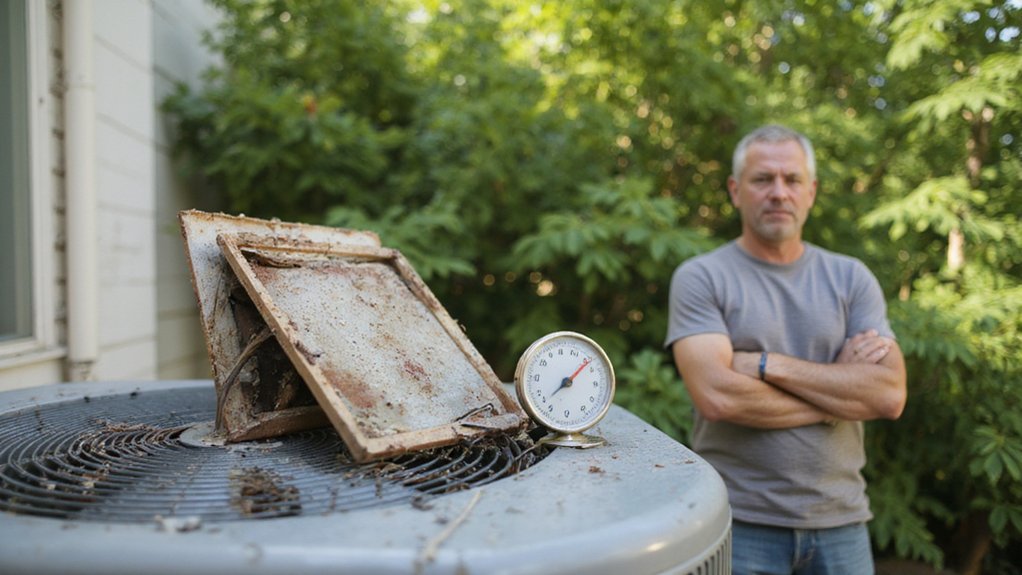
Cause 4: The Outdoor Coil Is Dirty or Blocked
The outdoor condenser needs airflow. If weeds, leaves, grass clippings, lint, or stored items block the coil, heat cannot leave the system well.
One pattern we have noticed is that warm-air calls often happen after yard work, storms, or long stretches without maintenance. The system may run, but it cannot breathe.
Look around the outdoor unit. There should be clear space around it. Remove loose debris around the outside, but do not bend fins or spray electrical areas.
A dirty condenser coil can raise system pressure, reduce cooling, and make the equipment work harder. During San Antonio heat, that extra stress can push a weak component toward failure.
Cause 5: The AC Is Frozen
A frozen AC can blow warm air because ice blocks normal heat transfer. Sometimes the air feels slightly cool at first, then gets warmer as airflow drops.
You may see ice on the refrigerant line, water around the indoor unit, or weak airflow from the vents. The thermostat may never reach the set temperature.
Many customers are surprised to learn that a frozen AC often starts as an airflow or refrigerant problem. The ice is a symptom, not the root cause.
If you see ice, turn cooling off. Let the system thaw. Do not chip ice off the line or coil. If the system freezes again, schedule service.
Read the related guide Should You Turn Off a Frozen AC Unit? before restarting the system if you see ice.
Cause 6: The System Has a Refrigerant Problem
Refrigerant is part of the heat-transfer process. If the system is low, leaking, or not moving refrigerant properly, the AC may blow warm air or freeze.
Refrigerant does not get used up like gas in a car. If the system is low, there is usually a leak or another problem that needs to be located.
In our opinion, this is where homeowners should avoid quick guesses. Adding refrigerant without understanding why it is low can lead to repeat problems.
A technician may check pressures, temperature split, airflow, coil condition, and system operation before making a recommendation. The right answer depends on the age and condition of the equipment.
Cause 7: The Compressor Is Struggling or Failing
The compressor is one of the most important parts of the AC system. If it cannot move refrigerant correctly, the system may run but fail to cool.
Compressor issues can show up as warm air, hard starting, breaker trips, humming, short cycling, or outdoor unit failure.
What we have seen is that compressor problems often have warning signs before full failure. The system may cool poorly, take too long, or trip a breaker during hot afternoons.
This is not a DIY repair. Compressor diagnosis requires proper tools and safety training.
Warm Air Troubleshooting Table
| What You Notice | Possible Cause | What To Do |
|---|---|---|
| Fan blows but air is not cold | Outdoor unit issue, thermostat setting, or refrigerant problem | Check thermostat and outdoor unit, then call if cooling does not return |
| Weak airflow and warm air | Dirty filter, blocked return, frozen coil, or blower issue | Check filter and turn system off if ice is visible |
| Outdoor unit hums but fan does not spin | Capacitor, motor, or electrical issue | Do not open the unit; schedule AC repair |
| Breaker trips when AC starts | Electrical fault, compressor issue, or motor problem | Reset once only; call if it trips again |
| Ice on refrigerant line | Frozen coil, airflow issue, or refrigerant concern | Turn cooling off and schedule service |
When Warm Air Becomes an Emergency
Warm air does not always require emergency service. But in San Antonio, the line between inconvenience and urgent problem can move quickly.
Call for emergency help if the home keeps heating up, the outdoor temperature is extreme, the system is frozen, the breaker trips, the AC smells electrical, or someone in the home is sensitive to heat.
The related guide 5 Signs Your AC Needs Emergency Repair can help you decide if the symptom needs immediate attention.
Need Help With Warm Air From Your AC?
If your AC is blowing warm air and the home is getting hotter, ASC Heating & Air can diagnose the problem and explain your repair options. Start here: 24/7 emergency AC repair in San Antonio.
What We Would Check First on a Warm-Air Call
On an actual service call, the technician will not guess from one symptom. The diagnosis usually starts with basics and moves toward equipment testing.
- Thermostat settings and system call for cooling
- Air filter condition and return airflow
- Indoor blower operation
- Outdoor fan and compressor operation
- Breaker and electrical components
- Coil condition and signs of ice
- Temperature split across the indoor coil
- Refrigerant pressure and system performance, when needed
This process matters because the same symptom can have different causes. Warm air can be simple, serious, or somewhere in between.
Frequently Asked Questions
Why is my AC blowing warm air all of a sudden?
A sudden warm-air problem may be caused by a thermostat setting, tripped breaker, failed capacitor, outdoor unit issue, frozen coil, or refrigerant problem. Check the simple settings first, then call if cooling does not return.
Should I turn off my AC if it is blowing warm air?
Turn it off if you see ice, smell burning, hear loud noises, or the breaker trips. If the system is only blowing slightly warm air, check the thermostat and filter first.
Can a dirty filter cause warm air?
Yes. A dirty filter can reduce airflow, freeze the coil, and make the AC stop cooling correctly.
Is low refrigerant the most common cause?
Low refrigerant is one possible cause, but it is not the only one. Airflow, electrical, thermostat, and outdoor unit problems can all cause warm air.
How fast can warm-air AC problems be repaired?
Simple problems may be repaired during the first visit if parts are available. More complex issues, such as refrigerant leaks or compressor failure, may take longer.
Final Takeaway
If your AC is blowing warm air, start with the thermostat and filter. Then check whether the outdoor unit is running. If the home keeps getting hotter, do not keep forcing the system to run.
Based on our real-world experience, warm air is one of the symptoms homeowners should handle early. A fast diagnosis can prevent more stress on the system and help restore comfort before the heat gets worse.

Owner, ASC Heating & Air
Ron Carter is the owner of ASC Heating & Air, a family-owned HVAC company serving San Antonio and the surrounding communities. With more than 20 years of hands-on HVAC experience, Ron has built his reputation on honest recommendations, quality workmanship, and dependable customer service.
He specializes in residential heating and air conditioning repair, installation, replacement, and preventative maintenance, helping homeowners make informed decisions that improve comfort, efficiency, and the lifespan of their HVAC systems. Through his articles, Ron shares practical insights gained from years in the field, answering common homeowner questions and providing trusted advice tailored to the unique heating and cooling challenges of South Texas.
What We See Most Often In San Antonio Homes
When an air conditioner runs but the air feels warm, the thermostat is only the starting point. A technician needs to check airflow, indoor coil temperature, refrigerant conditions, electrical readings, and the outdoor condenser before deciding which repair is appropriate.
One pattern we have noticed is that a dirty filter or blocked return can make a homeowner think the system has lost refrigerant. Restricted airflow can reduce cooling at the registers and may allow the coil to freeze. Replacing the filter may help airflow, but recurring ice means the underlying cause still needs to be found.
Stop And Call For Help When
- Ice is visible on the refrigerant line or indoor coil.
- You smell burning or see smoke.
- The breaker trips again after one safe reset.
- The outdoor unit is silent, grinding, or making an abnormal electrical sound.
- Water is leaking near the indoor equipment.
A Simple Diagnostic Path
- Confirm the thermostat is set to Cool and the set point is below room temperature.
- Check whether the indoor blower is moving air through the registers.
- Look at the filter and replace it if it is visibly loaded, using the correct size.
- Check the outdoor unit for heavy debris without opening the cabinet or touching wiring.
- If the system still blows warm air, turn it off if symptoms worsen and schedule professional diagnosis.
Do not add refrigerant based on a guess. Low refrigerant is not a normal fuel supply; it usually points to a leak or another system issue. A proper visit should identify the condition, explain the evidence, and give you the repair cost before work begins.
Questions To Ask Before Approving The Repair
- What test showed the cause of the warm air?
- Is the coil frozen, dirty, or restricted?
- If refrigerant is low, where is the leak or why is the charge incorrect?
- Does the quoted work include labor, materials, refrigerant, and follow-up?
- What parts and labor warranty applies?
For local cooling diagnostics, see ASC AC repair services. For cost-planning questions, review the repair-versus-replacement guidance. If the system has stopped during dangerous heat or shows an electrical or burning symptom, use emergency AC repair options.