

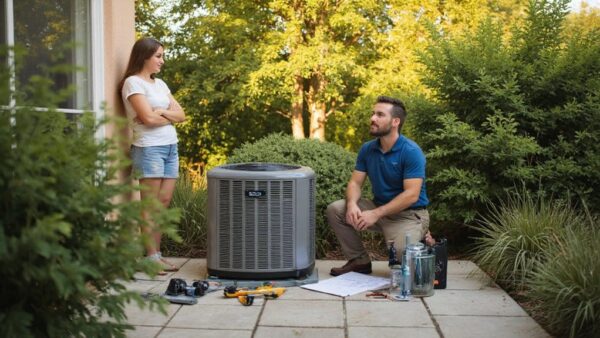
When you’re considering an air conditioning installation, asking the right questions can save you time, money, and frustration later. You want to know that the contractor is properly qualified, that the system suits your home, and that the price and installation plan are clear before work begins.
A good conversation with your contractor should cover more than the AC unit itself. Ask about licensing, insurance, sizing, energy use, installation costs, warranties, permits, maintenance, and previous customer experiences.
Taking the time to discuss these details can help you feel more confident about the contractor you choose and the system they recommend.
Key Takeaways
- Check the contractor’s licensing, insurance, and certifications before agreeing to the work.
- Ask how they assess your home’s cooling needs, including size, insulation, windows, and room layout.
- Compare recommended AC units by efficiency ratings, noise levels, features, and total cost.
- Get a clear installation schedule and ask what could cause delays.
- Find out what the warranty covers and who handles warranty-related repairs.
- Ask about permits, local requirements, maintenance services, and emergency repairs.
- Check customer references and online reviews before making your final decision.
What Qualifications Should My AC Contractor Have?
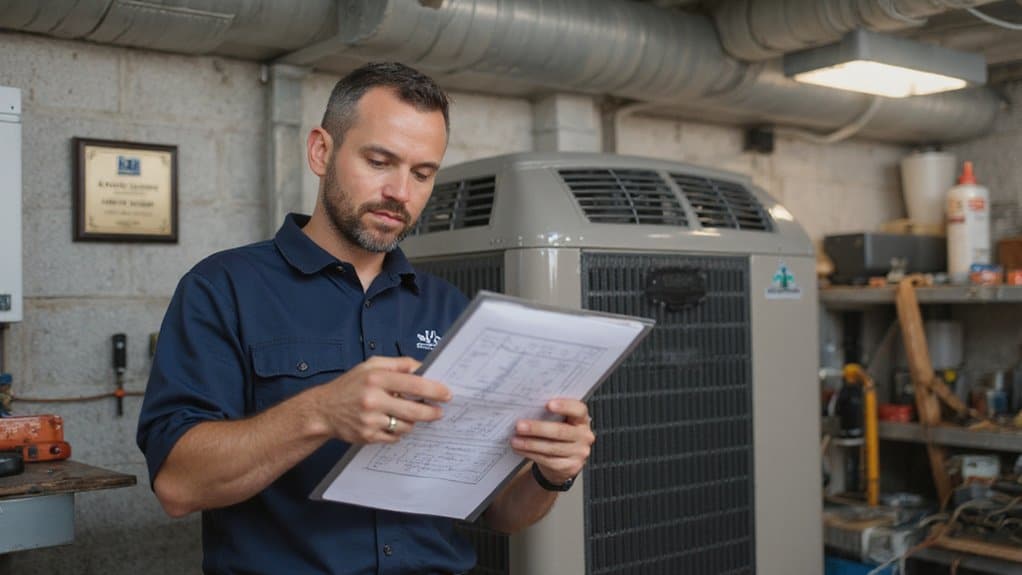
When you’re comparing AC contractors, start by checking their qualifications. Ask whether they’re licensed to perform air conditioning work in your area and whether their license is current.
Licensing rules vary by location, so it’s worth checking the requirements that apply where you live. You can also ask the contractor for their license number and verify it through the appropriate local or state authority.
Insurance matters too. Ask whether the contractor carries liability insurance and workers’ compensation coverage. These policies can help protect you if someone is injured during the project or if your property is damaged while the work is being done.
You can also ask about professional certifications and technician training. HVAC equipment and installation methods change over time, so it’s useful to know whether the people working on your system receive ongoing training.
Don’t hesitate to ask for documentation. A contractor who is comfortable providing licensing, insurance, and certification details makes it easier for you to check their qualifications before work begins.
How Do You Figure Out My Home’s Cooling Needs?
Your home needs more than a quick square-footage calculation to determine the right AC size. Ask the contractor how they plan to assess your home’s cooling requirements.
A proper assessment can include the home’s size, room layout, ceiling height, insulation, windows, sunlight exposure, and existing ductwork. The number of people who regularly occupy the home can also affect cooling needs.
Ask the contractor to explain how they arrived at their recommended system size. If they can walk you through the factors they considered, you’ll have a clearer idea of why a particular unit was chosen.
Choosing the right size matters. An AC unit that’s too small may struggle to keep the home comfortable on hot days. An oversized system may cycle on and off too often, which can affect comfort and energy use.
Home Size Assessment
How does the contractor plan to determine the cooling capacity your home needs?
Ask whether they will assess the square footage of the home, ceiling height, room layout, windows, and existing ductwork. They may also look at airflow throughout the house to identify areas that don’t receive enough cooled air.
Duct sizing deserves attention as well. If the existing ducts are too small, damaged, or poorly arranged, installing a new AC unit may not solve every comfort problem.
Ask what method the contractor uses to determine the required BTUs. You can also ask whether they inspect the existing duct system before recommending equipment.
A thoughtful assessment helps reduce the chance of choosing a unit that’s poorly matched to the home. It also gives you a chance to discuss rooms that are consistently warmer or cooler than the rest of the house.
Insulation and Sunlight Factors
Square footage is only part of the picture. Insulation and sunlight can have a noticeable effect on how much heat enters your home.
Ask your contractor to look at the condition and type of insulation in the attic, walls, and other relevant areas. Fiberglass, foam, and cellulose insulation can perform differently, and gaps or damaged areas may allow more heat into the home.
Windows matter too. Large windows that receive direct sunlight can increase the cooling load, especially during the hottest part of the day. Shading, window orientation, and the condition of the windows may all be worth discussing.
If certain rooms become much hotter than others, tell the contractor. That information can help them look more closely at insulation, windows, ductwork, and airflow in those areas.
Which AC Brands and Models Are Best for My Home?
Rather than asking which brand is simply the best, ask which models make sense for your home and your budget.
The right choice can depend on the size of your home, how often you use the AC, your preferred comfort level, local climate, and how much you’re willing to spend upfront.
Ask the contractor to explain the differences between the models they recommend. If you’re also considering a heat pump, ask whether heat pump installation could be a suitable option for your home’s heating and cooling needs.. You may also want to compare efficiency ratings, operating noise, warranty coverage, controls, and repair considerations.
Energy Efficiency Ratings
When comparing AC systems, ask about their efficiency ratings and what those numbers mean for your expected energy use.
SEER ratings are commonly used when comparing the energy performance of air conditioning equipment. A higher rating generally indicates that the unit can provide cooling with less energy under the conditions used for the rating.
Don’t choose a unit based on the rating alone. Ask how the equipment’s efficiency fits your home’s size, usage, and local climate.
It’s also useful to ask about the expected operating cost of each model. A unit with a higher purchase price may have lower running costs, but the difference depends on how often the system operates and the local electricity rate.
Ask the contractor to explain the numbers in practical terms. That makes it easier to compare the upfront price with the expected cost of running the system.
Noise Levels Consideration
If you care about a quiet home, ask about the sound level of the AC system before choosing a model.
Different units produce different amounts of noise. The location of the outdoor condenser, the design of the ductwork, and the type of indoor equipment can also affect what you hear inside the house.
Variable-speed systems may operate at lower speeds for longer periods, which can make their operation quieter in some situations.
Ask the contractor for the manufacturer’s published sound ratings and find out where the indoor and outdoor units will be installed.
Installation also plays a role. Properly secured equipment, sealed ducts, and appropriate vibration control can help reduce unwanted sounds.
If the outdoor unit will be close to a bedroom, patio, or another area where noise could be bothersome, mention that before installation begins.
How Is the Total Cost of Installation Determined?
Ask for a detailed written estimate before approving the work. The total price can include much more than the AC equipment itself.
Equipment size and type, labor, electrical work, duct modifications, removal of an old system, permits, and other installation requirements can all affect the final bill.
If your existing ductwork needs repairs or changes, ask how much that work will cost. The same applies to electrical upgrades or changes to the location of the indoor or outdoor equipment.
Ask the contractor to identify anything that isn’t included in the quoted price. This is especially useful for permits, disposal fees, additional materials, and unexpected repairs.
A detailed estimate should make it easier to compare contractors because you’ll be looking at the same types of costs rather than comparing one large number against another.
If the contractor expects the price could change after work begins, ask what circumstances would cause that change and how they would discuss additional costs with you.
What Is Your Installation Timeline?
Before scheduling the work, ask how long the installation is expected to take.
A contractor should be able to give you a general schedule based on the type of system being installed and the condition of your existing equipment. Ask when the work can begin, how long installation should take, and whether any preparation is required beforehand.
Equipment availability can affect the schedule. Weather, permit processing, unexpected ductwork problems, and other site conditions may also cause delays.
Ask how the contractor handles these situations and how they will keep you informed if the schedule changes.
It’s also worth asking what parts of the home will be affected during installation. You may need to clear access to certain rooms, move furniture, or make arrangements if the work temporarily affects your cooling.
Having a clear schedule helps you plan around the installation rather than being caught off guard by unexpected disruptions.
What Warranties Do You Offer on AC Installation?
Don’t assume that the equipment warranty and the installation warranty are the same thing.
Ask what warranty comes with the AC equipment and what coverage the contractor provides for their installation work. Find out how long each type of coverage lasts and which parts, labor, and repairs are included.
Ask whether you need to register the equipment to receive the full manufacturer’s warranty. You should also find out whether regular maintenance is required to keep certain coverage in effect.
Pay attention to exclusions. Some warranties may not cover particular types of damage, parts, labor, or problems caused by improper maintenance.
It’s a good idea to ask who you should contact if something goes wrong. Knowing whether you deal directly with the contractor or the equipment manufacturer can save time if you need warranty service later.
Get the warranty terms in writing so you have something to refer back to after installation.
How Do You Handle Permits and Local Regulations?
Ask your contractor who is responsible for obtaining the permits needed for your AC installation.
Permit requirements vary by location and by the type of work being performed. Some installations may require inspections or specific documentation.
A contractor familiar with local requirements should be able to explain which permits apply to your project and whether those costs are included in the estimate.
Ask whether the contractor will submit the paperwork, schedule required inspections, and provide copies of the relevant documents.
You should also ask what happens if an inspection identifies a problem. Knowing who will handle corrections can prevent confusion later.
Taking care of these requirements before or during the installation can help avoid problems when you sell the home or need documentation for future work.
What Maintenance Services Do You Provide After Installation?
The relationship with an AC contractor doesn’t necessarily end when the new system starts running.
Ask whether the contractor offers routine maintenance after installation. Regular service may include checking filters, cleaning components, inspecting electrical connections, checking refrigerant levels, and examining the system for signs of wear. If you also have a heat pump, ask whether the contractor provides heat pump repair services when problems arise.
Find out what is included in any maintenance agreement and how often visits are scheduled.
You can also ask about emergency repair services. If the AC stops working during a hot spell, knowing whether the contractor handles urgent calls can be useful.
Ask whether maintenance is performed by the same team that handles installations or by a separate service department.
It’s also worth asking which maintenance tasks you can handle yourself, such as replacing or cleaning the air filter. Knowing what you can do between professional visits can help keep the system in good working order.
How Can I Check Your References and Reviews?
Before hiring a contractor, ask for references from recent customers who had similar AC work completed.
When contacting a reference, don’t just ask whether they were happy with the work. Ask about the contractor’s communication, arrival times, workmanship, cleanup, pricing, and how the contractor handled problems.
Online reviews can provide another source of information. Check several platforms rather than relying on a single rating.
Look for repeated comments about the same issue. A few negative reviews don’t necessarily tell the whole story, but a pattern of complaints about communication, unexpected charges, unfinished work, or missed appointments deserves attention.
You can also check whether the contractor is listed with local trade groups or licensing authorities.
The goal isn’t to find a contractor with a perfect review history. You’re looking for enough information to understand what previous customers experienced and whether the contractor’s work matches what you’re looking for.
Frequently Asked Questions
Do You Have Insurance Coverage for Your Work?
Yes, this is something you should confirm before installation begins. Ask what types of insurance the contractor carries and request documentation if needed.
Liability coverage can help address property damage, while workers’ compensation coverage can apply to job-related injuries involving employees.
What Is Your Policy on Unexpected Costs During Installation?
Ask how the contractor handles costs that weren’t included in the original estimate.
Find out what types of problems could lead to additional charges and whether you’ll be contacted before extra work is performed. Getting this process in writing can help prevent unexpected bills.
How Do You Handle Customer Complaints or Issues?
Ask what happens if you’re unhappy with part of the installation or if a problem appears after the work is complete.
A good contractor should be able to explain who handles complaints, how issues are documented, and how follow-up work is arranged.
Can You Provide a Detailed Written Estimate?
You should receive a written estimate that clearly explains the equipment, labor, materials, permits, and other expected costs.
Ask whether the estimate also identifies items that could change after work begins. This gives you a clearer picture of what you’re agreeing to before the project starts.
What Training Do Your Technicians Undergo?
Ask about the training and certifications held by the technicians who will install your system.
You can also ask whether technicians receive ongoing training when new equipment, refrigerants, controls, or installation methods are introduced.
Conclusion
Before you commit to an AC contractor, take time to ask questions about qualifications, cooling needs, equipment, pricing, scheduling, warranties, permits, and ongoing service.
A detailed conversation can reveal how the contractor approaches the job and whether their recommendation makes sense for your home.
Don’t be afraid to ask for documents, written estimates, warranty details, and references. Comparing these details can help you choose an AC contractor and installation plan that fit your home’s needs and your budget.
The goal is simple: understand what you’re buying, know who will install it, and have a clear idea of what happens after the system is running.