


When your central AC system starts acting up, knowing when to call a professional can save you time, money, and a lot of frustration. Inconsistent cooling, unusual noises, or higher energy bills can all point to a problem that needs attention.
Some issues are minor and easy to check yourself. Others involve electrical parts, refrigerant, or internal components that are better left to a trained technician. Knowing the difference can help you avoid making a small problem worse.
Key Takeaways
- Hire a professional if your AC can’t maintain the desired temperature or is cooling some areas better than others.
- Banging, hissing, clanking, and other unusual sounds can point to mechanical or refrigerant-related problems.
- Strange odors, fluid leaks, or ice buildup should be checked by a professional.
- A sudden increase in energy bills may mean your AC is working harder than it should.
- If a repair involves electrical components, refrigerant, or equipment you aren’t familiar with, professional help is the safer choice.
Signs Your AC Needs Professional Help
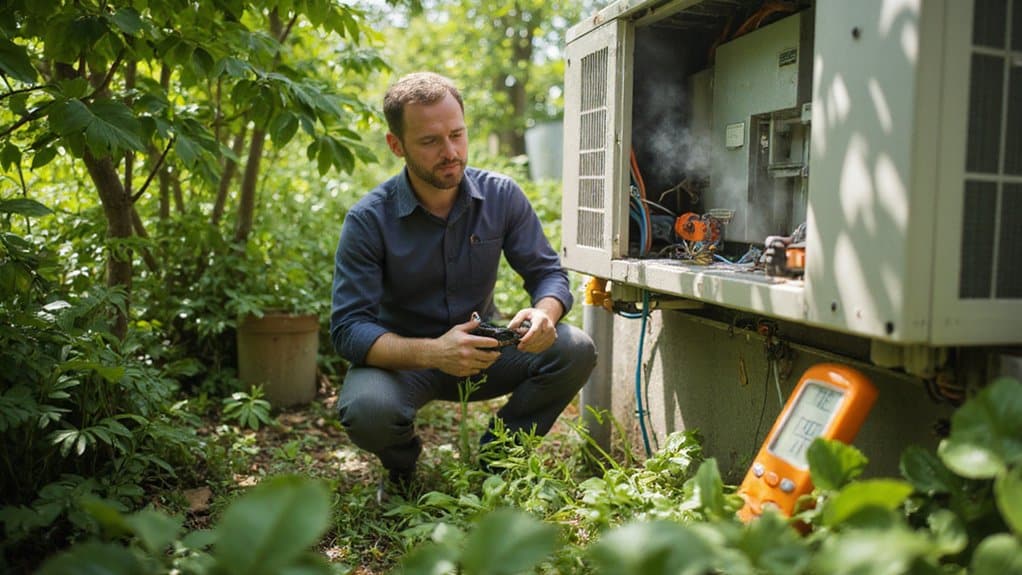
When your air conditioning system starts showing signs of trouble, it’s worth paying attention to what it’s telling you.
Inconsistent cooling is one common warning sign. You may notice that some rooms feel comfortable while others stay warm, or the system may run for long periods without reaching the temperature set on the thermostat.
Unusual sounds can also point to a problem. Banging, hissing, rattling, or clanking noises may come from loose parts, airflow problems, or other mechanical issues.
Leaks and ice buildup deserve attention, too. Fluid around the unit or ice forming on the coils isn’t something to ignore. These problems can be connected to refrigerant issues, airflow restrictions, or other faults within the system.
If you’re seeing several of these signs at once, calling a professional is usually the safer option. A technician can find the source of the problem before it causes more damage.
What Rising Energy Bills Mean for Your AC
A sudden increase in your energy bills can be a sign that your AC isn’t running as it should. When a system has to work harder to cool your home, it can use more electricity than usual.
You may also notice that your home doesn’t feel as comfortable as it normally does. Temperature changes from room to room, longer cooling cycles, or an AC that seems to run almost constantly can all point to a problem.
Some routine maintenance can help. Replacing a dirty filter, keeping the outdoor unit clear, and making sure air can move freely through the vents are good places to start.
If your energy bills continue to rise after these simple checks, there may be an issue that needs a closer look. A professional can inspect the system and identify problems that aren’t easy to spot from the outside.
Finding the cause early can also help prevent a small fault from turning into a much more expensive repair.
Identifying Strange Noises From Your AC
When your AC starts making sounds you haven’t heard before, don’t brush them off.
Different noises can point to different problems. Paying attention to the type of sound, when it happens, and whether it gets worse over time can give a technician useful information.
Common AC Noises Explained
Banging sounds can come from loose or damaged parts inside the system. If the noise is loud or keeps happening, it’s best to have the unit inspected rather than continuing to run it and hoping the sound disappears.
A hissing sound may be linked to escaping refrigerant or air moving through a leak. Refrigerant problems should be handled by a qualified professional.
Clicking can sometimes happen during normal startup or shutdown. Persistent clicking, especially when the AC isn’t starting properly, may point to an electrical or component problem.
Rattling may come from loose screws, debris, or a component that has started to wear. Clanking can be another sign that something inside the system isn’t sitting or moving as it should.
Whistling can be connected to restricted airflow or problems within the ductwork. The exact cause isn’t always obvious, so a technician may need to inspect the system.
The sound itself doesn’t always tell you exactly what’s wrong, but it can be a useful warning that something needs attention.
When to Seek Help
If an unusual noise is loud, persistent, or getting worse, it’s time to call a professional.
Continuing to run an AC with a mechanical problem can sometimes cause additional damage. What starts as a loose or worn component may affect other parts if the system keeps operating under the same conditions.
The same applies to hissing or screeching sounds. These may involve refrigerant, electrical components, or moving parts that aren’t safe to handle without the right training.
Getting the system checked early can also give you a clearer idea of repair costs and how long the work may take. If the unit is older, a professional inspection can help you decide whether repairing it still makes sense.
Why Is Your AC Not Cooling Properly?
If your AC is running but your home still feels warm, there are several possible reasons.
Start with the thermostat. Make sure it’s set to cooling and that the temperature is set where you expect it to be.
Next, check the air filter. A dirty filter can restrict airflow and make it harder for the system to cool your home.
Blocked vents or problems in the ductwork can cause similar symptoms. You may notice that certain rooms receive very little air even though the system is running.
Low refrigerant can also affect cooling. If refrigerant is low because of a leak, adding more refrigerant without fixing the leak won’t solve the underlying problem.
Home insulation and high indoor humidity can affect how comfortable your home feels, too. If you’ve checked the simple things and the AC still isn’t cooling properly, a professional can inspect the system and find the cause.
How Age Affects Your AC System
Central AC systems don’t last forever. A typical system may last around 10 to 15 years, although actual service life depends on maintenance, usage, installation, and other factors.
As an older system wears down, repairs may become more frequent. You may also notice that it takes longer to cool the house or that energy bills are higher than they used to be.
Older equipment can also lack features found in newer systems. That doesn’t automatically mean replacement is the right choice. If a repair is relatively minor, fixing the existing unit may still make sense.
When an older AC needs a major repair, it’s worth comparing the repair cost with the age and condition of the system. A professional can help you understand your options before you spend money on a repair that may only provide a short-term solution.
If an older system needs a major repair or replacement, you may also want to consider whether heat pump installation is suitable for your home.
Essential Maintenance Tasks for Your AC System
Regular maintenance can help prevent some common AC problems and keep the system running as it should.
Two simple tasks homeowners can keep up with are replacing the air filter and keeping the outdoor condenser coils clean.
Regular Filter Replacement
The air filter catches dust, dirt, allergens, and other particles before they move through the system. Over time, the filter can become clogged.
A dirty filter restricts airflow and can make your AC work harder. It may also affect indoor air quality.
Check your filter about once a month. Many filters need to be replaced every one to three months, although the right schedule depends on the filter type, household conditions, and how often you use the AC.
If the filter looks dirty before the usual replacement date, change it. It’s a small maintenance task that can help prevent airflow problems and unnecessary strain on the system.
Clean Condenser Coils
The outdoor condenser unit needs good airflow to release heat from your home. Dirt and debris around the condenser coils can interfere with that process.
Before cleaning the unit, turn off the power. Remove leaves, grass, and other debris from around the outdoor unit, and follow the manufacturer’s instructions for cleaning.
A soft brush or appropriate coil cleaner may be used when suitable. Take care not to bend the fins or damage the coil.
Cleaning the condenser coils about once a year can help keep the outdoor unit working properly. If the coils are heavily soiled or you’re uncomfortable working around the equipment, have a professional handle the job.
Knowing When to Avoid DIY AC Repairs
Some AC maintenance tasks are simple enough for homeowners. Repairs are a different matter.
Electrical components, refrigerant, compressors, and other internal parts can be dangerous to handle without the right training and equipment.
Before attempting a repair, think honestly about what you’re comfortable working on. If you don’t know what a component does or aren’t sure how to safely test it, it’s better to stop there.
A repair that goes wrong can also cost more in the long run. A mistake may damage another component or turn a smaller repair into a larger one.
There’s also the question of your warranty. Depending on the equipment and warranty terms, unauthorized repairs may create problems with future service coverage.
If the issue involves electricity, refrigerant, internal components, or anything beyond basic maintenance, calling a professional is usually the safer choice.
If your home also uses a heat pump, problems involving electrical components, refrigerant, or internal parts are best handled by a professional experienced in heat pump repair.
How to Find the Best AC Repair Expert
Finding the right AC technician starts with checking the basics.
Look at reviews to see what previous customers say about the service. Pay attention to comments about communication, workmanship, pricing, and whether repairs were completed as promised.
Check that the technician has the required licenses and certifications for the work they’re performing. You can also ask friends, family, or neighbors if they have used a local AC professional they would recommend.
Once you have a few options, compare quotes. Don’t focus only on the lowest price. Make sure you understand what the quote includes, such as labor, parts, diagnostic charges, and follow-up service.
Experience also matters. A technician who regularly works on central AC systems may be better prepared to diagnose a problem quickly.
Before agreeing to the repair, ask about warranties on parts and labor. Knowing what happens if the same issue returns can prevent confusion later.
What to Expect During a Professional AC Visit
A professional AC visit usually starts with an inspection of the system.
The technician may check the thermostat, electrical connections, compressor, evaporator coil, condenser, airflow, and refrigerant levels. The exact checks will depend on the symptoms you’re experiencing.
Once the problem has been identified, the technician should explain what’s wrong and what needs to be done. Ask questions if anything isn’t clear.
You may receive an estimate covering parts and labor, along with an idea of how long the repair should take. If a replacement part is needed but isn’t available right away, the repair may take longer.
This is also a good time to ask whether there are maintenance steps you can handle yourself and what signs to watch for in the future.
A clear explanation gives you a better understanding of the work and helps you make an informed decision about the repair.
Tips for Maintaining Your AC After Repair
Once your AC has been repaired, a little regular care can help reduce the chance of another problem.
Keep an eye on the filter and pay attention to changes in cooling, airflow, sounds, and energy use. Small changes are easier to address when you catch them early.
Regular Filter Replacement
Replacing the filter regularly helps maintain good airflow through the system.
Check the filter once a month and replace it when it’s dirty. Depending on the type of filter you use, replacement may be needed every one to three months.
Homes with pets, construction dust, or heavier AC use may need more frequent filter changes.
If you’re using a high-efficiency filter, check the manufacturer’s recommendations. A filter that’s too restrictive for your system can reduce airflow instead of helping it.
When you’re unsure which filter to use, check the AC manufacturer’s instructions or ask a professional.
Schedule Annual Maintenance
An annual AC inspection gives a professional a chance to look for worn parts, airflow problems, refrigerant issues, and other concerns before they lead to a breakdown.
During a maintenance visit, the technician may clean the coils, check refrigerant levels, inspect electrical connections, and look over other system components.
Annual service can be especially useful before the cooling season begins. It gives you a chance to address problems before the AC is working hard every day.
If your system is older or used heavily, you may benefit from having it checked more often.
Frequently Asked Questions
How Often Should I Schedule Professional AC Maintenance?
For most central AC systems, scheduling professional maintenance once a year is a good starting point. If the system is older or gets heavy use, you may want to have it checked twice a year.
What Certifications Should a Professional AC Technician Have?
Look for a technician with the required local or state licensing and appropriate training for AC work. Technicians who handle refrigerants may also need EPA certification, depending on the type of work being performed.
Can I Still Use My AC if It’s Making Noise?
It depends on the noise and what’s causing it. A minor sound during normal startup may not mean there’s a serious problem. Persistent rattling, banging, hissing, or screeching should be checked by a professional, especially if cooling performance has also changed.
What Are the Typical Costs for AC Repair Services?
AC repair costs can range from around $100 to $1,500 or more, depending on the problem, parts, labor, and system. A simple repair may cost much less than replacing a major component.
How Long Does an AC Repair Usually Take?
Many AC repairs can be completed within one to four hours, but the actual time depends on the problem. A repair may take longer if a part needs to be ordered or the technician finds additional issues during the inspection.
Conclusion
Knowing when to call a professional for central AC repair can help you avoid bigger problems and keep your home comfortable. Inconsistent cooling, unusual noises, leaks, ice buildup, and rising energy bills are all reasons to take a closer look at your system.
Simple maintenance, such as changing the filter and keeping the outdoor unit clear, can be handled at home. Repairs involving electrical parts, refrigerant, or internal components are better left to a trained technician.
If you’re unsure what’s causing the problem, getting the system inspected is often the safest way to find out what’s wrong and decide what to do next.