

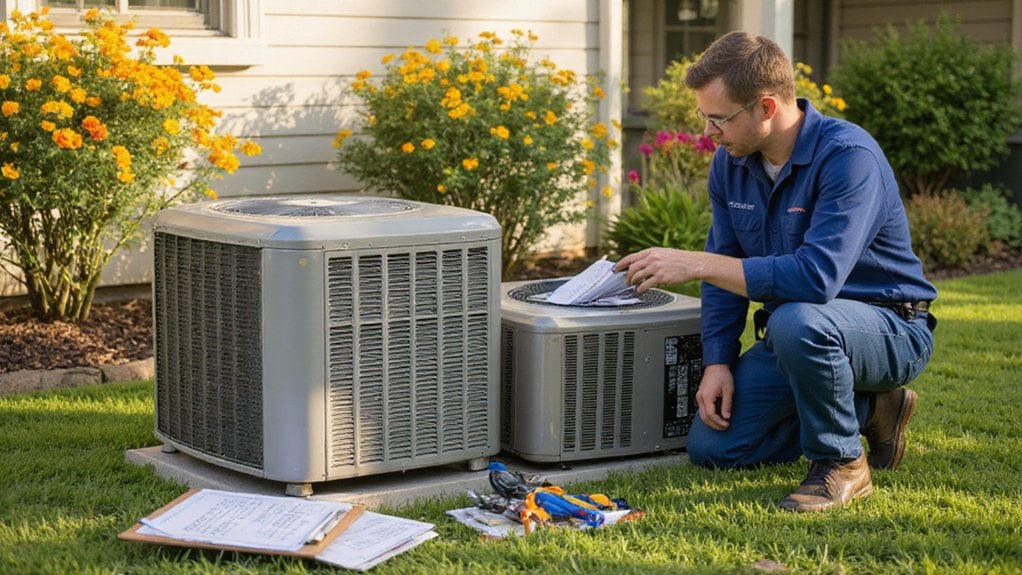
Choosing the right HVAC contractor for AC installation or replacement takes more than picking a company from a search result. You want someone with the proper credentials, experience with similar systems, and a track record that gives you a clear idea of what to expect.
The wrong choice can lead to installation problems, unexpected costs, or an AC system that doesn’t perform as it should. Taking some time to check your options can help you avoid those issues and find a contractor who fits your home, budget, and project needs.
Key Takeaways
- Check the contractor’s credentials, including licensing, insurance, and relevant certifications.
- Ask about their experience with similar AC installations and replacement projects.
- Find out what warranties cover the equipment, parts, labor, and installation work.
- Read customer reviews from several sources instead of relying on one website.
- Compare quotes carefully and look beyond the total price to understand what each contractor includes.
What Common Challenges Do Homeowners Face When Choosing HVAC Contractors?
Finding an HVAC contractor can seem simple until you start comparing several companies. Different contractors may offer different equipment, prices, warranties, and installation timelines. It can be difficult to tell what is actually included in each quote.
One common concern is checking licensing and insurance. A contractor should be able to provide proof of the licenses required in your area, along with insurance coverage. These details help protect you if something goes wrong during the project.
Customer reviews can create another challenge. A contractor may have plenty of positive reviews, but it is worth looking at the overall pattern. Pay attention to comments about communication, punctuality, workmanship, and how the contractor handled problems.
It also helps to check more than one review source. Looking at feedback across several platforms can give you a broader picture instead of relying on a single collection of reviews.
Price comparisons can be tricky, too. A lower quote may leave out certain services, use different equipment, or provide less coverage after installation. Comparing what each contractor includes can tell you much more than comparing the final numbers alone.
If your existing system is having problems, you may also need HVAC repairs before deciding whether replacement is necessary.
The goal is to compare the full scope of each proposal, not just the number at the bottom.
What Should You Look For in an HVAC Contractor?
Start with the contractor’s credentials. Ask whether they are licensed, insured, and certified by any relevant organizations. Licensing requirements vary by location, so check what applies where you live.
Insurance matters as well. Ask what type of coverage the contractor carries and whether it includes liability insurance and workers’ compensation.
Experience is another area worth discussing. Ask how long the contractor has been handling AC installations and whether they have worked with systems similar to the one you need. A contractor who regularly handles comparable projects may be familiar with installation issues that can come up during the work.
Take time to understand the warranty coverage before agreeing to anything. Ask what the equipment warranty covers and whether the installation itself has a separate warranty. Find out how long each warranty lasts and what you need to do if a problem occurs.
Customer feedback can also help you understand what working with the contractor is like. Look for comments about communication, scheduling, workmanship, and follow-up service. A few negative reviews don’t necessarily tell the whole story, so look for recurring themes across multiple reviews.
Evaluating Energy Efficiency Ratings for AC Units
The contractor is only part of the AC replacement decision. You also need to consider the system being installed.
Energy efficiency ratings can help you compare different AC units. SEER ratings are one factor to look at when reviewing equipment, while ENERGY STAR certification can help identify systems that meet specific energy performance requirements.
Your home’s size, insulation, climate, ductwork, and cooling needs can all affect how well an AC system performs. A contractor should consider these factors when recommending equipment rather than choosing a unit based only on its efficiency rating.
Understanding SEER Ratings
SEER stands for Seasonal Energy Efficiency Ratio. It measures an air conditioner’s cooling output in relation to the energy it uses over a typical cooling season.
A higher SEER rating generally indicates greater energy efficiency. That can be useful when comparing systems, especially if you’re looking at long-term operating costs.
Still, the highest available rating isn’t automatically the right choice for every home. The size of the house, local climate, insulation, ductwork, and how often the system is used all affect energy consumption.
Ask the contractor to explain how the equipment’s rating relates to your home. You can also ask about expected operating costs and whether the difference between two efficiency ratings is likely to matter for your situation.
Understanding these details can make the equipment comparison much easier.
Comparing ENERGY STAR Units
ENERGY STAR certified AC units meet specific energy performance standards. When comparing equipment, certification can give you another way to identify systems that meet those standards.
Look at the unit’s efficiency rating along with its size, features, warranty, and expected operating costs. The equipment should also be properly sized for your home.
An oversized or undersized system can create comfort and performance issues even when the unit has a high efficiency rating. Proper sizing is something your contractor should discuss before installation.
You can also ask about expected service life and maintenance requirements. These details can help you understand the longer-term costs associated with different AC systems.
Key Questions to Ask Your HVAC Contractor During Consultation
A consultation gives you an opportunity to learn how the contractor approaches your AC installation or replacement. Instead of focusing only on the price, ask questions that help you understand the work involved.
Start by asking about contractor credentials. Confirm that the contractor has the licenses and insurance required for the project.
Ask about previous AC installations that are similar to yours. You can ask how the contractor determines the correct system size and what factors they consider before recommending equipment.
The installation timeline is another useful topic. Find out when the work can begin, how long the installation is expected to take, and whether anything could cause delays.
Warranty coverage should also be discussed before the work starts. Ask what is covered for the equipment and what is covered for labor or installation. Make sure you understand how warranty claims are handled.
It can also be helpful to ask for references from previous customers. Speaking with past clients may give you a better sense of the contractor’s communication, workmanship, and overall service.
These conversations can help you understand what you’re paying for before you sign an agreement.
How to Compare Quotes and Services From Different HVAC Contractors
Once you’ve spoken with several HVAC contractors, take time to compare their quotes side by side.
Start with the cost breakdown. A useful quote should make it clear what you’re paying for. Look for equipment costs, labor, installation materials, permits when applicable, removal of an old system, and any other charges.
A quote that appears cheaper at first may not include the same services as another contractor’s quote. Ask about anything that isn’t clearly explained.
The installation timeline can also vary between contractors. If your current AC system isn’t working, a shorter timeline may matter to you. If you’re planning a replacement in advance, you may have more flexibility.
Compare the equipment being offered as well. Make sure you’re looking at similar system sizes, efficiency ratings, features, and warranty terms.
Don’t forget to review service agreements or maintenance plans if they are included in the proposal. Understand what those agreements cover and whether they involve an additional cost.
The goal is to compare the full scope of each proposal, not just the number at the bottom.
Common Mistakes to Avoid When Hiring an HVAC Contractor
One common mistake is skipping the credential check. Before hiring a contractor, confirm that they have the licenses and insurance required for the work.
Another mistake is failing to ask about installation warranties. Equipment warranties and installation warranties may cover different things. Make sure you understand both before work begins.
Rushing the decision can also create problems. If your AC has failed during hot weather, it may be tempting to hire the first contractor who can arrive. Even then, take a few minutes to ask about credentials, pricing, equipment, and warranty coverage.
Ignoring customer reviews can leave out useful information. Look for feedback from several sources and pay attention to repeated comments about communication, scheduling, and workmanship.
Price should not be the only factor, either. A lower quote may come with different equipment, fewer included services, or less warranty coverage. Compare the complete proposal before deciding.
Finally, don’t hesitate to ask questions when something in the quote or contract isn’t clear. A professional contractor should be willing to explain the work and answer reasonable questions before the project begins.
Frequently Asked Questions
How Long Does an AC Installation Typically Take?
An AC installation often takes several hours, though the exact timeline depends on the system and the existing setup. Replacing an existing unit may be fairly straightforward, while changes to ductwork, electrical components, or other parts of the system can take longer.
Ask your contractor for an estimated installation time before the project begins. They can give you a better idea after reviewing your current system and the new equipment.
Are HVAC Warranties Transferable to New Homeowners?
Some HVAC warranties can be transferred to a new homeowner, while others may have different requirements. The terms depend on the equipment manufacturer and the specific warranty.
If you’re buying or selling a home with an existing AC system, check the warranty documents and ask the manufacturer or contractor about transfer requirements. Some warranties may require registration or paperwork within a certain period.
What Financing Options Do HVAC Contractors Offer?
Some HVAC contractors offer financing through payment plans or third-party lenders. Available terms can vary from one contractor to another.
Before choosing a financing option, review the interest rate, payment amount, loan term, fees, and total amount you’ll pay. If you’re comparing contractors, look at the financing terms separately from the installation price.
Do HVAC Contractors Provide Emergency Services?
Many HVAC contractors offer emergency service, but availability varies. Some provide after-hours support, while others operate only during regular business hours.
If emergency service matters to you, ask about it before hiring the contractor. Find out when emergency support is available, what types of problems are covered, and whether additional charges apply outside normal hours.
How Can I Verify a Contractor’s Licensing and Insurance?
You can usually verify licensing through your state’s or local area’s licensing authority. Ask the contractor for their license information and check it against the official licensing records available in your area.
You should also ask for proof of insurance. Confirm that the policy provides appropriate coverage for the work being performed, including liability coverage and workers’ compensation where applicable.
Conclusion
Choosing an HVAC contractor for AC installation or replacement involves more than comparing prices. Check credentials, ask about experience, review warranty terms, and look at customer feedback from several sources.
The AC system itself deserves the same attention. Compare efficiency ratings, system sizes, equipment features, and expected operating costs. Ask the contractor how the proposed system fits your home and cooling needs.
When you compare complete quotes instead of focusing only on the lowest price, you’ll have a clearer picture of what each contractor is offering. Taking the time to ask questions and review the details can help you avoid common problems and feel more prepared before installation begins.