

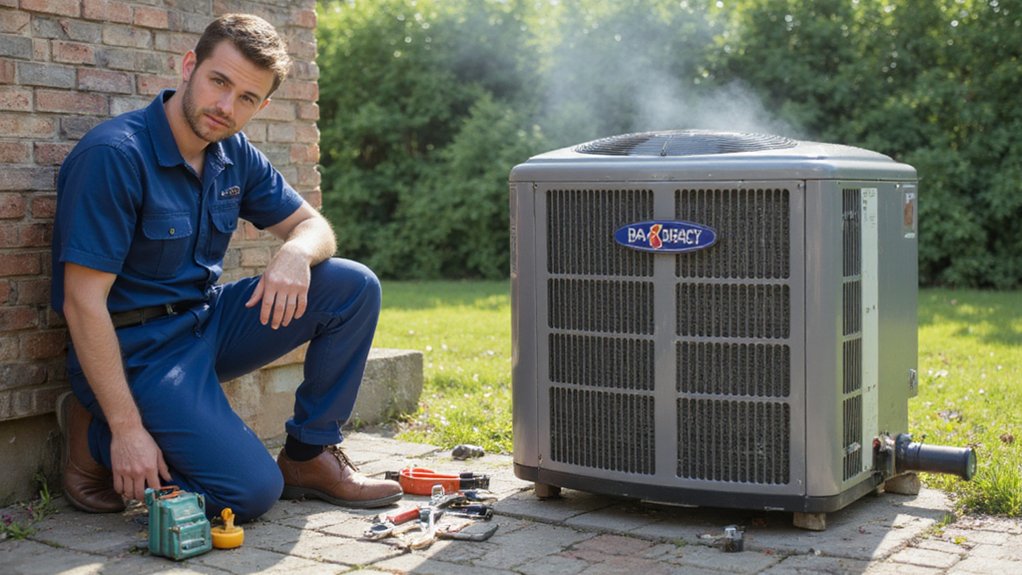
When your air conditioning system stops working without warning, an emergency service call can feel stressful. Knowing what happens during the visit can make the situation easier to handle.
A technician will usually inspect both the indoor and outdoor parts of the system, look for common problems, and ask about recent changes or issues you’ve noticed. Problems such as frozen coils, faulty wiring, refrigerant leaks, and electrical faults can all affect cooling.
The technician will explain what they find and discuss the repair options. Depending on the problem, the repair may take a short time or require parts to be ordered.
Key Takeaways
- A technician will inspect the indoor and outdoor components of your AC system during the initial assessment.
- Common emergency problems include frozen coils, faulty wiring, refrigerant leaks, clogged filters, and electrical issues.
- Repair costs depend on the problem, parts required, and amount of labor involved.
- Your technician may ask about the system’s history and any symptoms you’ve noticed before the visit.
- If parts aren’t available immediately, the technician should explain the expected wait and any temporary options.
- Basic maintenance after an emergency repair can help keep the system running properly.
Recognizing When to Call for Emergency AC Service
Not every AC problem requires an emergency visit, but some warning signs shouldn’t be ignored.
If your system suddenly stops cooling, produces warm air, makes unusual noises, or gives off an unusual odor, you may need emergency AC repair.
Temperature changes throughout the home can also point to a problem. A system that struggles to maintain the set temperature may have an airflow issue, refrigerant problem, electrical fault, or another mechanical concern.
Safety should be a priority. If you notice burning smells, exposed wiring, repeated electrical trips, or signs of overheating, turn the system off and contact a qualified technician.
Waiting too long can allow a relatively small problem to develop into a more involved repair. Getting the system checked when you notice a clear change can help identify the cause sooner.
Preparing Your Home for the Technician’s Arrival
A little preparation can make it easier for the technician to inspect your AC system.
Start by clearing the area around the indoor and outdoor equipment. Move furniture, boxes, plants, or other items that could block access to the unit or make it difficult to work safely.
If you have pets, keep them in a separate room while the technician is working. This gives the technician enough space to focus on the equipment and helps keep everyone safe.
It’s also helpful to have your AC’s warranty information and previous service records available. If you’ve recently noticed a particular problem, make a note of when it started and what you observed.
For example, tell the technician if the system stopped cooling suddenly, began making a new noise, or started turning on and off more frequently than usual.
These details can help the technician understand what happened before the inspection begins.
What to Expect During the Initial Assessment of Your AC
Once the technician arrives, they’ll begin by assessing the air conditioning system.
The inspection may cover the indoor unit, outdoor condenser, evaporator coil, condenser coil, air filter, thermostat, electrical connections, and other system components.
The technician may also check refrigerant levels and look for signs of leaks or damage. Airflow can be tested to determine whether the system is moving enough air through the home.
The thermostat will usually be checked as well. A thermostat problem can sometimes look like a larger AC failure, so checking the controls is part of the diagnostic process.
You’ll probably be asked about the system’s history. The technician may want to know how old the unit is, whether you’ve had recent repairs, when the problem started, and whether you’ve noticed anything unusual.
This information, along with the inspection results, helps the technician identify the likely cause and explain the available repair options.
Common Issues Technicians Encounter in Emergency AC Service
Emergency AC calls can involve a range of problems.
Frozen coils can restrict airflow and affect the system’s ability to cool your home. A frozen coil can have several possible causes, so the underlying problem needs to be identified rather than simply removing the ice.
Faulty wiring can cause electrical problems and may create a safety concern. Electrical components should be inspected by a qualified professional.
Refrigerant leaks can reduce cooling performance and may cause other problems within the system. Refrigerant work should be handled by a qualified technician.
A failed compressor can prevent the system from cooling altogether. Compressor problems can require more extensive repairs than smaller component issues.
Other emergency service calls may involve thermostat problems, clogged filters, blocked drain lines, fan problems, or a tripped circuit breaker.
The exact repair depends on what the technician finds during the inspection.
How Technicians Diagnose Issues During Emergency AC Service
A technician usually starts with the symptoms you’ve reported and then checks the system to identify the source of the problem.
Diagnostic equipment may be used to measure electrical readings, system pressures, and other operating conditions. These measurements can help narrow down the possible causes.
The technician may check the thermostat settings, inspect electrical connections, examine the airflow, and look at the condition of the coils and other components.
If refrigerant is suspected, the system can be checked for signs of a leak and other conditions that may affect refrigerant levels.
The goal is to identify the underlying problem rather than simply address the most obvious symptom.
Once the inspection is complete, the technician should explain what was found and discuss the repair options with you before proceeding with additional work.
Repair Costs and Time Estimates for Emergency AC Service
Emergency AC repair costs can vary considerably. The price depends on the type of problem, the parts required, the amount of labor involved, and whether the repair can be completed during the initial visit.
The original estimate of $150 to $600 may apply to some standard repairs, but it shouldn’t be treated as a fixed price for every emergency service call. Larger repairs can cost more.
The time required also depends on the problem. Some repairs can be completed during the initial visit, while more complicated issues may take longer.
If a part needs to be ordered, the repair may require another visit.
A technician should explain the expected cost and timeline after diagnosing the problem. Ask what is included in the estimate and whether additional costs could arise if other issues are found.
Having this information before work begins can help you understand what to expect.
What to Expect if Parts Must Be Ordered
Sometimes the technician identifies the problem but doesn’t have the required part available.
In that situation, the technician should explain which component is needed, whether it is currently available, and how long it may take to arrive.
Potential Wait Times
Part availability can affect how quickly your AC can be repaired.
The wait may depend on the supplier, the specific component, shipping time, and whether the part is readily available in the local area.
Some parts may be available quickly, while others can take longer to source. The technician should give you an estimated timeline based on the information available at the time.
If a temporary solution is safe and appropriate, the technician may explain whether it can provide limited cooling while you wait.
Keep in touch with the service provider if the repair requires a follow-up visit. This gives you a chance to receive updates about the part and the expected repair date.
Parts Availability Challenges
Parts availability can be more difficult for older or less common AC systems.
A technician may need to locate a specific component through a supplier before the repair can continue. If the part is no longer commonly stocked, finding a suitable replacement may take additional time.
Ask which part is needed and whether there are compatible options. You can also ask when the technician expects to have the part available.
The goal is to have a clear understanding of what is delaying the repair and what needs to happen before your AC can be restored.
Communication Process Explained
Clear communication matters when your AC repair cannot be completed during the first visit.
If a part needs to be ordered, the technician should explain what has been diagnosed, which component is required, and what happens next.
You should also receive information about the expected delivery and the next service appointment when that information is available.
If the timeline changes, ask the service provider for an updated estimate. This can help you plan around the repair rather than being left unsure about when the system will be working again.
Tips for Maintaining Your AC After Emergency Repairs
Once your AC has been repaired, regular care can help keep the system operating properly.
Start by checking the air filter regularly. A dirty filter can restrict airflow and make the system work harder. Many homeowners replace filters every one to three months, although the right schedule depends on the filter, household conditions, pets, and system use.
Keep the outdoor unit free from leaves, grass, dirt, and other debris. Make sure there is enough open space around the unit for air to move freely.
Pay attention to the thermostat as well. Make sure the settings are appropriate for your home and watch for unusual cycling or temperature changes.
Regular professional maintenance can include checking electrical connections, cleaning coils, checking refrigerant levels, and inspecting other components.
If the same problem returns soon after a repair, contact the technician rather than continuing to operate the system without an inspection.
When to Consider Replacing Your AC System
An emergency repair can restore cooling, but an older system may eventually reach a point where repeated repairs become difficult to justify.
Age is one factor to consider. Many air conditioning systems can operate for around 15 years or longer, depending on maintenance, usage, installation, and other conditions.
Frequent breakdowns are another warning sign. If you’re repeatedly paying for repairs, it may be worth asking an HVAC professional to assess the overall condition of the system.
Rising energy costs can also prompt a closer look, especially when your usage hasn’t changed and the system is no longer providing the same level of cooling.
A replacement isn’t automatically the right choice just because a system is old. Ask the technician to explain the condition of the equipment, expected repair needs, and available replacement options.
This gives you the information needed to compare continued repairs with a new system.
Frequently Asked Questions
How Long Does an Emergency AC Service Call Typically Take?
The length of an emergency AC service call depends on the problem. The initial inspection may take around an hour or more, while a repair can take additional time depending on the parts and work required.
Some problems can be resolved during the first visit. Others may require additional time or a follow-up appointment.
What Qualifications Should I Look for in an AC Technician?
Look for a qualified HVAC contractor with appropriate training, certifications, licensing where required, and experience working with your type of AC system.
You can also ask about their experience with the specific problem you’re experiencing and whether they can provide a written explanation of the recommended repair.
Are Emergency AC Services Available 24/7?
Some HVAC companies offer emergency AC service around the clock, while others have limited emergency hours.
Availability varies by provider, so check the service hours before you need emergency assistance. If your system fails during extreme weather or you notice an electrical or safety concern, ask the provider about their emergency response options.
Can I Perform Any Troubleshooting Before the Technician Arrives?
You can handle a few basic checks before the technician arrives.
Check whether the thermostat is set correctly, make sure the air filter isn’t heavily clogged, and check whether a circuit breaker has tripped.
Avoid opening electrical panels or attempting refrigerant-related work. If you notice burning smells, exposed wiring, or another safety concern, leave the system off and wait for professional help.
Will My Insurance Cover Emergency AC Repair Costs?
Insurance coverage depends on your policy and the reason for the AC damage. Some policies may cover certain types of sudden damage, while normal wear and maintenance may not be covered.
Review your policy or contact your insurance provider to find out whether your particular repair qualifies for coverage.
Conclusion
Knowing what to expect from an emergency air conditioning service call can make an unexpected breakdown easier to manage.
The technician will inspect the system, identify the likely cause, and explain the repair options. You may also receive information about costs, timing, and whether parts need to be ordered.
Before the visit, clear access to the equipment, secure pets, and have your service records available. After the repair, regular filter changes, professional maintenance, and attention to unusual system behavior can help keep your AC operating properly.
If your system continues to experience frequent problems, ask a professional to assess its overall condition. That can help you understand whether another repair makes sense or whether it’s time to consider replacing the equipment.