

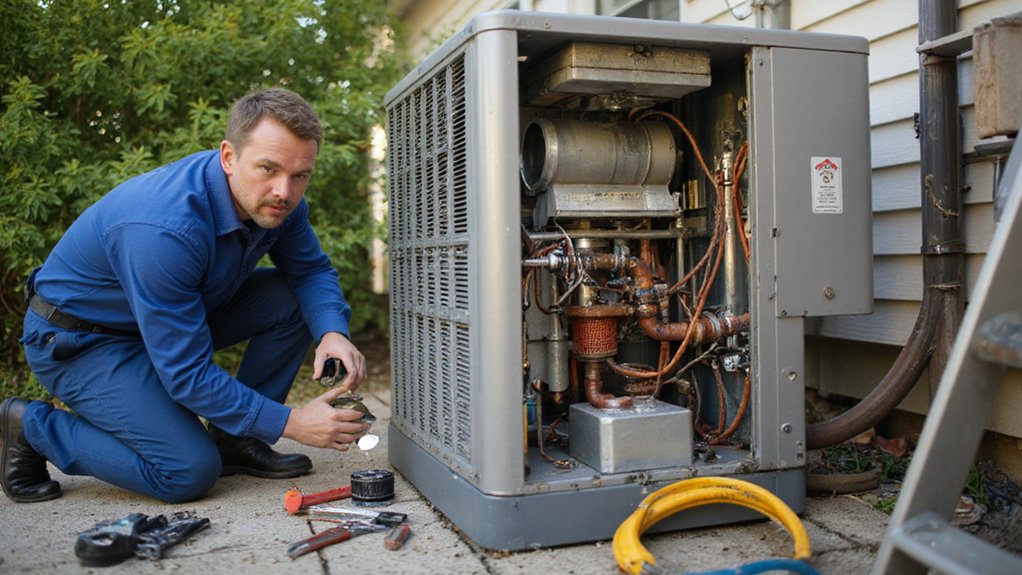
When your air conditioner isn’t working the way it should, it can be hard to know whether you need a simple fix or professional help. Problems like uneven cooling, strange noises, and higher energy bills can point to issues that aren’t easy to fix on your own.
Knowing what to look for can help you decide when it’s time to call an HVAC technician. A small problem can sometimes be handled at home, while other issues need proper testing and repair.
Key Takeaways
- Poor cooling or uneven temperatures may mean your AC needs professional attention, especially when simple fixes don’t help.
- Rattling, hissing, or other unusual sounds can point to mechanical problems or refrigerant leaks.
- An inaccurate thermostat can affect how your system controls the temperature and may need adjustment or replacement.
- A sudden increase in energy bills, without a change in usage, can point to an AC problem.
- Strange or unpleasant smells may be linked to mold, wiring issues, or other problems that should be checked by a professional.
Common AC Problems and Their Solutions
An air conditioner that isn’t cooling properly can make even a normal hot day uncomfortable. Before assuming the entire system has failed, it’s worth looking at some of the common problems that can affect cooling.
A refrigerant leak can make it difficult for the system to cool your home properly. Thermostat problems can also cause temperature control issues, especially when the thermostat isn’t reading the room temperature correctly.
Poor airflow is another common concern. A dirty filter can restrict air movement, while damaged or leaking ductwork can keep cooled air from reaching the rooms where you need it.
A failed compressor is more serious. Since the compressor plays a central role in the cooling cycle, a problem with it can leave the system unable to cool your home.
Electrical faults can also stop an AC from working properly. Wiring, connections, and other electrical components may need to be checked by a trained technician.
The outdoor condenser unit also needs attention. Dirt, leaves, and other debris around the unit can restrict airflow and make the system work harder than it should.
Finding the problem early can help prevent a small issue from turning into a larger repair.
Signs Your AC Needs Professional Repair
Some AC problems are easy to spot. Others develop slowly and may only become noticeable when your comfort or energy bills start to change.
Poor cooling is one of the clearest signs. If certain rooms stay warm while others are comfortable, or the system struggles to reach the temperature on the thermostat, there may be an issue with airflow, refrigerant, or another component.
Listen for unusual sounds too. Rattling, hissing, buzzing, or grinding noises can point to loose parts, mechanical problems, electrical issues, or refrigerant leaks.
A thermostat that gives incorrect readings can also affect the way your AC operates. If the room feels much warmer or cooler than the temperature shown on the thermostat, the thermostat may need attention.
Keep an eye on your energy bills. If your electricity costs rise without a change in how often you use the AC, the system may be working harder than usual because of an underlying problem.
Strange smells are another reason to have the system checked. Musty odors can be linked to moisture or mold, while burning or electrical smells can point to a more urgent issue.
DIY Tips Before Calling a Pro
There are a few simple things you can check before calling an HVAC technician. These steps won’t fix every AC problem, but they can help rule out some common causes.
Start with the air filter. A clogged or dirty filter can reduce airflow and make the system work harder. If the filter is dirty, clean or replace it according to the manufacturer’s instructions.
Next, take a look at the thermostat. Make sure it’s set to the correct mode and temperature. If the temperature reading seems inaccurate, the thermostat may need adjustment or replacement.
Check the area around the outdoor unit as well. Remove leaves, grass, dirt, and other visible debris that may be blocking airflow. Keep enough open space around the unit for air to move freely.
You can also check the circuit breaker if the AC isn’t running at all. If the breaker has tripped, reset it once. If it trips again, don’t keep resetting it. A repeated trip can point to an electrical problem that needs professional attention.
These checks are simple, but they can help you avoid an unnecessary service call when the issue has an easy cause.
How Regular Maintenance Prevents AC Breakdowns
Regular AC maintenance can help catch problems before they lead to a complete breakdown. It also gives you a chance to deal with wear and buildup that can affect how the system operates.
Cleaning or replacing the air filter helps maintain good airflow. A blocked filter can place extra strain on the system and make it harder to cool your home.
Refrigerant levels should also be checked when there are signs of a cooling problem. Low refrigerant can affect cooling performance and may indicate a leak that needs to be located and repaired.
The thermostat should be checked to make sure it is reading the temperature correctly. Poor thermostat readings can cause the system to run too long or not run long enough.
Airflow problems deserve attention as well. Blocked vents, damaged ducts, and other restrictions can make it harder for cooled air to move through your home.
The condensate drain should stay clear so water can drain away properly. A blocked drain can lead to water buildup, leaks, or moisture problems.
Electrical connections can also loosen or wear over time. A technician can inspect these parts during routine service and identify issues that may affect the system.
Checking duct insulation and the condition of vents can also help reduce unwanted cooling loss and keep the system from working harder than necessary.
Finding the Right HVAC Technician for Your Needs
Choosing an HVAC contractor starts with checking their qualifications. Look for appropriate HVAC certifications and make sure the technician is trained to work on your type of AC system
Certifications from organizations such as NATE or EPA can show that a technician has completed relevant training. The exact certification you need may depend on the type of work being performed.
Experience also matters when you’re dealing with an unfamiliar AC problem. Ask how long the technician has been working with systems like yours and whether they have handled the type of repair you need.
Reviews and references can give you more information about previous customers’ experiences. Look for comments about communication, workmanship, pricing, and how problems were handled.
Before work begins, confirm that the technician is properly licensed and insured where required. This can help protect you if something goes wrong during the repair.
It’s also a good idea to ask what the technician plans to inspect before agreeing to a repair. A clear explanation can help you understand what is wrong and why a particular repair is being recommended.
What to Expect During a Professional AC Repair?
A professional AC repair usually starts with an inspection. The technician will look at the system, identify possible causes, and test the parts involved.
You should also expect an explanation of what they find. A good technician should be able to tell you what is wrong, what needs to be repaired, and what the repair is expected to involve.
Diagnostic Assessment Process
A professional AC repair begins with a diagnostic assessment. The goal is to find the actual cause of the problem rather than simply treating the most obvious symptom.
Technicians may use tools such as multimeters and refrigerant gauges to check electrical readings and refrigerant conditions. They may also check system pressure and compare temperature readings at different points in the system.
The inspection can include the compressor, evaporator coil, condenser, thermostat, electrical connections, and ductwork. The parts checked will depend on the symptoms you’re experiencing.
Once the inspection is complete, the technician should explain what they found. You may receive information about the repair needed, parts that need to be replaced, and any other concerns found during the inspection.
A clear diagnosis makes it easier to understand what you’re paying for and why the repair is needed.
Repair Techniques and Solutions
The repair itself will depend on what the technician finds during the inspection.
For a refrigerant leak, the technician may need to locate the leak before adding refrigerant. Electrical problems may require repair or replacement of damaged components. Airflow problems can sometimes be addressed by cleaning components, replacing filters, or repairing ductwork.
Other repairs may involve replacing a faulty thermostat, cleaning coils, or dealing with worn mechanical parts.
Before the work is carried out, ask the technician to explain the repair and the expected cost. This gives you a chance to understand what will be done before you approve the work.
After the repair, the system should be checked to make sure it is operating properly.
Understanding AC Repair Costs
The cost of AC repair can vary quite a bit. The type of problem, the age and model of the unit, the parts required, and local labor rates can all affect the final price.
For example, repairing a refrigerant leak may involve different costs from replacing a compressor. Older systems can also be more expensive to repair when parts are harder to find.
Emergency service can cost more than a standard appointment, especially when the repair is needed outside normal business hours.
Parts availability is another factor. If a specific component isn’t readily available, the repair may take longer or cost more.
Before approving a repair, ask for a clear estimate when possible. Find out whether the estimate covers labor, parts, service fees, and any other charges.
Having this information upfront can make it easier to decide how you want to handle the repair.
Preventative Measures to Extend Your AC’s Lifespan
A few regular habits can help keep your air conditioner running properly and may reduce the chance of unexpected problems.
Start with seasonal maintenance. Check or replace the air filter every one to three months, depending on how often you use the system and the conditions inside your home.
Take a look at the thermostat from time to time and make sure it is reading the temperature correctly. A programmable thermostat can also give you more control over when the system runs.
Keep the outdoor unit clear of leaves, grass, dirt, and other debris. Avoid placing objects directly around the unit, since the condenser needs open space for proper airflow.
An annual professional inspection can also help identify worn parts, drainage problems, electrical concerns, or other issues before they become larger repairs.
Regular attention doesn’t guarantee that an AC system won’t break down, but it can help you spot problems earlier and keep the system in better working condition.
Frequently Asked Questions
How Often Should I Replace My AC Filter?
Most AC filters need to be replaced every one to three months, although the right schedule depends on the filter type, system usage, and conditions inside your home.
Check the filter regularly. If it looks dirty or clogged, replacing it can help restore airflow and reduce strain on the system.
Can I Run My AC While on Vacation?
Yes, you can leave your AC running while you’re away. Many homeowners raise the thermostat rather than turning the system off completely.
Keeping some level of cooling can help manage indoor humidity and reduce the chance of moisture-related problems. A programmable or smart thermostat can make this easier by adjusting the temperature while you’re away and returning it to a more comfortable setting before you get home.
What Is the Lifespan of a Typical Air Conditioner?
A typical air conditioner can last around 15 to 20 years when it receives regular maintenance and is used under normal conditions.
Age isn’t the only thing to consider. Frequent repairs, poor cooling, unusual sounds, and rising operating costs can also indicate that the system is reaching the end of its useful life.
Are There Any Energy-Efficient AC Options Available?
Yes. There are air conditioning systems designed to use less energy while providing the cooling your home needs.
When comparing systems, look at their energy ratings and the type of refrigerant they use. A properly sized and installed system can also affect how much energy your home uses for cooling.
How Do I Know if My AC Warranty Is Still Valid?
Start by checking the purchase date and any warranty documents you received when the AC was installed.
If you don’t have the paperwork, contact the manufacturer or the company that installed the system. Have the model and serial numbers available if possible. They can help confirm whether the warranty is still active and what types of repairs or parts it covers.
Conclusion
Knowing when to call for professional AC repair can help you avoid bigger problems later. Poor cooling, unusual sounds, rising energy bills, strange odors, and repeated system problems are all reasons to have your AC checked.
Simple steps such as replacing a dirty filter, clearing debris around the outdoor unit, and checking the thermostat can sometimes resolve minor problems. When those steps don’t help, or when the issue involves electrical components, refrigerant, or major mechanical parts, professional service is the safer choice.
Regular maintenance can also help you catch problems earlier and keep your AC working properly for longer. Paying attention to changes in cooling, airflow, sounds, and energy use gives you a better chance of dealing with issues before they become expensive repairs.