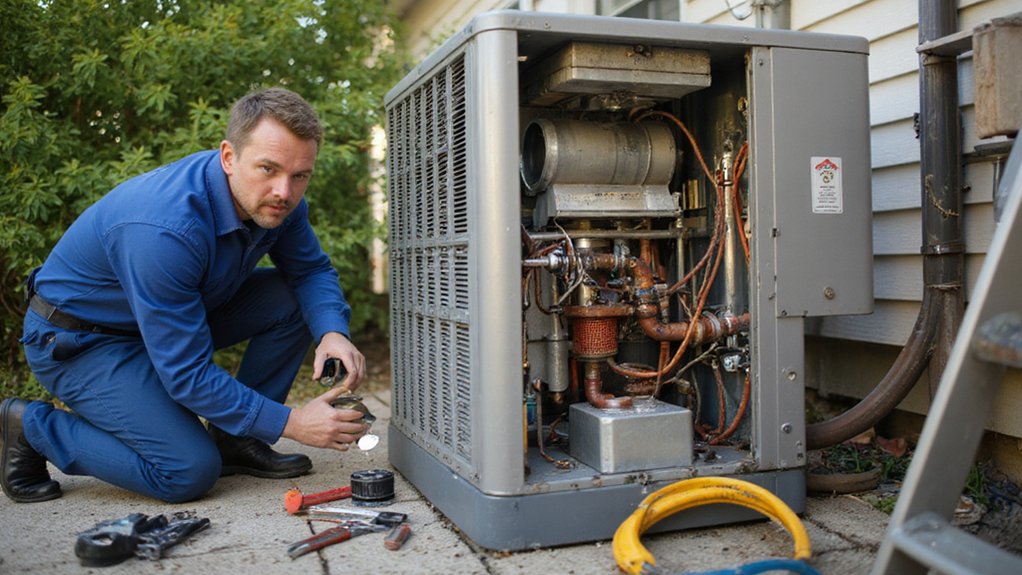
Spot AC performance changes that may increase electricity use, distinguish them from normal summer operation, and know when to book San Antonio HVAC service.
QUICK ANSWER
A higher bill alone does not prove an AC fault. Look for a combination of rising kWh and changed system behavior: weak airflow, poor cooling, unusually long runs in mild weather, frequent starts and stops, ice, new noises, or rooms that no longer cool evenly. Check the filter, thermostat, and clearances safely. Persistent symptoms call for a diagnosis, not guesswork.
A bill increase matters more when it appears with a change in cooling performance.
An air conditioner may use more electricity during a hotter month even when it is working normally. The warning signs are changes in performance that appear alongside higher use. This guide helps homeowners recognize those patterns, make safe basic checks, and decide when an HVAC professional should inspect the system.
1. Your electricity use rose and comfort got worse
Compare kWh and billing days with a similar period. If daily use rose and the system is taking longer to cool, cannot reach the thermostat setting, or leaves rooms warm, an HVAC issue may contribute. Also consider weather, occupancy, thermostat schedules, and other large electric loads.
Note whether the problem is throughout the home or limited to one area. Whole-home weak cooling may point toward equipment or airflow; one room may involve a duct, return, door, sun, or insulation issue. These are clues, not a diagnosis.
A high total with unchanged kWh may be a utility billing question. Contact the utility for account-specific charges before paying for a repair that is not supported by symptoms.
2. The system runs unusually long in mild weather
During extreme heat, extended cooling cycles can be normal. A pattern that persists when outdoor conditions are mild—or a home temperature that keeps rising while the AC runs—deserves attention. Compare to similar days and the system’s prior behavior.
Possible causes include a dirty filter, restricted coil, duct leakage, refrigerant or mechanical fault, thermostat issue, or added home heat load. The technician should evaluate operating conditions and airflow before recommending parts.
Record the set point, indoor temperature, and approximate run time. Avoid repeatedly lowering the set point, which can hide the original symptom without making the equipment cool faster.
3. The unit starts and stops every few minutes
Frequent short runs are different from normal cycling. Short cycling may relate to airflow, thermostat location or settings, refrigerant conditions, electrical or safety controls, or equipment sizing. Repeated starts can affect comfort and add wear, so persistent rapid cycling should be evaluated.
Check the thermostat for a schedule change and make sure the filter is not visibly clogged. Do not bypass a float switch or safety control. If a breaker trips repeatedly, do not keep resetting it.
Weak airflow can come from a dirty filter, blocked return grille, closed vents, dirty blower, coil restriction, duct damage, or motor issue. Start with the filter and visible grilles. Check that furniture is not covering returns and that supplies are not blocked.
Do not close many vents to redirect air. That can disrupt the system’s intended airflow. A high-MERV filter may not be right for every system; follow manufacturer guidance and ask a technician if airflow is already low.
If airflow suddenly dropped, the indoor coil may be icing. Turn cooling off and arrange service. Do not remove the access panel or scrape ice.
5. Ice appears on the indoor coil or refrigerant line
Ice is not a normal sign that the AC is “working extra hard.” Restricted airflow, a blower problem, refrigerant condition, or controls may be involved. Ice blocks heat transfer and can cause water when it melts.
Turn cooling off and let a professional evaluate the system. If the indoor fan can run safely without cooling and the equipment instructions allow it, follow those instructions; otherwise leave the unit off. Protect belongings from meltwater.
Do not pour hot water, use a sharp tool, or ask for a refrigerant top-off without leak diagnosis. The technician should identify why freezing happened.
6. New buzzing, grinding, hissing, or electrical odors
A new sound may come from a fan, motor, loose panel, debris, or electrical part. Hissing can have different sources; it does not prove a refrigerant leak. A burning odor or repeated breaker trip needs prompt attention.
Turn the system off if there is smoke, burning smell, or severe electrical noise. Do not open the outdoor disconnect or service panel. Contact a qualified HVAC technician and describe the sound, when it occurs, and which unit is running.
Routine maintenance may not include repair of a failed component. Confirm what visit is appropriate and ask about diagnostic charges before scheduling.
7. Filters load quickly or drains cause shutdowns
A filter that becomes dirty quickly may be responding to dust, pets, construction, leaks in the return path, or a filter size and fit problem. Check it monthly in heavy-use periods as ENERGY STAR recommends, and use the right filter for the system.
A clogged condensate drain can trigger a safety switch and stop cooling, or lead to water near the indoor unit. Keep the area around the indoor equipment clear and call for service if the drain repeatedly clogs. Do not disable the float switch.
Ask the technician to explain why a filter loads quickly or a drain blocks repeatedly instead of treating each event as unrelated.
8. Your rooms are humid, stuffy, or unevenly cooled
Poor comfort can cause homeowners to run the thermostat lower, raising energy use without fixing the cause. Humidity or room imbalance may relate to airflow, duct layout, sizing, controls, or home air leakage. A temperature reading at one vent cannot tell the full story.
Keep a simple room-by-room note: approximate temperature, time of day, sun exposure, and whether doors are open. A technician can assess airflow delivery and system operation; a building professional may be needed for insulation or envelope work.
Avoid installing portable equipment or closing off rooms without understanding the effect on airflow and humidity. Get the issue evaluated as a whole.
Quick comparison
Warning signs and sensible next steps
What you notice
Possible concern
Safe response
Higher kWh with weaker cooling
A system or building condition may be increasing runtime.
Compare weather and household use; note the comfort change.
Weak airflow or a room that stays warm
Filter, return path, duct, blower, or coil restriction may be involved.
Check the filter and clear grilles; request service if it continues.
Ice, burning odor, repeated breaker trips
Could indicate a fault that needs prompt qualified attention.
Turn the system off when safe and arrange professional service.
Long runs during a heat wave; home stays comfortable
May reflect high outdoor load rather than a failure.
Monitor it and compare behavior during milder conditions.
Safe checks that do not require opening the equipment
Check the thermostat mode and schedule. Inspect the filter and replace it when dirty. Clear furniture from returns and supplies. Keep leaves and storage away from the outdoor unit, following manufacturer clearance.
Compare utility kWh, daily use, and billing days. Note new appliances, occupancy changes, or unusually hot weather. Record system sounds and performance without touching electrical or moving parts.
Call a professional for ice, persistent short cycling, poor cooling, repeated breaker trips, burning odors, water, or a sudden change in airflow.
A qualified technician checks the equipment before identifying the cause.
What professional efficiency service should cover
The technician should connect observations to measurements. Depending on the symptom, the visit may include filter and airflow checks, coil condition, electrical inspection, thermostat controls, condensate safety, and refrigeration-system measurements. Ask what is included in the quoted visit.
For a confirmed fault, request the diagnosis and repair estimate in writing. For a system that is functioning but due for care, compare the maintenance checklist and plan terms. A tune-up can support proper operation but does not guarantee a lower bill.
1Bill changed onlyCompare kWh, days, and charges first.
2Cooling changed tooCheck thermostat, filter, and open grilles.
3Pattern persistsShare observations and schedule a diagnostic.
4Safety symptom appearsStop operation when appropriate and call for service.
The chart helps prioritize action; only an on-site inspection can diagnose equipment.
When to request service
Book service when symptoms persist after safe checks or when comfort has changed. Share the bill dates and kWh change, thermostat setting, system age, symptom timing, and any room differences. Be clear whether you want a repair diagnosis or scheduled maintenance.
If the home is unsafe due to electrical odor, smoke, or a breaker that trips repeatedly, turn the system off if safe and seek professional help. If the system is running normally during a heat wave and maintaining the set point, monitor rather than assume a failure.
You do not need special equipment to document a pattern. For a few hours, write down the thermostat setting, approximate indoor temperature, whether the outdoor unit is running, and which rooms feel warm. Note whether the system seems to run steadily or starts and stops every few minutes. Use a basic thermometer only as a rough clue; vent temperature by itself cannot diagnose refrigerant charge or system efficiency.
Record when the issue occurs. A west-facing room that becomes uncomfortable after afternoon sun may point toward solar gain or duct delivery. If every room warms, the concern may involve the equipment or whole-home heat load. If the issue follows cooking or gatherings, occupancy and indoor heat may be part of the pattern.
Take a picture of a thermostat code or visible ice, but do not remove covers to photograph internal parts. Note any recent filter change, repair, thermostat programming update, renovation, or change in how often exterior doors are opened.
When you call, summarize the timeline in two or three sentences. For example: “The bill’s kWh increased compared with the same period last year; the AC now runs most of the afternoon, and two upstairs rooms stay about four degrees warmer.” A clear, factual summary helps the company schedule the appropriate repair or maintenance visit.
Takeaway: a pattern is more useful than a single bill
Electricity use, weather, billing days, and home habits all influence the bill. A combination of higher kWh and changed system behavior provides a stronger reason to schedule HVAC service than a bill total alone.
Check the filter and thermostat, keep grilles clear, and note what changed. Leave electrical, refrigerant, and internal cleaning work to a qualified technician. Ask for a clear diagnosis before approving repairs.
Use the service page and linked guides to choose the right next step for your AC.
Unexpected energy use that may not be the central AC
The cooling system is a major summer load, but it is not the only equipment that can run for hours. Pool pumps, a dehumidifier, an electric water heater with a leak, a second refrigerator, a freezer in a hot garage, or an EV charging schedule can change daily kWh. If the usage pattern is unusual but indoor comfort is normal, review the timing of other large loads as well.
A thermostat may also control more than a single cooling stage or may be connected to a heat pump with supplemental electric heat. If you have a heat pump and see a sudden usage spike during a period when the home is in cooling mode, tell the technician the system type and any thermostat display labels. Do not switch service settings or disconnect equipment based on an internet suggestion.
If your utility portal provides daily or interval use, compare the times when consumption rose with AC runtime and other appliance schedules. This does not identify the exact appliance in every home, but it can help you describe the issue accurately. Keep the question open until the available evidence points to a cause.
When you contact ASC, focus on observed symptoms and measurements rather than a guessed diagnosis. If an HVAC inspection finds normal operation, that is useful information; it points the next investigation toward utility charges, other loads, ducts, or home conditions.
Frequently asked questions
What are signs an AC is using too much electricity?
A higher kWh reading with longer run times, weak airflow, poor cooling, rapid cycling, ice, or new equipment noises can indicate a performance issue. Weather and home conditions also affect use.
Can a high electric bill happen when my AC is working normally?
Yes. Hotter weather, longer billing periods, thermostat settings, household loads, and utility charges may raise a bill without an HVAC fault.
What is the first thing to check when my AC bill rises?
Compare kWh, billed days, and charges with similar periods. Then check the filter, thermostat schedule, and blocked grilles. Call for service if performance symptoms persist.
Does a dirty filter waste electricity?
A dirty filter can restrict airflow and make the system work harder. Check it monthly during heavy-use periods and follow equipment instructions.
Can a tune-up find wasted energy?
A tune-up can identify some maintenance issues, depending on its checklist. It cannot guarantee that every cause of high use will be found or that the bill will fall.
Want an HVAC professional to check the system?
Tell ASC what changed, how the system is running, and what you found when comparing your bill. We can discuss the appropriate next step for your San Antonio property.
Ron Carter has more than 20 years of hands-on HVAC experience as a technician, instructor, sales manager, and business owner. He leads ASC Heating & Air, a family-owned company serving San Antonio. Ron is a licensed Air Conditioning and Refrigeration Contractor in Texas (License No. TACLB00031551E). His articles share practical guidance to help homeowners make informed decisions about heating, cooling, and preventative maintenance.