Learn when long AC run times are normal in San Antonio heat, what can cause a system to run constantly, and when to book an HVAC diagnosis.
QUICK ANSWER
An air conditioner may run for long stretches during very hot weather. If it cannot reach the thermostat setting, runs constantly in mild weather, or has suddenly changed its pattern, check the filter and thermostat and look for blocked grilles. Persistent long runs can come from airflow, coil, duct, refrigerant, control, equipment-size, or home-load problems. A technician should test the system before recommending repair.
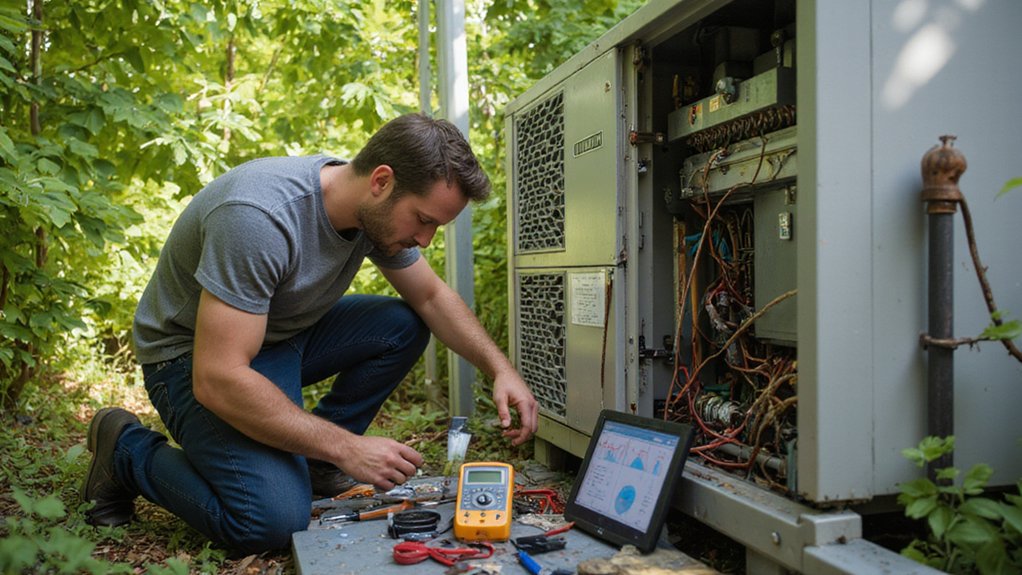
A technician can compare system operation with indoor comfort and outdoor conditions.
“My AC never shuts off” can describe normal operation on a punishingly hot afternoon—or a system that is struggling. For San Antonio homeowners, context matters: outdoor temperature, humidity, sun exposure, indoor set point, and how quickly the home cools. Use these seven possibilities to understand the pattern without trying risky repairs yourself.
1. Extreme outdoor heat is increasing the cooling load
When outdoor temperatures climb, heat enters through the roof, walls, windows, and air leaks faster. The air conditioner may need longer cycles to keep pace. A system that runs more during a heat wave but maintains indoor comfort may be operating normally.
Compare the behavior on similar-weather days. If the home used to reach the same setting under similar conditions but now falls behind, record the thermostat setting, indoor temperature, and time of day. That change can help a technician separate a normal peak-load run from reduced system performance.
Curtains or shades on sunny windows, keeping exterior doors closed, and avoiding oven use during the hottest part of the day can reduce indoor heat gain. These steps will not repair a mechanical problem, but they can reduce load.
2. The thermostat setting or schedule changed
Check that the thermostat is set to Cool and that the target temperature is not lower than intended. A programmed schedule, hold setting, vacation mode, app control, or low battery can produce a surprise set point. If the thermostat is in direct sun, near a supply vent, or beside a warm appliance, it may read a temperature that does not represent the rest of the home.
Use a steady, comfortable setting while observing the system. Large frequent adjustments can make it harder to tell whether the equipment is performing consistently. If a thermostat display is blank, shows an error, or behaves inconsistently, consult its manual or ask for service.
If the thermostat says the target is met but the unit continues to run, or the indoor temperature does not match the displayed temperature, note that for the technician. Do not bypass thermostat wiring.
Check the system safely from outside; leave internal testing to a qualified technician.
3. Airflow is restricted
A dirty filter is a common safe first check. Inspect it and replace or clean according to the manufacturer’s directions. ENERGY STAR advises checking filters monthly during heavy-use periods. Make sure the correct size is installed and that an extra filter has not been left in a second slot.
Also look for a blocked return grille or supply vent. Furniture, rugs, dust buildup, closed dampers, or too many closed vents can reduce airflow. The indoor coil can become dirty or iced, and a blower problem can lower delivered airflow even with a clean filter.
If you see ice on the indoor coil or refrigerant line, turn cooling off and arrange qualified help. Running an iced system can worsen the condition. Do not scrape ice or open the indoor cabinet.
4. A coil is dirty or heat transfer is impaired
The outdoor condenser releases heat. Leaves, lint, cottonwood, grass clippings, and dirt can restrict air passing through the coil. The indoor evaporator absorbs heat from home air; dust and airflow issues can interfere with that process. The result may be longer run times or weaker cooling.
From a safe distance, remove loose debris around the outdoor unit and keep the manufacturer’s clearance. Do not remove the fan top, bend fins, apply a chemical cleaner, or spray into the electrical section. A technician can inspect whether cleaning is needed and select a method that suits the coil.
Ask what was dirty and how cleaning affected measured operation. “Cleaned” should describe a task performed, not substitute for a diagnosis if the system still cannot cool.
5. Duct leaks or room-by-room imbalance are losing cooled air
A system can run a long time if conditioned air leaks from ducts into a hot attic or crawlspace, or if return airflow is inadequate. A loose connection, crushed flex duct, poor insulation, or closed damper may leave a distant room warm even though air near the unit feels cool.
Notice whether the problem affects one room, one floor, or the entire house. A warm upstairs room in the afternoon may involve solar gain and attic heat as well as HVAC equipment. Ask whether a duct inspection or airflow evaluation is appropriate when basic system checks are normal.
Do not seal ducts with ordinary cloth-backed tape or adjust hidden dampers without knowing the system layout. A qualified contractor can identify leakage and explain any repair scope.
6. Refrigerant, electrical, or mechanical trouble is reducing capacity
A refrigerant leak, metering-device issue, weak capacitor, failing fan motor, compressor trouble, or other fault may cause low cooling capacity or unusual runtime. Several different problems can produce similar symptoms. Low refrigerant should prompt leak diagnosis and a repair plan; refrigerant is not a routine fuel that an AC simply “uses up.”
Watch for clues such as warm air, hissing, ice, buzzing, a fan that does not start, repeated cycling, burning odor, or a breaker that trips. These are reasons for professional evaluation. Do not open electrical compartments, handle refrigerant, or repeatedly reset a tripping breaker.
Ask the technician what measurements support the diagnosis and request a written estimate. A proper explanation should connect the measured condition to the symptom and recommended work.
7. The system or home is not matched to the cooling load
A system that is too small, poorly installed, or affected by high home heat gain can struggle to maintain temperature. An oversized system often has a different problem: it may cool the thermostat area quickly and shut off before longer areas or humidity are managed. System size and layout should be evaluated with the home, not guessed from square footage alone.
A new roof, insulation change, addition, window replacement, air sealing, or major room-use change can affect the load. If the equipment is old or has repeated failures, ask for both a repair diagnosis and a properly supported replacement proposal before making a decision.
The best next step may be mechanical repair, duct work, thermostat changes, or building improvements. A bill or run-time symptom alone does not identify which one.
Quick comparison
Constant run time: normal conditions or a warning sign?
Pattern
What it can mean
Next step
Long run during extreme heat; home approaches set point
The system may be meeting a high cooling load.
Keep vents open and monitor comfort; avoid judging by runtime alone.
Long runs continue in mild weather or temperature rises
Cooling capacity, airflow, ducts, controls, or equipment may need review.
Check filter and thermostat, then request a diagnostic if the pattern persists.
Starts and stops every few minutes
Short cycling has several possible causes.
Arrange diagnosis; do not repeatedly reset breakers or bypass controls.
How to tell a long normal run from a problem
Ask two questions: is the home reaching the set point, and did operation change under similar weather? If comfort is stable during extreme heat, extended operation may be expected. If the indoor temperature rises despite a low set point, the system runs for hours during mild conditions, or the pattern changed suddenly, arrange an evaluation.
Also distinguish continuous blower operation from continuous cooling. Some thermostats run the indoor fan independently. Check whether the outdoor unit is operating and review the thermostat fan setting, but avoid touching equipment wiring.
The Department of Energy and ENERGY STAR both recommend regular system maintenance, but maintenance does not guarantee that a system can handle every heat load. The ENERGY STAR checklist provides examples of items a professional visit may cover.
Visual guide
A quick chart for diagnosing long AC runs
1Check the weatherWas the outdoor load unusually high?
2Check the set pointDid the schedule or thermostat setting change?
3Check comfortCan rooms approach the set temperature?
4Check symptomsWeak airflow, ice, or frequent starts need attention.
Use these clues to organize the service conversation. They are not a remote diagnosis.
What to note before a service appointment
Write down the outdoor conditions, indoor temperature, thermostat set point, when the long run began, and which rooms are warm. Take a photo of any thermostat code or visible ice. Note filter size and approximate age, plus recent changes such as a new schedule, construction, or duct work.
Tell the company whether the system is keeping up, whether airflow changed, and whether there are noises, odors, water, or breaker trips. This helps the dispatcher distinguish an urgent no-cooling issue from a maintenance question.
What “constant running” can mean on different systems
A conventional single-stage central air conditioner commonly cycles on and off as the thermostat calls for cooling. A variable-speed or inverter system may adjust its output and run at a lower level for longer periods. A heat pump may also operate for longer stretches than a homeowner expects. The sound or duration alone does not tell you whether the equipment is using too much energy.
Find the model number on the equipment label from a safe location, or look for the paperwork from installation. If you know the system is variable capacity, tell the service company; its normal operation may differ from an older single-stage unit. The technician can compare the actual controls and operation with the manufacturer’s specifications.
Also check whether the indoor fan is set to On instead of Auto. The blower may continue moving air even after the compressor stops. Some owners prefer continuous fan circulation, but it uses electricity and can change how air feels at the vents. Do not change advanced installer settings; note the existing setting and ask whether it fits the system.
The useful question is whether the home stays comfortable and whether the observed pattern matches the equipment type and outdoor conditions. If comfort has declined, the unit is noisy, starts and stops rapidly, ices up, or runs for hours in mild weather, seek a diagnosis. Do not assume that a new high-efficiency system is defective simply because it runs longer than a previous unit.
What not to do
Do not lower the thermostat far below your desired temperature to force faster cooling. Do not close many vents, install a restrictive filter without checking specifications, or keep operating through icing. Do not repeatedly reset a breaker that trips.
Do not let anyone add refrigerant without explaining why the charge is low and how leaks are handled. Do not approve expensive work without a clear diagnosis, estimate, and warranty terms.
If you smell burning, hear severe electrical noise, see smoke, or have repeated breaker trips, turn the system off if safe and contact a qualified professional.
Frequently asked questions
Is it normal for an HVAC system to run constantly in summer?
It can run for long periods during extreme heat if it is maintaining comfort. A system that cannot reach its set point or runs constantly in mild weather should be checked.
Why does my AC run all day but not cool the house?
Possible causes include restricted airflow, dirty coils, duct leakage, refrigerant or mechanical faults, thermostat problems, or unusually high home heat gain. Testing is needed to identify the cause.
Should I turn off an AC that is running constantly?
If the home remains comfortable and the system is running steadily during extreme heat, it may be normal. Turn it off and arrange service if it is icing, repeatedly tripping a breaker, making a burning smell, or causing water damage.
Can a dirty filter cause long AC run times?
Yes. A dirty filter can restrict airflow and make the system work harder. Check monthly during heavy-use months and replace it as needed with the specified filter.
When should I call an HVAC technician?
Call if cooling has changed, the home cannot reach the target, airflow is weak, the unit short-cycles, ice appears, or the system has unusual noise, odor, leaks, or breaker trips.
Want an HVAC professional to check the system?
Tell ASC what changed, how the system is running, and what you found when comparing your bill. We can discuss the appropriate next step for your San Antonio property.
Ron Carter has more than 20 years of hands-on HVAC experience as a technician, instructor, sales manager, and business owner. He leads ASC Heating & Air, a family-owned company serving San Antonio. Ron is a licensed Air Conditioning and Refrigeration Contractor in Texas (License No. TACLB00031551E). His articles share practical guidance to help homeowners make informed decisions about heating, cooling, and preventative maintenance.