

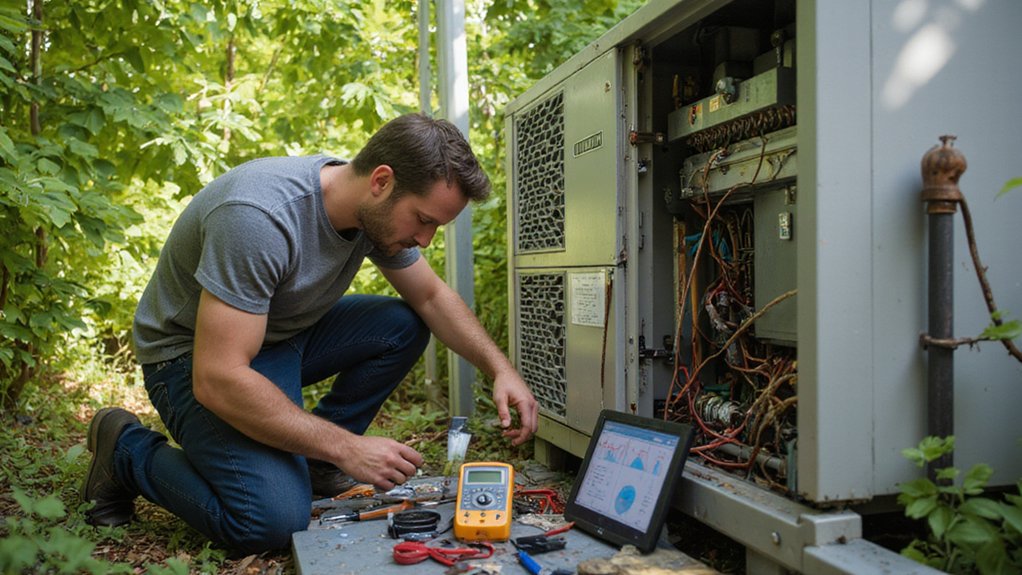
When your air conditioning system starts acting differently, finding the cause isn’t always straightforward. A unit may stop cooling properly, make unusual sounds, or develop airflow problems for several different reasons.
Professional technicians use a step-by-step inspection process to narrow down the cause. They may begin with a visual check before testing electrical connections, refrigerant levels, airflow, and temperatures. The information gathered during these checks helps them determine what is happening inside the system.
Knowing what technicians look for can also help you recognize when a problem needs professional attention.
Key Takeaways
- Technicians visually inspect AC systems for leaks, damaged components, and airflow problems.
- Electrical tests help check voltage, continuity, and the condition of electrical components.
- Refrigerant checks can reveal leaks or other problems affecting cooling performance.
- Airflow and temperature measurements help identify problems that may not be visible during a basic inspection.
- Sharing the system’s history and symptoms with a technician can help narrow down the cause of an AC problem.
Signs Your AC Has Problems and Needs Repair
Air conditioning problems don’t always start with a complete system failure. In many cases, the system gives you warning signs before a major issue develops.
One common sign is poor cooling. If your AC runs for long periods but doesn’t bring the room down to the desired temperature, something may be affecting its performance.
Unusual sounds are another reason to pay attention. Banging, rattling, buzzing, or hissing can point to mechanical, electrical, or airflow-related problems.
Weak airflow can also indicate trouble. A clogged filter, blocked ductwork, or another restriction may prevent enough air from moving through the system.
Refrigerant problems can affect cooling as well. Ice around the evaporator coil or noticeably reduced cooling may warrant a professional inspection.
Thermostat problems can cause the system to cycle too often or fail to maintain the selected temperature. Bad odors should also be investigated, particularly when they continue after basic cleaning or filter replacement.
If the system stops cooling completely, produces a burning smell, or develops another serious problem, emergency AC repair may be needed.
Spotting these signs early gives you a better chance of addressing the issue before it develops into a larger AC repair.
Understanding Technician Inspections
A professional AC inspection usually starts with a visual assessment. The technician looks over the system for visible damage, leaks, loose components, debris, and signs of wear.
They may then move on to electrical testing. Checking connections, voltage, and continuity can help determine whether electrical components are receiving and delivering power as expected.
Refrigerant levels may also be checked when cooling performance suggests a possible refrigerant-related issue. The technician can use readings and other observations to determine whether the system’s charge appears appropriate.
Airflow and temperature readings provide more information about how the system is operating. These measurements can help identify problems that aren’t obvious from a visual inspection alone.
Your input can make the inspection more useful. Tell the technician when you first noticed the problem, what changes you’ve observed, and whether the issue happens all the time or only under certain conditions.
That history gives the technician more context when evaluating the system.
What Tools AC Technicians Use to Diagnose Problems
AC technicians use specialized equipment to gather information about the condition of a cooling system.
Pressure gauges can be used to check refrigerant pressure and help assess system operation. These readings can give technicians useful information when investigating possible refrigerant problems.
A multimeter is used to test electrical components. It can help technicians check voltage, continuity, and other electrical measurements during the inspection.
Temperature probes allow technicians to take precise temperature readings at different points in the system. Comparing these readings can help narrow down cooling or airflow problems.
Airflow measurement tools can also show whether the system is moving air properly. Poor airflow may be linked to filters, ductwork, blower components, or other restrictions.
Rather than relying on one measurement, technicians typically look at several readings and observations together. This helps them build a clearer picture of what may be causing the problem.
Effective Troubleshooting for Common AC Problems
Some basic troubleshooting steps can help you understand what’s happening before calling a technician.
If the temperature in your home keeps changing, check the thermostat settings first. Make sure it is set correctly and appears to be responding to changes.
A dirty air filter is another simple thing to check. When a filter becomes clogged, airflow can be restricted and cooling performance may suffer.
Unusual rattling or buzzing sounds may point to loose components, debris, or electrical problems. If the sound continues, a professional inspection can help identify the source.
Refrigerant-related problems can also affect cooling. Ice buildup around the evaporator coil may be one sign that something isn’t working as it should.
Homeowners can handle simple checks, but not every AC problem can be safely diagnosed without specialized equipment. If basic troubleshooting doesn’t resolve the issue, a professional technician can test the system and identify the underlying cause.
The Importance of Regular AC Maintenance
Regular AC maintenance can help keep a cooling system working properly and may reduce the need for unexpected HVAC repairs.
During seasonal maintenance, important components can be inspected and cleaned. Filters, coils, electrical connections, refrigerant levels, and other parts may be checked depending on the system and its condition.
Replacing or cleaning the air filter helps maintain airflow. Dirty filters can make the system work harder and may affect indoor air quality.
Coils also need attention because dirt and debris can interfere with heat transfer. Keeping the system clean can help it operate as intended.
Refrigerant checks can identify possible problems that affect cooling. If refrigerant levels are low because of a leak, simply adding refrigerant may not address the underlying issue. The cause needs to be identified.
Moving components may also need inspection and lubrication where appropriate. Regular checks can help identify worn parts before they contribute to a larger breakdown.
Skipping maintenance may lead to reduced cooling, higher energy use, and unexpected repairs. A routine inspection gives you a chance to address smaller concerns before they become more disruptive.
Frequently Asked Questions
How Much Does It Cost to Hire a Professional Technician?
The cost of hiring a professional technician can vary based on the problem, the system, the service required, and local rates. The original estimate of $75 to $150 per hour may not apply to every location or service provider.
Before approving repair work, ask for a clear estimate that explains the expected work and associated costs.
Can I Diagnose AC Problems Myself?
You can perform a few basic checks yourself. Start by looking at the thermostat, checking the air filter, making sure vents aren’t blocked, and looking for obvious signs such as unusual noises or ice buildup.
More involved electrical, refrigerant, or mechanical problems require specialized tools and knowledge. If the basic checks don’t solve the problem, a professional inspection can help identify the cause.
How Long Does an AC Inspection Typically Take?
An AC inspection can take different amounts of time depending on the system and the problem being investigated. A straightforward inspection may be completed relatively quickly, while a system with multiple symptoms may require additional testing.
The technician may need to inspect electrical components, airflow, temperatures, refrigerant-related readings, and other parts before reaching a diagnosis.
What Qualifications Should I Look for in a Technician?
Look for a technician with appropriate training, certifications, and experience working with air conditioning systems. You can also ask about licensing requirements in your area.
Before hiring someone, ask about their experience with your type of AC system and whether they provide a written estimate for recommended work.
How Often Should I Have My AC Professionally Inspected?
An annual professional inspection is a common maintenance schedule for many residential AC systems. The right frequency can vary depending on the system, how often it runs, its age, and its condition.
Regular inspections can help identify worn components, airflow problems, and other concerns before they lead to a larger breakdown.
Conclusion
Diagnosing air conditioning problems takes more than looking at whether the unit is blowing cold air. Professional technicians use visual inspections, electrical tests, temperature readings, airflow measurements, and other diagnostic tools to narrow down the cause.
Homeowners can still handle a few simple checks, such as inspecting the filter, checking thermostat settings, and making sure vents are clear. When the problem involves electrical components, refrigerant, or internal mechanical parts, professional testing is the safer approach.
Regular AC maintenance can also help identify developing problems and keep the system in good working condition. Paying attention to changes in cooling, airflow, sounds, and energy use gives you a better chance of dealing with issues before they become larger repairs.