

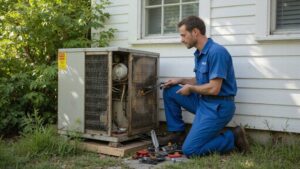
When an older air conditioning system starts showing signs of wear, finding the right repair service can make a big difference. Older units can have different repair needs than newer systems, especially when replacement parts are harder to find.
You’ll want a technician who understands older equipment, can identify the source of a problem, and knows where to find the right parts when needed. A careful inspection can also help you avoid paying for repairs that your system may not actually need.
So, what should you look for when choosing an AC repair service for an older unit? A few practical factors can help you make a sound choice.
Key Takeaways
- Look for technicians who have experience working on older air conditioning models.
- Read customer reviews to learn about other homeowners’ experiences.
- Ask about warranties and guarantees for both parts and labor.
- Make sure the technician can source parts for older or discontinued systems.
- Arrange professional inspections each year to spot developing problems early.
- Compare repair costs with replacement costs when an older unit needs major work.
Key Signs Your Aging Air Conditioner Needs Repair
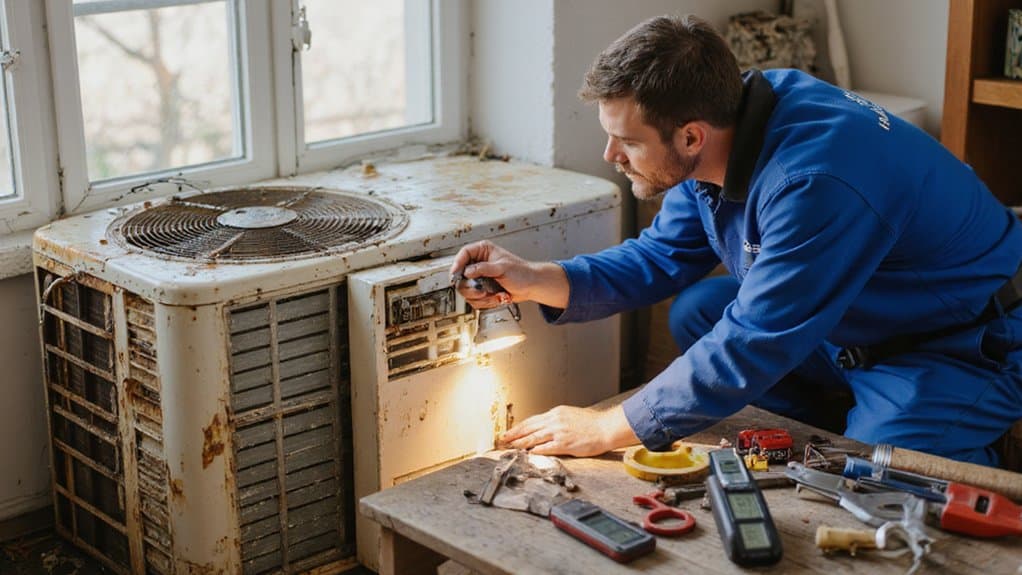
As an air conditioner gets older, small changes in how it runs can point to a developing problem. Paying attention to these signs can help you deal with an issue before it turns into a larger repair.
One common warning sign is a drop in cooling performance. If your home doesn’t feel as cool as it used to, even when the thermostat is set to the same temperature, the system may be having trouble.
Listen for unusual noises, too. Grinding, squealing, rattling, or other sounds that weren’t there before can point to worn components or a mechanical problem.
Frequent cycling is another sign to watch. If the AC keeps turning on and off more often than usual, something may be affecting how the system operates.
Higher energy bills can also provide a clue. An aging unit that has to work harder to cool your home may use more electricity than it once did.
These signs don’t always mean that a major repair is needed. A professional inspection can help determine what is actually happening and whether a repair is worthwhile.
Next Steps After Identifying AC Issues
Once you’ve noticed a problem with your air conditioner, don’t ignore it and hope it goes away. Start by having the system checked so the cause can be identified.
A diagnostic assessment can help determine whether the problem is related to a worn component, airflow, refrigerant, electrical parts, or another part of the system. This gives you a clearer idea of what needs to be repaired.
If you’re not trained to work on air conditioning equipment, it’s safer to leave testing and repairs to a qualified technician. Older systems can have components that require specific handling, and guessing at the cause can sometimes lead to more damage.
After the problem has been identified, take care of routine maintenance as well. Clean or replace the filter when needed, keep the outdoor condenser free from leaves and other debris, and have the system checked regularly.
Small maintenance tasks won’t prevent every repair, but they can help an older unit continue operating properly.
How to Choose a Reliable AC Repair Service for Older Units
Finding an AC repair company for an older unit takes a little more thought than simply choosing the first service you see.
Pay close attention to the technician’s experience with older equipment. Ask whether they have worked on your brand or model before and whether they regularly handle systems that are no longer in production.
It’s also worth asking about warranties, guarantees, and parts. These details can matter when you’re spending money on an older system.
Experience With Older Units
Older air conditioners can present repair challenges that aren’t as common with newer models. Some components may be discontinued, while older designs may require a technician who is familiar with how the equipment was built.
Ask the repair company about its experience with older systems before scheduling the work. A technician who has worked on similar units may be more familiar with common faults and the parts needed for those repairs.
You can also ask whether they can recommend ways to keep an older system running properly. Simple maintenance advice may help reduce unnecessary wear between service visits.
If the company can provide examples of previous work on older air conditioners, that can give you a better idea of whether they are suited to your system.
Warranty And Guarantee Policies
Before approving a repair, ask what protection comes with the work.
Find out whether the company offers a warranty on replacement parts and labor. The length and terms can vary, so it’s worth getting the details in writing.
A warranty can be useful if a repaired component develops a problem shortly after the service. You should also ask whether there are conditions that could cancel the warranty.
Don’t be afraid to ask questions about the guarantee. A professional repair company should be able to explain what is covered without making the terms difficult to understand.
Knowing these details before the repair begins can help you avoid confusion later.
Availability Of Parts
Parts can be one of the biggest concerns when repairing an older AC unit.
Some older systems use obsolete components that are no longer produced. Others may require parts that are still available but harder to locate.
Before hiring a technician, ask whether they can source the components your system needs. They may have access to suppliers that carry older parts or may know which compatible replacements are available.
It’s also worth asking how long a repair could take if a part needs to be ordered. A simple repair can take longer when the required component isn’t readily available.
Customer reviews can provide another useful clue. Look for comments from people who had older systems repaired, especially if they mention parts availability and how the company handled the repair.
Repair Costs for Older AC Units
Repair costs for an older AC system can vary quite a bit. The price depends on the problem, the age and model of the equipment, the parts required, and the amount of labor involved.
Knowing what can affect the price can help you plan for the repair and compare your options.
Average Repair Expenses
Older AC repairs can range from around $150 to $1,200, depending on the type of problem and the work required.
Minor repairs may cost much less than major component replacements. Compressor problems, refrigerant leaks, and electrical faults can all have different price ranges.
It’s also worth looking at how often your older system needs repairs. One repair may make sense if the rest of the system is in reasonable condition. Repeated service calls can tell a different story.
If you’ve already paid for several repairs in a short period, ask the technician about the expected condition of the rest of the system. A clear estimate can help you compare continued repair costs with the price of replacing the unit.
Factors Influencing Costs
The age and model of your AC unit can affect the final repair bill. Older systems may need specialized parts, and those components can sometimes be more difficult or expensive to obtain.
The type of repair matters, too. A straightforward component replacement may require less labor than a repair involving several parts or an older installation.
Energy use can also be a concern. An aging unit that consumes more electricity may cost more to operate even after a repair.
Regular service can help reduce some avoidable problems. Keeping filters clean, maintaining proper airflow, and having the system inspected can help you spot worn components before they cause a complete breakdown.
Ask for a written estimate before approving major work. This gives you a chance to understand the cost and decide whether repairing the unit makes sense.
Why Regular Maintenance Is Crucial for Aging AC Units
An older air conditioner may continue to cool your home, but that doesn’t mean it should be left unchecked.
Regular maintenance gives a technician a chance to look for worn components, restricted airflow, dirty coils, refrigerant concerns, and other issues that can affect the way the system runs.
Preventive care can also help you spot problems while they’re still relatively manageable. Waiting until an older unit stops working completely may leave you dealing with an urgent repair.
Simple maintenance matters at home, too. Check the filter regularly and replace it when needed. Keep the outdoor unit clear of leaves, dirt, and other debris.
A professional inspection at least once a year can provide a more detailed check of the equipment. For an older system, regular inspections can be especially useful because components naturally wear over time.
Choosing Between Repair and Replacement for Your AC
At some point, every older air conditioner reaches a stage where you need to decide whether to keep repairing it or replace it.
Age alone doesn’t always answer the question. Look at the condition of the system, how often it needs repairs, and how much those repairs are costing.
If an AC unit is more than ten years old and needs frequent repairs, replacement may be worth considering. Newer systems can also use less energy, which may reduce electricity costs over time.
The condition of the existing equipment matters just as much. If the unit struggles to maintain the temperature in your home or needs increasingly expensive repairs, continued repair may not make financial sense.
One useful way to compare your choices is to look at the repair estimate alongside the cost of a new system. If a repair costs less than about half the price of replacement and the rest of the unit is in decent condition, repairing it may be reasonable.
If your older system is becoming expensive to maintain, you may also want to compare the costs with heat pump repair before deciding what makes sense for your home.
For a system with several major problems, replacement may be the more practical choice.
A qualified technician can explain the condition of your current unit and help you understand what you can reasonably expect from it.
If replacement makes more sense than another major repair, heat pump installation is another option worth discussing with a qualified HVAC technician.
Questions to Ask Your AC Repair Technician Before Hiring
Before hiring an AC repair technician, ask a few direct questions about their experience and the work they plan to do.
Start by asking about their qualifications, certifications, and experience with older air conditioning systems. If your unit is discontinued or several years old, ask whether they’ve worked on similar models.
Ask how they plan to diagnose the problem. A technician should be able to explain what they found and why a particular repair is being recommended.
It’s also worth asking which parts will be used. Find out whether the part is original, a compatible replacement, or a refurbished component.
Don’t forget to ask about the cost. Request an estimate that separates parts and labor when possible.
Warranty coverage is another useful question. Find out how long the repair and replacement parts are covered and what the warranty includes.
Finally, check customer reviews and ask for references if they are available. Feedback from previous customers can help you get a better sense of how the company handles repairs, communication, and follow-up service.
Frequently Asked Questions
How Long Can I Expect My Old AC Unit to Last?
An older AC unit may last around 10 to 15 years, although the actual lifespan depends on the equipment, usage, maintenance, and operating conditions.
Regular service can help keep the system running properly as it ages. Cleaning filters, checking the system, and addressing problems when they appear can also help prevent avoidable wear.
Are Older Air Conditioning Systems More Energy-Efficient?
Older air conditioning systems are generally less energy-efficient than newer models. Technology and equipment standards have changed over time, and newer systems may use less electricity to provide the same level of cooling.
If your energy bills have increased and your AC is also struggling to cool the home, it may be worth comparing repair costs with the potential operating costs of a newer system.
What Are Common Issues With Older AC Units?
Common problems include reduced cooling, refrigerant leaks, electrical faults, worn components, restricted airflow, and unusual noises.
Routine maintenance can help identify some of these issues early. Checking filters, cleaning coils, and making sure air can move freely through the system are useful maintenance steps.
Can I Repair My AC Myself, or Should I Hire a Pro?
Simple tasks such as changing the air filter or clearing debris around the outdoor unit are usually manageable for homeowners.
Repairs involving electrical components, refrigerant, compressors, or other internal parts should be handled by a qualified technician. Professional testing can also help identify the actual cause instead of treating only the visible symptom.
How Often Should I Get My Older AC Serviced?
An older air conditioner should generally be inspected at least once a year. Regular service gives a technician a chance to check the condition of the system and spot issues that may not be obvious during normal use.
Between service visits, keep the filter clean, maintain clear airflow, and watch for changes in cooling, noise, cycling, or energy use.
Conclusion
Choosing an AC repair service for an older system requires a little more care. Look for technicians who understand older equipment, can diagnose problems properly, and know how to find parts when standard suppliers no longer carry them.
Ask about repair costs, warranties, parts, and the technician’s experience before approving the work. Customer reviews can also help you understand what others have experienced.
Regular maintenance remains useful as your system gets older. Annual inspections and timely repairs can help you get more use from the equipment while giving you a clearer picture of when replacement may make more sense.
When repair costs start adding up, compare the condition and operating costs of the existing unit with the price of a new system. That comparison can help you make a practical decision for your home and budget.