

Quick answer: A musty smell near an air vent can come from moisture or odor sources in the HVAC system, ductwork, drain components, or nearby building materials. The odor alone cannot confirm mold. Notice when it happens, look for visible water without opening equipment, and arrange an inspection if it returns, grows stronger, or appears with poor cooling or drainage problems. Correcting moisture is more important than masking the smell.
Why does the odor show up when the AC turns on?
Air movement can carry an odor from a return grille, coil area, drain pan, duct, or nearby room into the space. The smell may be strongest at startup because the fan begins moving air across the source. It can also fade as air circulates, then return the next time the system runs. That pattern is useful to report, but it does not identify the source on its own.
Air conditioners remove heat and condense moisture from indoor air. Water should collect in the condensate pan and leave through the drain. If the drain is obstructed, the pan has standing water, or insulation and nearby materials stay damp, odor may develop. Condensation may also occur on poorly insulated ducts in hot areas. Other sources such as a damp wall, plumbing leak, or wet carpet may be near a vent without being part of the HVAC system.
Common causes to consider
A drain or condensate pan issue
The indoor coil produces water during cooling. A clogged or slow drain, a damaged pan, or a safety switch that has activated can cause water to collect or leak. Water near HVAC equipment deserves prompt attention, especially if it is close to electrical components. Do not reach into the cabinet or bypass a float switch.
Moisture on or near the coil and air handler
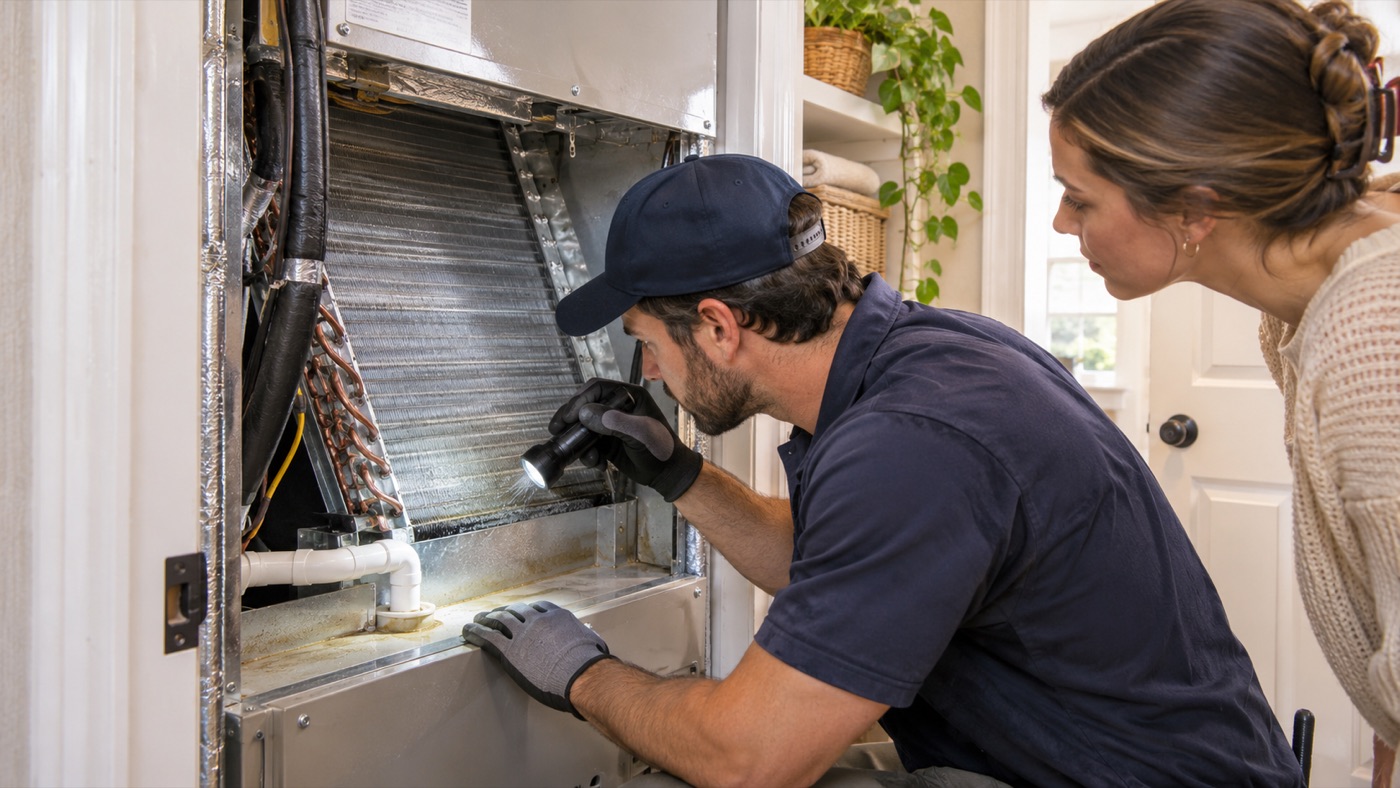
The coil and plenum operate in a cold, damp environment during cooling. If dirt, standing water, or another moisture condition remains, it may contribute to odor. Cleaning a component without correcting the source of moisture may allow the condition to return. A technician can inspect the relevant HVAC surfaces and drainage.
Condensation on ductwork
When a cold duct surface meets warm, humid air, condensation can form if the surface is below the air’s dew point. This can occur when insulation is damaged, missing, or not suited to the location. Look for visible exterior sweating or staining from a safe distance, especially in an attic or closet; do not climb into an unsafe space or disturb insulation.
Duct leakage or nearby building material
A return-side leak may pull odor from an attic, closet, garage, or wall cavity. A supply-side duct may have moisture or contamination within it. A musty room may also have a building leak unrelated to the AC. A professional inspection can help separate system conditions from building-envelope or plumbing concerns.
Mold may be possible, but smell is not proof
Moisture can support biological growth, including mold. However, smell alone cannot confirm that mold is present or identify its type or location. EPA notes that even a substance that looks like mold may require expert assessment for confirmation. If you see suspected growth on building materials or need sampling or remediation, contact a qualified mold or building professional. ASC Heating & Air provides HVAC-related services, not medical diagnosis or a claim of mold testing/remediation.
What to do when you notice a musty vent odor
| Observation | What it may point to | Recommended response |
|---|---|---|
| Odor occurs only while AC runs | Air movement may be carrying odor from HVAC or nearby area | Note which vents and how quickly it starts; schedule inspection if it repeats |
| Musty smell remains when system is off | Nearby room, plumbing, carpet, wall, or stored item may be source | Check visible areas for dampness and investigate building moisture |
| Water near air handler | Drain, pan, or another leak may be involved | Turn off the system if water threatens equipment; arrange service promptly |
| Sweating duct or wet insulation | Condensation or insulation problem may exist | Ask a professional to assess insulation and moisture source |
| Visible mold-like material | Could be mold or another substance | Avoid disturbing it; consult an appropriate qualified specialist |
The location and timing help more than a broad description of “bad air.” Record whether the odor is at one supply register, at the return, throughout the home, or only in a specific room. Note whether it appears after rain, after the AC has been off, or when humidity is high. Photos of visible water or staining can be useful, but do not open an HVAC cabinet to take them.
Safe checks and what to avoid
- Check for a wet spot, water stain, or visible condensation around accessible equipment and nearby ceilings.
- Confirm the air filter is installed correctly and is not heavily loaded.
- Keep the area around the indoor unit accessible so a technician can inspect it.
- Do not pour bleach, fragrances, or other chemicals into a drain or duct unless the equipment manufacturer specifically permits that task.
- Do not spray a product into a vent to cover odor. It may hide a clue without removing the moisture source.
- Do not disturb suspected mold or wet insulation. Disturbance can spread material and may require appropriate protective steps.
- If water contacts electrical parts, there is a burning smell, or a breaker trips, stay clear and arrange qualified service.
Why moisture correction comes before duct cleaning
EPA guidance emphasizes moisture control because growth may return if the conditions that caused it remain. Duct cleaning is not a universal answer to a musty smell. EPA recommends considering cleaning for specific conditions such as substantial visible mold on hard-surface ducts or HVAC components, vermin, excessive debris, or debris released into rooms from supply registers. The company should inspect before cleaning and show the condition that supports the work.
Ask the provider to explain what component is affected, how the moisture source will be corrected, what cleaning includes, and whether damaged or wet insulation needs a different approach. If a company proposes applying chemicals or sealants inside ducts, ask what product is proposed and why, and review EPA’s cautions before authorizing it. A vague “sanitizing” promise is not a diagnosis.
What an HVAC service visit may include
Depending on the system and symptoms, an HVAC technician may inspect the filter, accessible coil and drain area, condensate flow, visible duct connections, and equipment operation. The technician may also look for airflow or insulation conditions relevant to moisture. The appointment should explain what was checked, what was found, and which repair addresses the cause.
If the source appears outside the HVAC equipment—such as a plumbing leak, roof issue, wet drywall, or mold on building materials—the next step may be a plumber, roofer, building-envelope contractor, or qualified mold professional. A responsible HVAC recommendation should acknowledge when another trade is better suited to the problem.
San Antonio homeowners can review ASC’s indoor-air-quality and AC service information, AC repair, or request an evaluation using the contact page.
What details help a technician find the source?
Before the appointment, describe the odor in specific terms: musty, sour, earthy, chemical, or burning. These descriptions do not diagnose a cause, but a new burning or electrical odor is a reason to stop operating the system and arrange service promptly. For a musty smell, note whether it occurs at one register or every register, whether the return grille smells too, and whether the odor remains after the system is off.
Record recent events such as a filter change, cleaning, water leak, heavy rain, AC repair, or a long period when the system was off. If you see a water stain or condensation, take a photo from a safe location. Do not open the air handler or climb into an attic to get a closer view. If the smell is limited to one room, inspect ordinary room sources such as damp towels, a closet, carpet, plants, or a nearby bathroom before assuming the duct is responsible.
These details help distinguish a system condition from a source elsewhere in the home. They can also prevent a technician from spending time on unrelated work. The technician may need to operate the system and inspect accessible components; keep the equipment area clear and let them know about any active leaks or electrical concerns.
Odor versus visible growth: why the difference matters
Odor is a clue, not an identification test. A musty scent may accompany dampness, but it cannot tell whether a material is mold, what type it might be, or whether the HVAC system is the source. Conversely, not smelling anything does not prove that no moisture issue exists. Visible growth on a surface also can be confused with dirt, dust, soot, or another residue.
EPA guidance says that a positive identification of mold may require expert evaluation and laboratory analysis. If you have extensive growth, water-damaged drywall, or wet insulation, do not scrape, brush, or vacuum it as a first step. Disturbing material can spread particles. A qualified mold or building professional can advise whether sampling or remediation is warranted. If the material is on an accessible hard-surface HVAC component, an HVAC professional can inspect the equipment but should not overstate what visual inspection proves.
Why a recurring odor can return after cleaning
Cleaning removes some buildup from a surface; it does not automatically stop water from collecting. If a clogged drain, leak, condensation, wet insulation, or outside-air pathway remains, the odor may return. Ask for a cause-and-correction plan: what is wet or dirty, what is causing it, how the source will be repaired, and how the work will be checked afterward.
If a proposal focuses only on spraying fragrance, applying a chemical treatment, or installing a new device, ask how that action addresses the actual moisture source. EPA cautions that chemical biocides and sealants in ducts are not routine treatments with fully established benefits. Understand the product, risks, scope, and alternatives before approving it. A recommendation should distinguish necessary repairs from optional upgrades.
How to choose the next service
- Water or drain issue at the air handler: HVAC service is the logical first call.
- Wet wall, roof leak, or plumbing leak near a register: contact the trade that can repair that building source.
- Substantial visible growth or damaged wet insulation: consider a qualified mold/building specialist; avoid disturbance.
- Odor with weak cooling or abnormal noise: request an AC performance diagnosis along with the odor inspection.
- No visible issue and odor persists: provide the timing log and ask the technician to inspect accessible HVAC and return-air paths before paying for cleaning.
There can be more than one source. An HVAC evaluation and a building investigation may both be needed, but each should have a clear purpose. Keep estimates, photos, and findings so you can compare what different providers have actually observed rather than relying on a general sales claim.
Frequently asked questions
Does a musty smell from a vent mean there is mold?
No. A musty odor can indicate moisture or another odor source, but smell alone cannot confirm mold. Inspect visible moisture and ask a qualified professional to evaluate the relevant area.
Can a clogged AC drain cause an odor?
A blocked or slow drain can leave water in the condensate system. Standing water, leaks, or a drain safety switch problem should be assessed by an HVAC professional.
Should I clean my air ducts to remove the smell?
Not without finding the source first. If moisture remains, cleaning may not prevent the odor from returning. EPA recommends duct cleaning only for certain evidence-based conditions, not as routine maintenance.
Can I pour bleach into the AC drain line?
Do not add chemicals unless the equipment manufacturer’s instructions allow it and explain the safe method. If water is backing up or the drain is not working, arrange service rather than experimenting with chemicals.
Who should inspect suspected mold near a vent?
An HVAC technician can assess HVAC conditions, while mold sampling or remediation may require a qualified building or mold specialist. Avoid disturbing the material until you know the appropriate next step.
Sources and next steps
See EPA guidance on duct cleaning, EPA mold and humidity guidance, and EPA’s guide to mold, moisture, and homes. Local San Antonio discussions informed homeowner questions about recurring mildew odor, humidity, drain and plenum concerns, and duct-cleaning quotes. Those comments are individual accounts, not evidence that a particular home has mold or needs cleaning.
If the odor appears connected to the AC, contact ASC Heating & Air and describe when and where it occurs.

About the Author
Ron Carter | Founder, ASC Heating & Air
Ron Carter has more than 20 years of hands-on HVAC experience as a technician, instructor, sales manager, and business owner. He leads ASC Heating & Air, a family-owned company serving San Antonio. Ron is a licensed Air Conditioning and Refrigeration Contractor in Texas (License No. TACLB00031551E). His articles share practical guidance to help homeowners make informed decisions about heating, cooling, and preventive maintenance.