

Quick answer: Most homes do not need air duct cleaning on a routine schedule. EPA recommends considering it when there is substantial visible mold on hard-surface ducts or HVAC components, vermin, excessive dust or debris, or particles actually released from supply registers. Dust on a return grille alone is normal and does not show that ducts are contaminated. Ask to see the condition, correct any moisture source, and get a clear written scope before authorizing work.
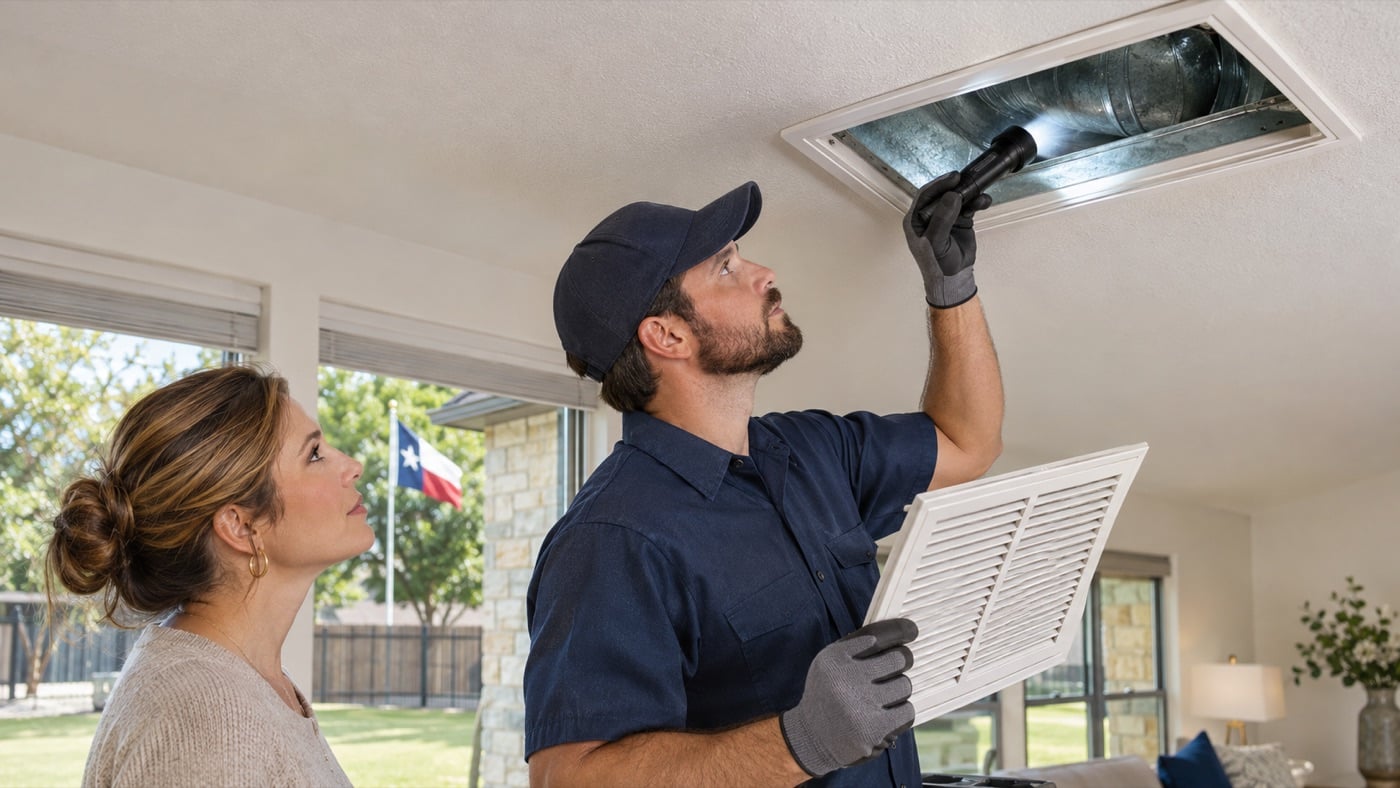
Does every home need its ducts cleaned?
No. Dust does collect in some duct systems, but much of it adheres to interior surfaces rather than entering the rooms. EPA does not recommend routine duct cleaning because the benefits are uncertain for most homes. Cleaning may be appropriate when there is a specific condition to address. The right decision comes from an inspection, not a coupon, calendar schedule, or a dusty grille.
San Antonio homeowners sometimes consider cleaning after noticing allergies, mildew odor, or dust that seems to return quickly. Those are understandable concerns, but none alone confirms that the duct interior needs cleaning. A filter problem, indoor dust source, air leak, drain issue, wet insulation, or building moisture may be more relevant. Find the cause first, especially when an odor or dampness is involved.
Conditions that may justify duct cleaning
Substantial visible mold on hard-surface ducts or HVAC components
EPA says cleaning should be considered when there is substantial visible mold growth inside hard-surface ducts or on other components of the heating and cooling system. A dark stain or surface deposit may look like mold but can be another material; a visual impression alone does not establish what it is. Ask the provider to show and document the area they say is affected.
If the system has insulated ductwork and the insulation is wet or moldy, EPA notes that it cannot be effectively cleaned and may need removal and replacement. Most importantly, the moisture condition that led to growth must be corrected or it may return. Mold testing or remediation may require a qualified specialist beyond an HVAC cleaning visit.
Vermin or insect infestation
Evidence of rodents or insects in the duct system is a reason to investigate. Cleaning alone may not solve the problem if entry points remain or biological material is left behind. The work may require pest control, repairs, and cleaning by appropriately qualified providers.
Excessive dust or debris inside the ductwork
Large accumulations, construction debris, or material that visibly obstructs a passage can warrant action. Dust visible around a register is different from a significant amount inside the duct. Ask for photos or an in-person view where safe and accessible, and clarify whether the issue is in the duct, the register boot, or another component.
Debris coming out of supply registers
If particles or pieces of debris are actually blown into a room from a supply vent, document which register and when it happens. The source could involve a duct, filter bypass, damaged insulation, or another HVAC condition. An inspection can determine whether cleaning, repair, replacement, or a different correction is appropriate.
Signs that do not prove ducts need cleaning
| What you see | Why it is not conclusive | What to check instead |
|---|---|---|
| Dust on a return grille | Air is pulled through the return, so surface dust can accumulate normally | Clean the grille and check filter fit and replacement schedule |
| Dust on furniture | Dust can come from people, pets, fabrics, outdoor air, cooking, or cleaning | Consider household sources, filter condition, windows, and renovation history |
| Musty odor | Odor can come from moisture, drains, building materials, or another source | Find visible moisture and inspect HVAC drainage and nearby areas |
| Allergy symptoms | Many indoor and outdoor triggers are possible | Discuss symptoms with a healthcare professional; assess HVAC separately |
| A contractor says “all ducts get dirty” | A general statement does not show a specific need | Ask for the condition, images, and a written scope |
| A low advertised price | The price alone does not explain what is included | Request a complete estimate and ask about added treatments or fees |
EPA cautions that poorly performed duct cleaning can release more contaminants, damage ducts, or increase repair costs. Be wary of broad claims that cleaning will prevent illness or cure allergies. Technical work should be based on visible evidence and an appropriate method.
A homeowner’s inspection checklist
Before calling a provider, note what you can safely observe:
- Is the dust on a return grille, inside a visible duct, or blowing from a supply register?
- Is the issue in one room or throughout the home?
- Did it begin after construction, water damage, a new pet, or a filter change?
- Is there a musty odor, standing water, condensation, or wet insulation?
- Is the filter the correct size and seated without gaps?
- Are airflow and cooling normal?
- Has anyone shown you photos or an accessible location with substantial debris or suspected growth?
Do not remove duct insulation, reach deep into ducts, disturb suspected mold, or open HVAC equipment while powered. If there is water near electrical equipment or repeated breaker trips, stay clear and arrange qualified service.
Questions to ask before hiring a duct-cleaning provider
- What specific condition makes cleaning appropriate in my home? Ask them to show or document it.
- Which components are included? A complete HVAC-system cleaning may involve more than the visible ducts; request a written list.
- How will dust be contained? EPA describes using suitable vacuum equipment and protecting furnishings.
- Will you apply biocides, fragrances, or sealants? Ask what the product is, why it is being proposed, and what evidence supports it. EPA says these treatments require careful consideration and are not established as a routine answer.
- Could a repair or moisture correction be needed first? Cleaning does not resolve leaks, wet insulation, or recurring condensation.
- What is the total price and what could add to it? Request a written estimate before work begins.
- Are there materials that need special handling? Asbestos-containing duct materials require specialized procedures and should not be disturbed by unqualified workers.
Compare written scopes from providers rather than comparing only headline prices. EPA advises talking with multiple providers and asking them to show contamination that would justify cleaning. A clear provider should explain limits and avoid guaranteed health outcomes.
What should a complete cleaning estimate explain?
Air duct cleaning quotes can be hard to compare because companies may mean different things by “whole system.” One estimate might cover supply ducts but omit the return, blower, coil area, or registers. Another may include access panels, protective covers, and a post-cleaning inspection. Request the same details from each provider so you can compare the work rather than a short label.
Ask for the system components to be included, the equipment and containment method, how furnishings and floors will be protected, how access openings will be closed, and how the provider will show what was removed. Ask whether cleaning may uncover damage that requires repair and how the provider will obtain your approval before adding work. Do not accept a vague promise that a cleaning will “sanitize” the house or prevent health problems.
Price depends on the size and layout of the system, number of systems, accessibility, amount and type of debris, condition of duct materials, and whether repair or special handling is needed. Since these factors vary, a general online estimate cannot tell you what your home requires. A provider should inspect and give a written estimate for the actual scope. Low introductory offers may omit important work or lead to add-ons, so ask for the total price before work begins.
When duct repair or replacement matters more
Cleaning is not the right remedy for a disconnected, crushed, leaking, or deteriorated duct. A duct leak can affect comfort and may pull air from a dusty or humid space. A damaged duct liner or wet insulated duct may require repair or replacement rather than brushing and vacuuming. Ask the technician to identify the affected section and explain whether it can be repaired, sealed, or should be replaced.
If replacement is proposed, ask why cleaning or repair is not appropriate, what material is being replaced, whether insulation is included, and how the completed work will be checked. A clear proposal should separate the confirmed issue from optional improvements. You can review ASC’s air duct repair and air duct replacement information when duct condition, rather than dust alone, is the concern.
What to expect on cleaning day
Before work starts, confirm the agreed scope and move fragile items away from registers where practical. Ask the provider to protect floors and furnishings and to use collection equipment appropriate for the work. EPA says vacuum equipment should exhaust outside the home or use HEPA filtration when exhausting indoors. Workers may need access to registers and equipment, but should not disturb materials that could contain asbestos unless properly qualified and equipped.
After work, review the areas included and ask how the provider verified that debris was removed. Check that access doors are secured and airflow is operating normally. If odor, moisture, or dust returns, document when it happens and contact the company with the scope and findings. Repeated cleaning without fixing a moisture source, leak, or indoor pollutant source is unlikely to resolve the underlying condition.
A fair decision when evidence is uncertain
Sometimes the ducts cannot be inspected fully without access openings, or the homeowner is unsure whether a dark deposit is mold, dirt, or another material. In that case, ask for a limited inspection plan and the cost before authorizing a larger treatment. If there is no evidence of substantial debris, vermin, mold-like growth, or material blowing from the registers, it may be reasonable to maintain the filter and monitor rather than proceed with routine cleaning.
When evidence is present but the recommendation still feels unclear, pause and obtain another written assessment. Share the photos and scope, not just the first provider’s conclusion. A second opinion should address the same components and explain the evidence. This can help distinguish a necessary repair from an optional service and reduce the chance of paying for repeated work that does not correct the cause.
Cleaning, repair, replacement, or no service?
| Finding | Possible next step |
|---|---|
| Light dust on an accessible grille, normal airflow | Clean grille and maintain the correct filter; monitor |
| Large visible debris inside accessible duct | Consider cleaning after confirming scope and source |
| Debris released from supply registers | Inspect filter, duct and equipment; correct source, then clean if justified |
| Damaged, disconnected, or leaking duct | Repair or replace the affected section; cleaning may be secondary |
| Wet or moldy insulated duct | Ask a qualified professional whether removal/replacement is needed |
| Standing condensate or recurring dampness | Correct drainage or moisture issue before cleaning |
ASC Heating & Air lists indoor-air-quality assessments, air duct cleaning, duct repair, and duct replacement for San Antonio area customers. The appropriate service depends on the actual condition. Learn about indoor air quality and AC service, air duct repair, air duct replacement, or contact ASC to discuss an HVAC concern.
Frequently asked questions
How often should air ducts be cleaned?
There is no universal routine interval recommended by EPA. Consider cleaning when a specific condition—such as substantial visible mold, vermin, excessive debris, or debris coming from supply registers—supports it.
Is dust on a return vent normal?
Some surface dust is normal because air is drawn through the return grille. Clean the grille and check the filter. A dusty grille alone does not establish that the duct interior needs service.
Can duct cleaning reduce allergies?
EPA says duct cleaning has not been shown to prevent health problems. Indoor symptoms may have several sources; consult a healthcare professional and avoid treating cleaning as a medical solution.
Should I clean ducts after buying a home?
Not automatically. Look for visible debris, vermin, prior renovation dust, water damage, and filter condition. Ask for an inspection if you see a specific concern, and request evidence before approving cleaning.
Does a musty smell mean I need duct cleaning?
Not necessarily. The odor may come from condensate, a wet component, building materials, or another source. Find and correct moisture before deciding on cleaning.
Can duct cleaning damage my system?
Improper methods can damage ducts or equipment and may release contaminants. Ask about the provider’s process, protective steps, and the scope of work before hiring.
Sources and next steps
Authoritative guidance: EPA: Should You Have the Air Ducts in Your Home Cleaned? and EPA mold and moisture guidance. Local discussion research surfaced recurring questions about dust, allergy concerns, visible mold, quoted cleaning costs, and fear of upselling or incomplete work. Those discussions are anecdotal and do not establish that a particular property needs cleaning.
If you have a specific HVAC symptom, contact ASC Heating & Air and ask what assessment matches the evidence.

About the Author
Ron Carter | Founder, ASC Heating & Air
Ron Carter has more than 20 years of hands-on HVAC experience as a technician, instructor, sales manager, and business owner. He leads ASC Heating & Air, a family-owned company serving San Antonio. Ron is a licensed Air Conditioning and Refrigeration Contractor in Texas (License No. TACLB00031551E). His articles share practical guidance to help homeowners make informed decisions about heating, cooling, and preventive maintenance.