

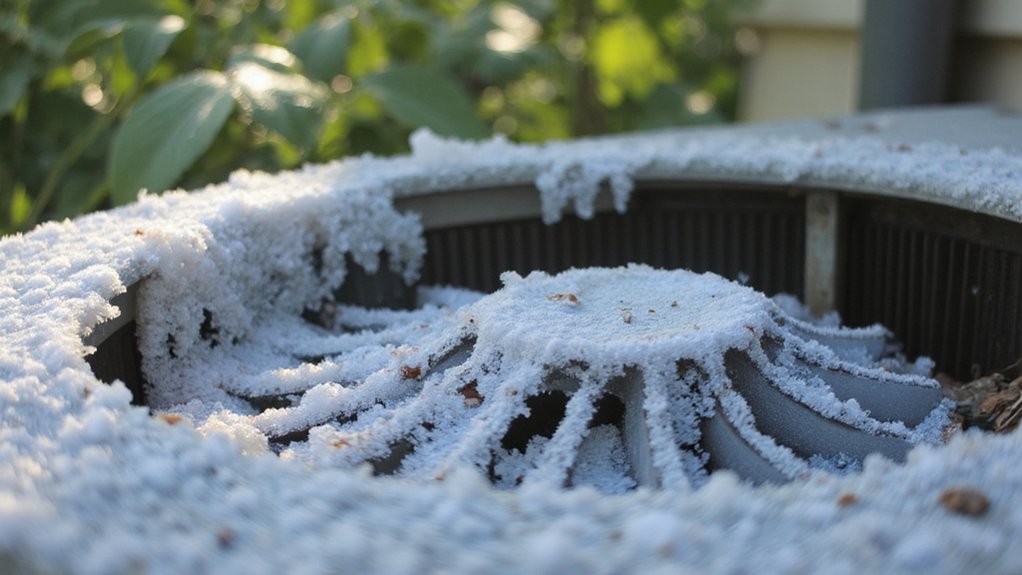
If your air conditioner is freezing up, something in the system isn’t working the way it should. Most of the time, it comes down to poor airflow or refrigerant issues. When either of these is off, the unit can’t manage temperature properly, and ice starts forming where it shouldn’t.
A frozen AC might still run for a while, but it won’t cool your home effectively. Left unchecked, it can lead to bigger problems and expensive repairs. Let’s walk through what usually causes this and what you can do about it.
Key Takeaways
- Frozen coils happen when the AC can’t absorb heat properly
- Restricted airflow from dirty filters or blocked ducts can trigger freezing
- Low refrigerant levels can drop coil temperature and cause ice buildup
- High indoor humidity can add excess moisture to the system
- Routine maintenance helps prevent most freezing issues
Why Does My AC Freeze Up?
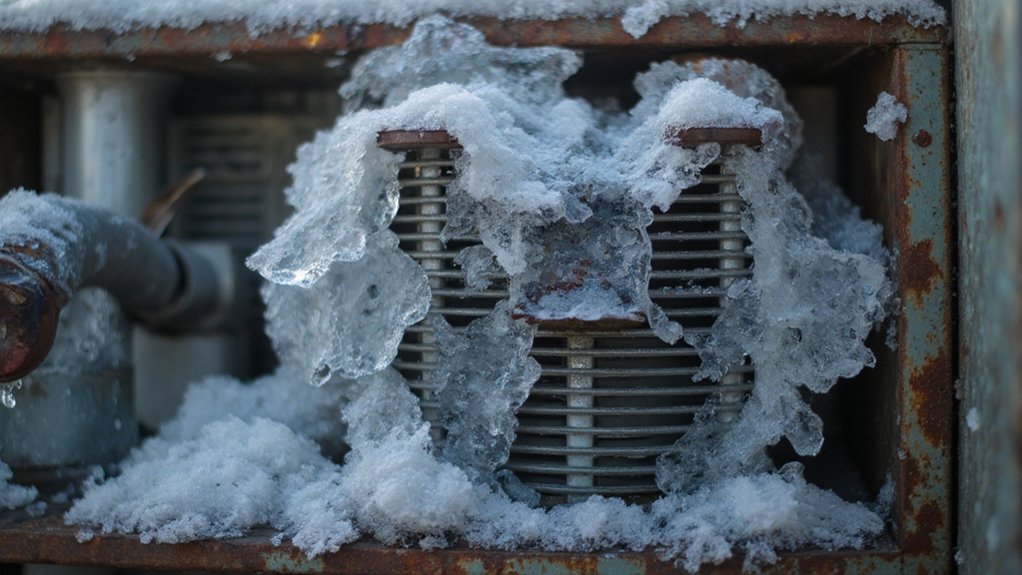
When your air conditioner freezes, it’s usually a sign that heat isn’t being absorbed and moved out of your home as it should be.
Inside your system, the evaporator coil is responsible for pulling heat from the air. For this to work, warm air needs to flow over the coil continuously. If that airflow drops, the coil gets too cold. Instead of just cooling the air, it starts freezing moisture around it.
Dirty air filters are a common reason. When they clog up, air can’t pass through easily. Blocked ducts can create the same problem. Even something as simple as closed vents can affect airflow enough to cause trouble.
Low refrigerant can also play a role. When levels drop, pressure inside the system changes. This can lower the temperature of the coil to the point where ice forms.
You might notice weak airflow, warm air from vents, or even visible ice on the unit. These are early signs that shouldn’t be ignored.
Common Causes of AC Freeze-Ups
Several issues can lead to a frozen air conditioner. Most of them are preventable with basic upkeep.
One of the biggest causes is restricted airflow. When air can’t move freely, the system can’t balance temperature properly. Dirty filters are often the starting point. Over time, dust and debris build up and block airflow.
Duct problems can add to this. If ducts are clogged, leaking, or poorly designed, air won’t circulate evenly through your home.
Humidity also plays a part. When indoor air holds too much moisture, that moisture collects on the evaporator coil. If the coil temperature drops too low, that moisture turns into ice.
Another issue to watch for is a faulty blower fan. The fan is what pushes air through the system. If it slows down or stops working correctly, airflow drops quickly, and freezing can follow.
Regular cleaning and basic checks can go a long way in avoiding these problems.
How Low Refrigerant Levels Cause AC Freeze-Ups
Refrigerant is what allows your AC to move heat from inside your home to the outside. When levels are low, the system can’t do this properly.
As refrigerant drops, pressure inside the system changes. This causes the evaporator coil to become colder than it should be. Once it gets cold enough, moisture in the air begins to freeze on the coil.
Leaks are the most common reason refrigerant levels fall. Even a small leak can slowly reduce performance over time. You may not notice it right away, but the system will struggle more as levels continue to drop.
As the AC works harder to keep up, it puts extra strain on the compressor. This is one of the most expensive parts of the system, so catching refrigerant issues early can save you a lot of money.
If you suspect low refrigerant, it’s best to have a technician inspect it. Handling refrigerant requires proper tools and training.
How Poor Airflow Affects Your AC
Airflow is one of the most important parts of how your AC functions. When it’s reduced, the entire system starts to struggle.
Clogged filters are often the first place to check. If they haven’t been replaced in a while, they can block a large amount of air. This alone can be enough to cause freezing.
Blocked or closed vents can also reduce airflow. Sometimes furniture or curtains unknowingly cover vents, limiting circulation.
Duct issues can make things worse. Leaks or buildup inside ducts prevent air from reaching different parts of your home.
The blower fan also needs to be working properly. If it’s not pushing enough air, even a clean system can run into freezing problems.
Keeping airflow steady helps maintain a stable temperature inside the unit. That balance is what prevents ice from forming.
What to Do When Your AC Freezes Up?
If your AC has already frozen, the first step is to stop using it. Turn the unit off completely and give it time to thaw.
Running it while frozen can damage internal components, especially the compressor.
Next, check your air filter. If it’s dirty, replace it. This is one of the quickest fixes and often solves the problem.
Once the ice has melted, take a look at the vents and ducts. Make sure nothing is blocking airflow. Open any closed vents and clear away obstructions.
After that, you can turn the system back on and see how it performs.
If the unit freezes again, it may be time to call for emergency AC repair to prevent further damage.
Frequently Asked Questions
Can a Dirty Air Filter Cause AC Freezing?
Yes, it can. When a filter gets clogged, it restricts airflow. This can cause the evaporator coil to get too cold and freeze. Checking and replacing filters regularly helps avoid this.
How Often Should I Service My Air Conditioner?
Once a year is a good rule for most homes. A yearly check keeps the system running smoothly and helps catch small issues before they turn into bigger ones.
Is It Safe to Run a Frozen AC Unit?
No, it’s not a good idea. Running a frozen unit can damage internal parts and increase energy use. It’s better to turn it off and let it thaw before doing anything else.
What Temperature Should I Set My AC to Prevent Freezing?
A setting between 72°F and 78°F works well for most homes. This range helps maintain steady airflow and reduces the chance of ice forming inside the system.
How Long Does It Take for an AC to Unfreeze?
In most cases, it takes about one to three hours. The exact time depends on how much ice has built up and the surrounding temperature.
Conclusion
A frozen air conditioner is usually a sign of airflow problems or low refrigerant. Both issues affect how the system handles heat, which can lead to ice forming on the coils.
Simple steps like replacing filters, keeping vents open, and scheduling regular maintenance can help prevent this from happening. If freezing continues after basic checks, it’s best to have a professional take a closer look.
Staying on top of these small tasks can help your AC run smoothly and avoid unnecessary AC repair costs.