


When your air conditioner starts acting differently, the AC capacitor could be part of the problem. You might notice strange noises, weak airflow, trouble starting the system, or higher energy bills. These symptoms don’t always point to the capacitor, but they can be signs that something needs attention.
Replacing an AC capacitor may look like a simple repair. The component itself is relatively small, but it stores electrical energy and works with some of the most important parts of your AC system. Handling it incorrectly can result in electric shock or damage to the equipment.
Knowing what the capacitor does and recognizing the signs of failure can help you decide when it’s time to call an AC repair professional.
Key Takeaways
- AC capacitors help compressor and fan motors start and continue running properly.
- Signs of a failing capacitor can include startup problems, weak airflow, unusual sounds, and repeated circuit breaker trips.
- A damaged capacitor can place extra strain on other AC components and may lead to more expensive repairs.
- Professional technicians can test the capacitor, identify related problems, and replace the part safely.
- Regular AC maintenance can help spot capacitor and motor problems before they become larger repairs.
Understanding the Role of the AC Capacitor
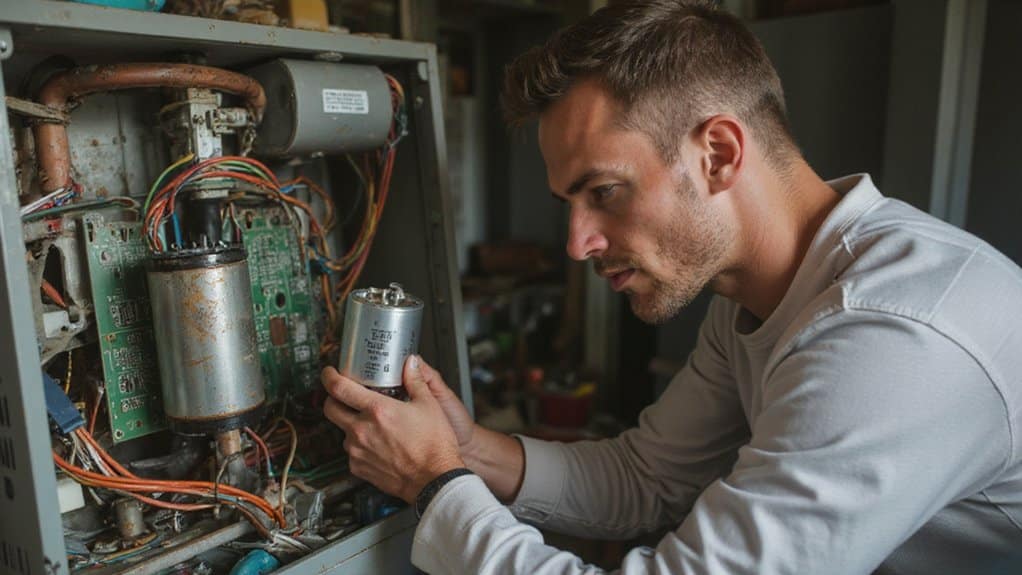
The AC capacitor is a small electrical component with an important job. It stores and releases electrical energy to help the compressor and fan motors start and run. Without the right electrical boost, these motors may struggle to operate as they should.
Most residential air conditioners use either a run capacitor, a start capacitor, or a dual capacitor that combines both functions.
A run capacitor stays active while the motor operates. It helps provide the electrical support the motor needs during normal operation. A start capacitor provides a stronger burst of energy when a motor needs help getting started.
When a capacitor begins to wear out, the motor may not receive the electrical support it needs. That can affect cooling, startup, airflow, and the way the entire system operates.
Capacitors also have a limited service life. Heat, electrical stress, age, and repeated use can all contribute to wear. Having the system checked during routine maintenance can help catch a weakening capacitor before the AC stops working on a hot day.
Key Signs You Need an AC Capacitor Replacement
A failing capacitor doesn’t always produce one obvious symptom. Your air conditioner may show several smaller signs before the component stops working completely.
Trouble starting the unit, unusual sounds, repeated breaker trips, and inconsistent cooling can all point to an electrical or mechanical problem. A technician can test the capacitor and determine whether it needs to be replaced.
Unresponsive Air Conditioning Unit
An air conditioner that won’t start can be frustrating, especially when the weather is hot. A failed capacitor is one possible reason the system may refuse to turn on.
You may hear the outdoor unit humming without the fan starting. In other cases, the system may attempt to start and then shut down. If the compressor or fan motor can’t get the electrical boost it needs, the capacitor could be at fault.
Other problems can produce similar symptoms. A thermostat issue, electrical fault, damaged motor, refrigerant problem, or control problem may also prevent the system from working correctly.
That’s why replacing the capacitor based on symptoms alone isn’t always the right approach. A technician can test the component and check the rest of the system before recommending a repair.
Frequent Circuit Breaker Trips
A circuit breaker that trips repeatedly shouldn’t be ignored. The breaker is designed to shut off power when it detects an electrical condition that could damage the equipment or create a safety concern.
A failing capacitor can cause the compressor or fan motor to struggle during startup. The added electrical strain may contribute to breaker trips. Other electrical faults can cause the same symptom, so the capacitor isn’t automatically the cause.
If your AC keeps tripping the breaker, turn the system off and have it inspected. Repeatedly resetting the breaker without finding the cause can leave the underlying problem unresolved.
How a Failing Capacitor Affects Air Conditioning Performance
A weak capacitor can change the way your air conditioner operates. The compressor and fan motors depend on the capacitor for electrical support, so a capacitor that isn’t working correctly can make those motors work harder.
You might notice that the home takes longer to cool or that the AC doesn’t seem to maintain the temperature as well as it normally does. The outdoor fan may also have trouble starting, while the system may cycle differently than usual.
A failing capacitor can place extra stress on the compressor and fan motor. Those components can be expensive to repair or replace, which is one reason a small capacitor problem shouldn’t be left unchecked.
Capacitors also don’t always fail all at once. Their performance can decline over time. A system may continue running while cooling less effectively, making early diagnosis useful.
If your AC starts behaving differently, a professional inspection can help determine whether the capacitor is the problem or whether another component needs attention.
Should You Replace Your AC Capacitor Yourself or Hire a Pro?
AC capacitor replacement isn’t a repair most homeowners should treat as a casual DIY project. The capacitor can retain an electrical charge even after the air conditioner has been switched off.
A mistake during testing, removal, or installation can result in electric shock or damage to the AC system. There is also the risk of installing the wrong capacitor or missing another problem that caused the symptoms in the first place.
A qualified HVAC technician has the tools and training to test the capacitor, verify the correct replacement, and inspect related components.
DIY Risks Explained
Replacing an AC capacitor involves more than disconnecting one part and installing another. The technician needs to confirm the correct capacitance and voltage ratings and make sure the replacement matches the system.
The capacitor must also be handled safely because it can store electrical energy after power has been disconnected.
Another concern is diagnosis. If the capacitor isn’t actually the source of the problem, replacing it won’t solve the issue. A weak motor, wiring fault, control problem, or another electrical component could be responsible.
For these reasons, homeowners who aren’t trained to work on electrical HVAC equipment should leave capacitor testing and replacement to a qualified professional.
Professional Benefits Highlighted
A professional can test the capacitor rather than relying only on visible symptoms. During the service visit, the technician can also inspect the compressor, fan motor, wiring, connections, and other related parts.
That broader inspection can help identify problems that may otherwise go unnoticed. If the capacitor is failing, the technician can install the correct replacement and verify that the system starts and runs properly afterward.
Professional service can also reduce the risk of electrical injury and accidental damage to the equipment. Depending on the company and the part used, a repair may also come with a service or parts warranty.
Why Ignoring a Failing Capacitor Can Be Costly
A capacitor problem may start as a relatively small repair, but leaving it unresolved can put additional strain on the air conditioner.
When a motor struggles to start or run, it may draw more power and experience extra heat and stress. Continued operation under those conditions can contribute to premature wear on the compressor or fan motor.
You may also notice higher electricity bills if the system isn’t operating normally. Poor cooling can lead to longer run times, which adds to energy use.
In some situations, a neglected capacitor problem can contribute to a larger equipment failure. Replacing a worn capacitor when it’s needed can be far less expensive than dealing with damage to a compressor or motor.
If your AC is showing repeated signs of electrical trouble, having it checked sooner rather than later can help prevent a small repair from becoming a much larger one.
How to Select the Correct Capacitor for Your AC Unit
The replacement capacitor needs to match the requirements of your specific air conditioner. Choosing a part based only on its physical size isn’t enough.
Capacitors have different capacitance ratings, usually listed in microfarads (µF), along with voltage ratings. The correct values should match the specifications provided by the equipment manufacturer.
The capacitor type matters, too. Your system may use a start capacitor, run capacitor, or dual capacitor.
It’s best to have a technician verify these specifications before purchasing or installing a replacement. Using the wrong capacitor can affect motor operation and may damage the equipment.
The part should also be compatible with the specific AC model. Your owner’s manual, equipment label, or manufacturer specifications can provide useful information, but a professional can confirm the correct part during service.
What Happens When You Call an AC Repair Pro?
An AC repair professional will usually begin by asking about the symptoms you’ve noticed. They may want to know when the problem started, whether the system makes unusual sounds, and whether the breaker has been tripping.
The technician can then inspect the system and test the capacitor along with other electrical and mechanical components.
If the capacitor has failed, the technician will explain the issue and recommend the appropriate replacement. If another component is responsible, they’ll explain that finding instead of replacing a part that doesn’t need to be changed.
Before repair work begins, you can ask about the cost of the replacement, labor, and any additional work that may be needed. Once you approve the repair, the technician can replace the faulty component and test the system.
A proper service visit should leave you with a clearer understanding of what caused the problem and what was done to correct it.
If the technician finds a problem beyond the capacitor, they can also determine whether related heating and cooling equipment needs heat pump repair.
Preventative Maintenance Tips for Your AC System
Regular AC maintenance can help catch problems before they interrupt your cooling.
Start by replacing or cleaning the air filter according to the manufacturer’s recommendations. A dirty filter can restrict airflow and make the system work harder.
Keep the outdoor unit clear of leaves, grass, dirt, and other debris. Restricted airflow around the outdoor unit can affect how the system operates.
Seasonal inspections can also give a technician an opportunity to check electrical connections, capacitors, motors, refrigerant levels, coils, and other parts.
Pay attention to changes in the way your air conditioner sounds or operates. Strange noises, longer cooling times, frequent cycling, or difficulty starting the system are worth reporting.
Your thermostat should also be working correctly. If the temperature displayed doesn’t seem to match the conditions in the room, the thermostat may need attention.
Routine maintenance doesn’t guarantee that a capacitor will never fail. It does give you a better chance of finding wear before the problem becomes a sudden breakdown.
If an older system continues to require major repairs, a technician can also discuss whether heat pump installation would be suitable for your home.
Cost of AC Capacitor Replacement: What to Expect
The cost of AC capacitor replacement typically ranges from $100 to $400, depending on the system and the service involved.
Several factors can affect the final price. The capacitor type, part specifications, labor rates, service location, and whether additional repairs are needed can all change the total.
A standard run capacitor may cost less than a more specialized component. A dual capacitor can also have a different price depending on the equipment.
Diagnostic work may be included in a service call or listed separately. If the technician finds another issue during the inspection, that repair would add to the overall cost.
When comparing estimates, look at what each quote includes. Ask whether the price covers the capacitor, labor, diagnostic work, and any applicable warranty.
A very low quote isn’t always the best option if it leaves out necessary service or uses a capacitor that doesn’t meet the equipment specifications.
Frequently Asked Questions
How Long Do AC Capacitors Typically Last?
AC capacitors commonly last around 5 to 10 years, although their service life can vary. Heat, electrical stress, usage, and the condition of the AC system can affect how long a capacitor lasts.
Signs such as inconsistent cooling, humming sounds, difficulty starting, or repeated electrical problems can indicate that the capacitor needs to be checked.
Can a Faulty Capacitor Damage Other AC Components?
Yes. A failing capacitor can place extra stress on the compressor or fan motor because those components may have trouble starting or running properly.
Leaving the problem unresolved for an extended period can increase the chance of additional wear or damage.
What Are the Safety Precautions for Handling Capacitors?
AC capacitors can retain an electrical charge even after the power has been turned off. That’s why they shouldn’t be handled without the proper training and equipment.
Power should be disconnected and the capacitor should be safely discharged using the correct procedure before it is handled. If you aren’t trained to work with electrical HVAC components, it’s safer to have a qualified technician perform the repair.
How Can I Tell if My Capacitor Is Faulty?
Common warning signs include humming, difficulty starting, a fan that won’t begin spinning, inconsistent cooling, and repeated circuit breaker trips.
A visual inspection may also reveal a swollen or leaking capacitor, but a capacitor can fail without showing obvious physical damage.
Testing the capacitor with the proper equipment is the best way to confirm whether it is operating within its rated specifications.
Are There Different Types of Capacitors for AC Units?
Yes. The two common types are run capacitors and start capacitors.
A run capacitor supports the motor during normal operation. A start capacitor provides a short burst of electrical energy to help a motor get started.
Some AC systems use a dual capacitor, which combines two capacitor functions in one component. The correct type depends on the design and specifications of your air conditioning system.
Conclusion
Timely AC capacitor replacement can help keep your air conditioner operating properly and reduce the chance of additional equipment problems.
If your system struggles to start, makes unusual sounds, trips the breaker, or isn’t cooling the way it normally does, have the issue checked rather than assuming the capacitor is the cause.
DIY capacitor work also carries electrical risks. A qualified HVAC technician can test the component, confirm the cause of the problem, install the correct replacement, and check that the system is operating properly.
Regular maintenance can also help catch worn electrical components before they contribute to a larger AC repair. Paying attention to changes in your system can make it easier to address problems while they’re still manageable.