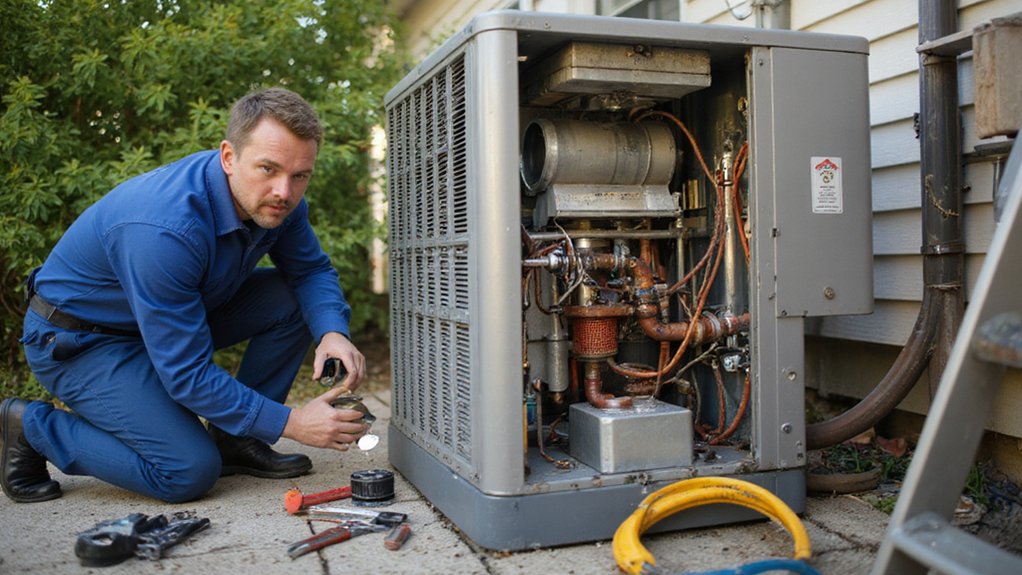
Understand what indoor and outdoor AC coils do, how dirt can affect cooling, what a professional coil cleaning includes, and when to book service in San Antonio.
QUICK ANSWER
An air conditioner transfers heat through its indoor evaporator coil and outdoor condenser coil. Dirt and debris can interfere with airflow and heat transfer, which may reduce capacity and lengthen runtime. A technician should inspect both coils and determine whether cleaning is needed. Dirty coils are only one possible cause of high bills, and cleaning alone does not guarantee a specific energy saving.
Coil cleaning should follow an inspection and use a method suited to the equipment.
Coils are out of sight, so it is easy to overlook them when a home cools slowly or the electric bill rises. The indoor coil absorbs heat from the air; the outdoor coil releases that heat outside. When either surface is dirty, the system may not move heat as effectively. Here is what the coils do, how to spot a concern, and what to ask before cleaning.
Quick comparison
Indoor and outdoor coils: what each one does
Coil
Main role
What an inspection considers
Indoor evaporator coil
Absorbs heat from indoor air as refrigerant changes state.
Airflow, filter condition, coil surface, temperature pattern, and signs of icing.
Outdoor condenser coil
Releases heat from refrigerant to outdoor air.
Debris, clearance, fin condition, fan operation, and safe cleaning needs.
The two coils do different parts of the same job
In a typical split air conditioner, the indoor evaporator coil sits near the air handler or furnace. Warm return air passes over it and gives up heat to the refrigerant. The blower then sends cooled air through the supply ducts.
The outdoor condenser coil releases heat carried by refrigerant to outdoor air. A fan moves air across the coil. Grass clippings, leaves, pollen, lint, dust, and other debris can accumulate around or in the coil, especially when landscaping or outdoor conditions push debris toward the unit.
Both coils must work with adequate airflow and the rest of the refrigeration circuit. A surface that looks dirty does not by itself prove it is causing a bill increase; airflow, temperature, and system operation help establish whether cleaning is appropriate.
How dirt can affect cooling and electricity use
Dust on a heat-transfer surface can reduce heat exchange. Debris on the outdoor coil can also block air moving through it. The system may then run longer to reach the thermostat target, deliver less cooling, or operate under conditions that increase component strain.
The indoor side can collect dust if filtration, sealing, or maintenance has been poor. A restricted filter may contribute to low airflow and coil problems. If airflow drops too far, the indoor coil can become cold enough to freeze in some conditions. Ice is a symptom, not proof that a coil simply needs cleaning; refrigerant and airflow faults can also be involved.
ENERGY STAR’s maintenance checklist includes professional inspection of coils and other equipment items. Its guidance also emphasizes filters and airflow. Read the ENERGY STAR heating and cooling maintenance checklist for homeowner and contractor tasks.
Signs that warrant an inspection
A coil inspection may be useful if cooling has weakened, the system runs longer than usual, airflow is low, the outdoor unit is visibly obstructed, or maintenance is overdue. A high bill is more informative when it appears with a clear performance change.
Look for leaves and grass around the outdoor cabinet from a safe distance. Keep vegetation trimmed to the clearance stated by the equipment manufacturer. Do not remove the top panel or reach through the grille. For the indoor unit, do not open access panels or spray cleaner into the air handler.
If ice forms, shut cooling off and call for service. Let the technician determine whether the issue is a filter, blower, coil, refrigerant, or control problem. Continuing to run an iced system can worsen performance and risk damage.
A visual check is only one part of determining whether a coil needs cleaning.
What professional coil cleaning should involve
A technician should identify which coil needs attention, inspect its access and condition, protect nearby electrical parts, and use a cleaning method suitable for the equipment. Indoor coils can require more involved access than outdoor surfaces. The technician should explain whether cleaning is included in a tune-up or priced separately.
Ask whether the service includes inspection of the blower, filter, drain pan, and condensate line if the indoor coil is accessed. For outdoor cleaning, ask what debris was removed and whether any fins are damaged or bent. An estimate should state the work, price, and any limitations before additional work begins.
Cleaning is not the same as repairing a refrigerant leak, replacing a motor, or fixing duct leakage. If the system still performs poorly after cleaning, ask for measured results and the next diagnostic step.
Why DIY coil cleaning can go wrong
Coil fins are thin and can bend easily. Strong water pressure can flatten them, while some cleaners can damage coatings or nearby materials if used incorrectly. Electrical components and fan blades also create hazards around the outdoor unit.
The indoor coil may be difficult to reach without removing panels or disturbing wiring and drain parts. Spraying household products into the system can leave residue, create odors, or damage surfaces. Turn off the thermostat alone does not always isolate every electrical hazard.
Homeowners can safely keep vegetation clear and replace a dirty filter according to the unit’s instructions. Leave panel removal, chemical cleaning, and electrical access to trained HVAC personnel.
Other causes of high cooling costs
A dirty coil is one possible explanation among several. A clogged filter, blower fault, thermostat schedule, duct leak, low refrigerant due to a leak, electrical issue, inadequate insulation, hot attic, or extreme outdoor temperatures can also affect runtime.
Before booking, compare kWh and billing days, note the thermostat setting, and track whether the house reaches the target. If kWh rose but the AC behavior appears normal, consult the utility about rates or billing details. If comfort and run time have changed, consider a system evaluation.
Which coil is dirty, and what did the technician observe?
Is the proposed cleaning included in my tune-up or billed separately?
What method and cleaner will be used for this coil?
Will you check airflow, filter fit, and the drain while the indoor coil is accessible?
What is the written price, and what findings would trigger additional work?
How will you confirm the system’s operation afterward?
These questions help distinguish a focused cleaning from a vague promise to “restore efficiency.” Request a clear service record describing the work completed and any remaining issue.
A reputable visit should not claim that coil cleaning guarantees a fixed percentage reduction in bills. Results depend on how dirty the coil was, the rest of the system, weather, and the home.
A practical maintenance routine
Check the filter monthly during heavy-use periods and replace it when dirty, following equipment instructions. Keep the outdoor unit free of stored items and maintain landscaping clearance. Schedule periodic professional service and report new symptoms rather than waiting for a complete breakdown.
If the system is operating normally and the coils are clean, more cleaning is not automatically better. Avoid unnecessary chemicals and repeated service that does not address the diagnosed cause. The goal is to maintain airflow and transfer heat without damaging equipment.
For an AC inspection or repair in San Antonio, review ASC’s AC tune-up service or request a diagnosis through ASC contact.
Visual guide
How cooling moves heat out of the home
1Indoor airWarm return air reaches the evaporator coil.
2Heat transferRefrigerant carries absorbed heat through the system.
3Compressor cycleThe compressor moves refrigerant through the cooling cycle.
This simplified diagram explains the heat path; actual refrigerant-cycle measurements require HVAC instruments.
How airflow, filtration, and coils work together
The filter catches airborne particles before they collect on the indoor coil and blower. When a filter is too dirty or does not fit its rack, airflow can fall and dust may bypass the filter. Over time, this can contribute to deposits on the blower or coil. Cleaning the coil without correcting a loose filter rack or return-side leak may allow the problem to come back.
A filter’s printed efficiency rating is not the only factor. The filter must fit the cabinet, and the equipment must be able to move air through it. A restrictive filter in a system not designed for it may reduce airflow. If a new filter seems to make cooling worse, confirm the size and type with the equipment documentation or ask a technician to check static pressure and airflow.
A professional can look at the filter, coil, blower, and return path as a system. If dust is heavy, ask whether there is a gap around the filter, an unsealed return, construction dust, or another source feeding debris into the equipment. The right correction may be better filter fit or return sealing rather than repeated coil cleaning.
This is one reason a good service report should state which coil was inspected, what condition it was in, what cleaning was done, and whether airflow was checked. A vague note saying “tune-up complete” does not help you understand why the system was struggling or what maintenance should happen next.
When coil cleaning is not enough
If poor cooling continues after a coil is clean, ask the technician to check other parts of the system, such as airflow, blower operation, refrigerant conditions, thermostat controls, duct delivery, and heat load. A complete diagnosis should follow the actual symptom instead of repeating the same cleaning.
If an estimate recommends several repairs, ask which issue is causing the immediate problem and which work is preventive. Get the total price and warranty details in writing. A second opinion can help when the diagnosis or repair scope is unclear.
The right solution may be a simple filter correction, a component repair, duct sealing, or a replacement comparison. The technician should explain why the recommended option fits the observed condition.
Key takeaway for San Antonio homeowners
Dirty coils can make heat transfer less effective and contribute to longer runtime, but a high bill has multiple possible causes. Compare usage and billing details, note how the home cools, and let a professional verify whether coil cleaning is needed.
Keep the outdoor area clear, maintain the filter, and arrange service when performance changes. Avoid opening equipment or applying chemicals yourself. Clear measurements and a written estimate help you choose the next step.
If your AC is running longer or cooling unevenly, start with the high electric bill AC guide or contact ASC for an evaluation.
Why a clean-looking coil may still need an inspection
Some parts of a coil are difficult to see without proper access. A clean outer cabinet does not confirm the full coil surface is clear, and a dirty outdoor coil is not always the only reason for weak cooling. The technician may need to check airflow, temperature change across the system, blower operation, and refrigerant performance to understand the symptom.
Likewise, a coil that looks dusty may still be moving air and transferring heat adequately. Cleaning should be tied to condition and measured performance, not offered automatically as a cure for every high bill. Ask the technician to show you the area of concern and explain how the obstruction affects this equipment.
For indoor coils, access varies by cabinet design. Some systems require more disassembly than others. A service provider should explain the additional labor and protect the surrounding equipment and home. If cleaning is not included in the advertised tune-up, get the extra cost before work starts.
After cleaning, the technician should reinstall panels correctly, restore power, check operation, and tell you whether the original complaint improved. If the AC still runs continuously or rooms remain warm, continue diagnosis instead of assuming that another cleaning is the answer.
Frequently asked questions
Can dirty AC coils cause a high electric bill?
They can reduce heat transfer or airflow and may contribute to longer runtime. Weather, ducts, filters, equipment faults, and other household loads can also affect electricity use.
How often should AC coils be cleaned?
There is no single interval for every home and system. Have coils inspected during maintenance and clean them when their condition and system operation show it is needed.
Can I clean my AC coils myself?
Homeowners can clear loose debris around the outdoor unit and replace a dirty filter. Leave panel removal, chemical cleaning, and access to indoor coils to a qualified technician.
Does coil cleaning guarantee energy savings?
No. Cleaning may help when dirt is impairing performance, but savings depend on the actual condition and the rest of the system and home.
Why is my AC coil freezing?
Possible causes include restricted airflow, a dirty filter, blower issues, refrigerant problems, or controls. Turn cooling off and arrange professional diagnosis rather than scraping ice or continuing to run it.
Want an HVAC professional to check the system?
Tell ASC what changed, how the system is running, and what you found when comparing your bill. We can discuss the appropriate next step for your San Antonio property.
Ron Carter has more than 20 years of hands-on HVAC experience as a technician, instructor, sales manager, and business owner. He leads ASC Heating & Air, a family-owned company serving San Antonio. Ron is a licensed Air Conditioning and Refrigeration Contractor in Texas (License No. TACLB00031551E). His articles share practical guidance to help homeowners make informed decisions about heating, cooling, and preventative maintenance.