

Quick answer: Your AC may need emergency repair if it stops cooling during extreme heat, blows warm air, smells like burning, leaks water near electrical parts, freezes over, trips the breaker, or makes loud grinding or buzzing noises. If the home is getting hotter and the system is showing unsafe symptoms, schedule 24/7 emergency AC repair in San Antonio.
2. Warning Signs
3. What To Do
4. FAQs
Warning Sign Severity Chart
Why AC Warning Signs Matter in San Antonio
When an air conditioner acts up in San Antonio, the timing matters. A weak AC on a mild day is annoying. A failed AC during a summer heat wave can become urgent fast.
In our experience, most emergency calls do not start with a system that looked perfect the day before. Homeowners often noticed a sound, smell, leak, or cooling problem first. The warning sign was there, but it did not seem serious yet.
That is why knowing the difference between a normal service issue and an emergency warning sign helps. It gives you a better chance of protecting your comfort, your equipment, and your home.
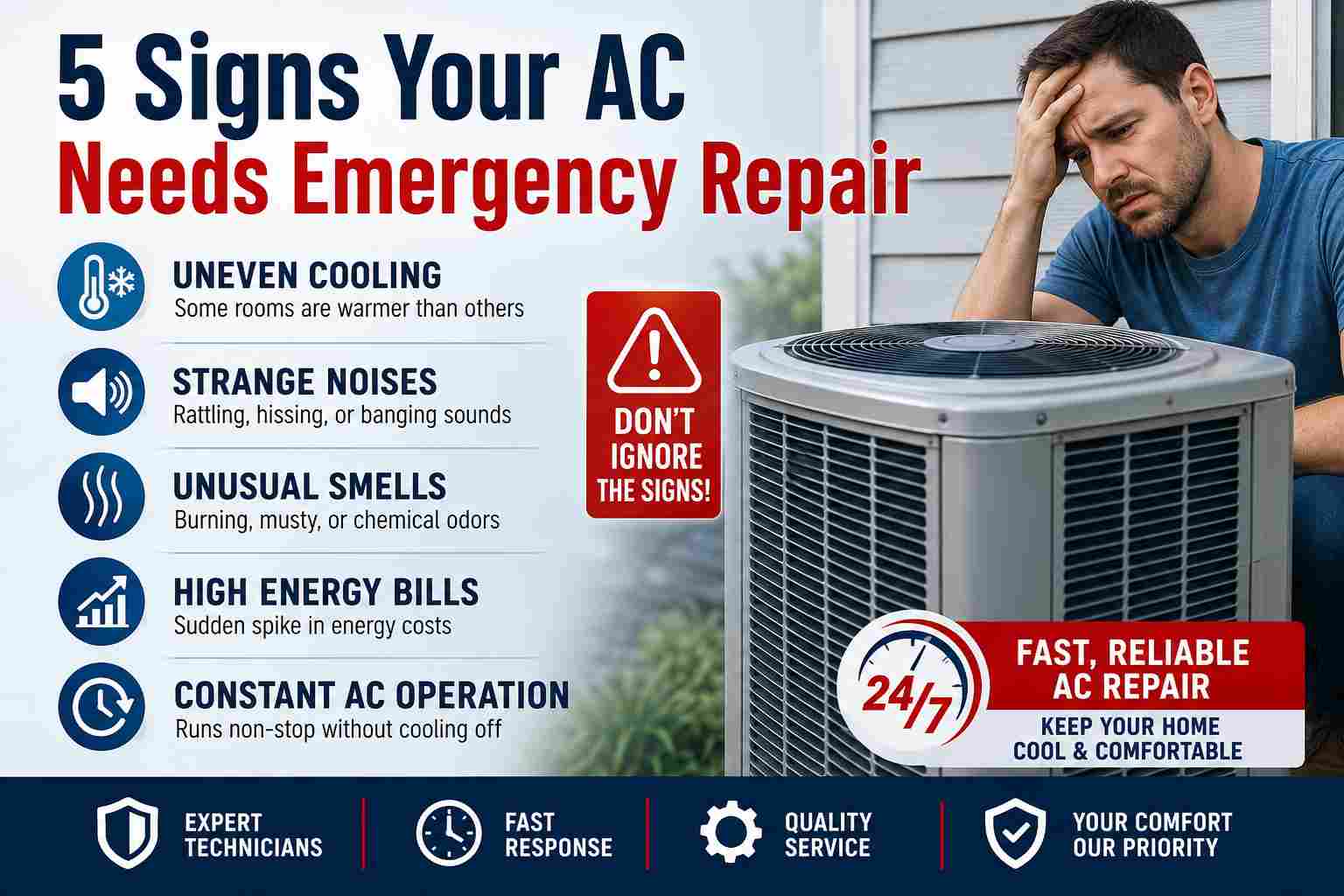
This guide explains five signs your AC needs emergency repair, what each sign may mean, and what to do before a technician arrives.
Warm Air During Extreme Heat
The system is running, but the house keeps getting hotter. This often points to a cooling failure that should not be ignored.
Burning Smells or Electrical Odors
Electrical smells can point to overheating parts, wiring problems, or motor trouble. Turn the system off and call for help.
Frozen Coils or Refrigerant Lines
Ice on the system usually means airflow, refrigerant, or coil problems. Running it while frozen can cause more damage.
Water Leaks Around the Indoor Unit
Water near ceilings, walls, floors, or electrical areas can create damage quickly and should be checked right away.
Breaker Trips or Loud Noises
Repeated breaker trips, buzzing, grinding, or banging can point to electrical or mechanical failure.
Sign 1: Your AC Is Running But Blowing Warm Air
Warm air is one of the most common reasons homeowners call for urgent AC service. The thermostat may say cool, the fan may be running, and air may still come from the vents. But the air does not feel cold.
Many customers notice this first in the afternoon. The home was comfortable in the morning, then slowly became warmer as outdoor temperatures rose.
What we commonly find is that warm air can come from several issues. A dirty filter can restrict airflow. A failed capacitor can stop the outdoor unit from starting. A refrigerant problem can prevent heat transfer. A dirty outdoor coil can make the system struggle to release heat.
According to the U.S. Department of Energy, proper maintenance helps air conditioners operate efficiently. In San Antonio, that matters because cooling systems often run for long stretches during peak heat.
Pro tip: Before calling, check whether the outdoor unit is running. If the indoor fan is blowing but the outdoor fan is not moving, mention that when you schedule service. It helps the technician understand the likely direction of the diagnosis.
Warm air is not always a full emergency. But if the home temperature is rising, someone in the home is heat-sensitive, or the system is making strange noises, it should be treated as urgent.
Sign 2: You Smell Burning, Smoke, or Electrical Odors
A burning smell is different from dusty air when a heater first starts. With an AC system, burning or electrical odors should be taken seriously.
In our opinion, this is one of the clearest signs to stop using the system. Turn it off at the thermostat. If the smell is strong, smoke is visible, or you feel unsafe, shut power off at the breaker and call for professional help.
Possible causes include an overheated blower motor, a failing capacitor, damaged wiring, a shorted component, or a motor that is struggling to start. These are not problems to test repeatedly.
One mistake we frequently see is homeowners trying the system again after the smell fades. The odor may disappear because the part cooled down, not because the problem went away.
Important note: If your AC smells like burning plastic, hot wires, or smoke, do not keep running it to see if it improves. Electrical warning signs deserve emergency attention.
Sign 3: The AC Is Frozen or Has Ice on the Lines
Ice on an air conditioner surprises many homeowners because it often happens during hot weather. A frozen AC does not mean the system is too cold. It usually means the system is not absorbing heat correctly.
You may see frost on the copper refrigerant line, ice on the indoor coil area, weak airflow, water around the indoor unit, or a system that runs without cooling well.
Based on our real-world experience, frozen systems often involve restricted airflow, dirty filters, dirty evaporator coils, blower problems, or refrigerant concerns. The exact cause matters because simply thawing the unit does not solve the underlying issue.
If you see ice, turn the cooling mode off. Do not chip the ice away. Do not keep lowering the thermostat. Give the system time to thaw and call for service.
For more detail, read the related guide: Should You Turn Off a Frozen AC Unit?
Common mistake: Leaving the AC running while frozen can make the compressor work harder and may turn a repairable problem into a more expensive one.
Sign 4: Water Is Leaking Around the Indoor AC Unit
Air conditioners remove humidity from indoor air. That moisture should drain safely through the condensate system. When it does not, water can back up and leak around the indoor unit.
Some leaks are caused by a clogged drain line. Others happen when a frozen coil thaws. In attic installations, a leak can become a ceiling stain quickly.
Many customers are surprised by how much water an AC can produce during humid weather. A small drain issue can turn into wet insulation, drywall damage, flooring damage, or mold concerns if it is ignored.
If you see water near electrical components, ceiling damage, or a pan that is filling up, turn the system off and call for service. If the leak is small and contained, it may not be a late-night emergency, but it should still be handled soon.
Sign 5: The Breaker Keeps Tripping or the System Makes Loud Noises
A breaker that trips one time may be a simple electrical event. A breaker that trips again is a warning sign.
Do not keep resetting it. Repeated tripping can point to a compressor problem, shorted wiring, a bad fan motor, a failing capacitor, or another issue that needs testing with the right equipment.
Loud noises also deserve attention. Grinding can point to motor or bearing trouble. Buzzing can point to electrical problems. Banging can point to loose or damaged parts.
What we have seen on actual projects is that homeowners often wait until a sound becomes louder. By then, the part may have failed completely.
If the sound is sudden, harsh, or paired with poor cooling, turn the system off. The goal is to avoid letting a failing part damage other parts.

Emergency or Normal Repair? Quick Comparison
| AC Symptom | What It May Mean | How Urgent It Is |
|---|---|---|
| Warm air during extreme heat | Cooling failure, outdoor unit issue, airflow issue, or refrigerant concern | Urgent if the home is heating up |
| Burning smell | Electrical or motor overheating | Emergency |
| Frozen coil or refrigerant line | Airflow, coil, blower, or refrigerant issue | Urgent |
| Water leak near ceiling or electrical area | Drain backup, thawing coil, or condensate problem | Urgent |
| Breaker trips repeatedly | Electrical fault or failing component | Emergency |
What To Do Before the Technician Arrives
If you believe your AC needs emergency repair, take a few simple steps. These steps can protect the system and make the service visit smoother.
- Turn the system off if you smell burning, see ice, notice leaking, or hear loud mechanical noises.
- Check the thermostat setting once and make sure it is set to cool.
- Check the air filter and replace it if it is packed with dust.
- Clear loose debris from around the outdoor unit without opening panels.
- Write down what you noticed, when it started, and whether the outdoor unit was running.
Do not remove equipment panels. Do not handle refrigerant lines. Do not keep resetting breakers. Those steps should be left to a licensed HVAC professional.
What Most People Misunderstand About Emergency AC Repair
What most people misunderstand is that emergency AC repair is not only for a completely dead system. It is also for unsafe symptoms and fast-developing problems.
A system that smells electrical, leaks near finished areas, freezes over, or trips a breaker can be urgent even if some air is still moving through the vents.
Another misunderstanding is that lowering the thermostat helps. If the system is already failing, setting the thermostat lower only keeps the equipment calling for cooling longer. It does not fix the cause.
In our experience, the best emergency calls are the ones made before the system suffers more damage. Calling early gives the technician a better chance to catch the problem while it is still contained.
Need Emergency AC Repair in San Antonio?
If your AC is showing one of these warning signs, ASC Heating & Air can help diagnose the issue and explain the repair options clearly.
Start with the emergency service page for fast help: 24/7 emergency AC repair in San Antonio.
Frequently Asked Questions
Is warm air from my AC always an emergency?
Warm air is urgent when the home keeps getting hotter, the outdoor temperature is high, or the system also has strange smells, noises, leaks, or ice. If the issue is only a thermostat setting or dirty filter, it may be simple, but it should still be checked if cooling does not return.
Should I turn off my AC if I smell burning?
Yes. Turn the system off if you smell burning, smoke, or electrical odors. Do not keep testing the unit. Electrical warning signs can get worse if the equipment keeps running.
Can a frozen AC fix itself after it thaws?
Thawing removes the ice, but it does not fix the cause. A frozen AC may have airflow, coil, blower, or refrigerant issues. The system should be inspected before it is pushed hard again.
How many times should I reset a tripped AC breaker?
Reset it one time. If it trips again, leave it off and call for service. Repeated breaker trips can point to electrical faults or failing components.
Who should I call for emergency AC repair in San Antonio?
Call a local HVAC company that handles emergency cooling problems, can diagnose electrical and mechanical issues, and understands how hard San Antonio heat is on AC systems.
Final Takeaway
The five biggest signs your AC needs emergency repair are warm air during extreme heat, burning smells, frozen components, water leaks, and repeated breaker trips or loud noises.
If this were our own property, we would not keep running a system with those symptoms. We would turn it off, protect the home, and schedule a professional diagnosis before more damage happens.

Owner, ASC Heating & Air
Ron Carter is the owner of ASC Heating & Air, a family-owned HVAC company serving San Antonio and the surrounding communities. With more than 20 years of hands-on HVAC experience, Ron has built his reputation on honest recommendations, quality workmanship, and dependable customer service.
He specializes in residential heating and air conditioning repair, installation, replacement, and preventative maintenance, helping homeowners make informed decisions that improve comfort, efficiency, and the lifespan of their HVAC systems. Through his articles, Ron shares practical insights gained from years in the field, answering common homeowner questions and providing trusted advice tailored to the unique heating and cooling challenges of South Texas.