

Quick answer: When your AC starts up and you notice an unpleasant smell, it’s more than just annoying.
When your AC starts up and you notice an unpleasant smell, it’s more than just annoying. It usually points to something happening inside the system that needs attention. In many cases, the cause is simple, like a dirty filter or trapped moisture. Other times, it could be a warning sign of something more serious.
Understanding what different smells mean can help you respond early and avoid bigger problems later. Let’s go through the common reasons your AC might smell and what you can do about it.
Key Takeaways
- Dirty air filters can trap dust and lead to stale or musty smells
- Standing water inside the system can cause mold and odor buildup
- Electrical faults may produce a burning smell and need urgent attention
- Moisture inside ducts or components can lead to mildew growth
- Regular cleaning and inspections help keep odors under control
Identify Common Causes and Solutions for Bad AC Smells
If your AC smells bad when it turns on, the first step is figuring out where that smell is coming from. Different causes tend to produce different types of odors.
A very common reason is a dirty air filter. Over time, filters collect dust, pet hair, and other particles. When air flows through, it carries that stale smell into your room. Changing the filter regularly usually fixes this quickly.
Another issue could be water sitting in the drain pan. When water doesn’t drain properly, it becomes stagnant. That creates a damp smell that spreads when the system runs.
In some cases, the smell may point to an electrical issue. A burning or sharp odor is a sign you should turn off the unit right away and get it checked.
Spotting Mold and Mildew Smells in Your AC
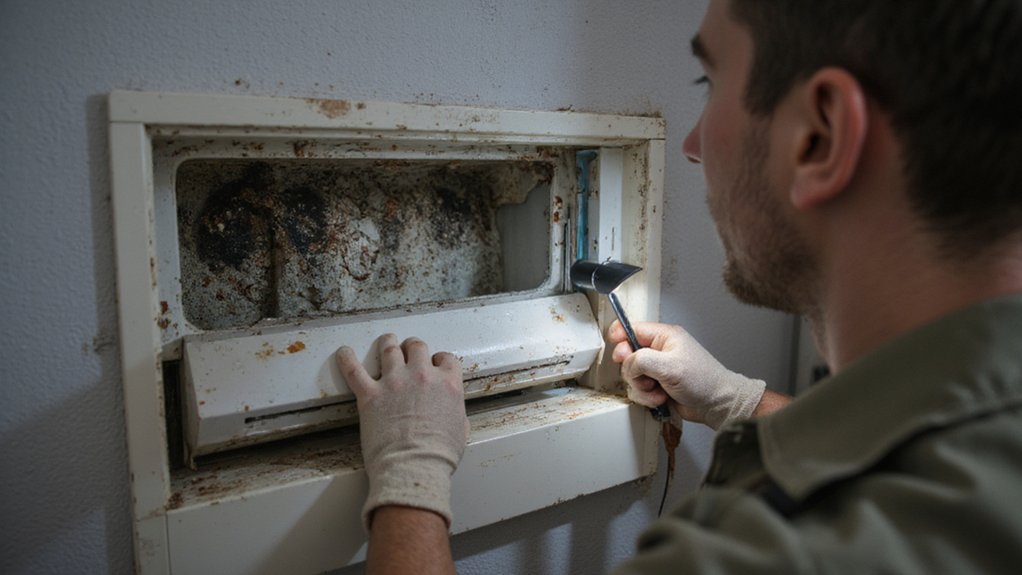
A musty smell is one of the most common complaints with air conditioners. It often signals mold or mildew somewhere inside the unit.
How to Recognize a Musty Smell
If the air smells damp or earthy, similar to wet clothes left too long, mold is likely involved. This happens when moisture builds up inside the system and doesn’t dry out properly.
Air conditioners naturally pull humidity from the air. When that moisture lingers in filters, coils, or ducts, it creates the right conditions for mold to grow.
If you notice this smell every time the AC starts, it’s worth checking the filters and vents. Mold can spread if ignored, and it can also affect how clean your indoor air feels.
Where the Moisture Comes From
Moisture can build up in a few different places inside your AC.
One common source is the condensate drain. If it gets clogged, water can’t flow out and starts to collect. Over time, that standing water leads to odor and mold.
Humidity inside your home also plays a role. If the system isn’t removing enough moisture from the air, dampness can settle in different parts of the unit.
Cleaning the drain line and keeping humidity levels in check can make a big difference. In some homes, using a dehumidifier helps reduce the risk of odors returning.
What a Burning Smell From Your AC Means
A burning smell is something you should never ignore. It usually points to overheating or an electrical problem.
Electrical Problems Behind the Smell
When wiring inside the AC becomes damaged or worn, it can overheat. This can create a sharp, burnt smell that’s easy to notice.
Sometimes wires rub against each other or lose insulation. When that happens, heat builds up and parts can start to fail.
If you ever smell something burning, switch off the AC immediately and consider professional air conditioner repair. Letting it run can make the problem worse and increase the risk of damage.
Overheating Parts and Dust Buildup
Not all burning smells come from wiring. Sometimes, dust collects on components like the motor or heating elements. When the system turns on, that dust burns off and creates a temporary smell.
Another cause is restricted airflow. If parts of the system can’t breathe properly due to dirt or debris, they heat up more than they should.
Regular cleaning helps prevent this. If the smell keeps coming back, it’s a sign something deeper needs attention.
How Dirty Air Filters Lead to Bad Smells
Air filters do a lot more than people realize. They trap dust, pollen, and other particles before they enter your living space.
When filters get clogged, they stop doing their job well. Instead of blocking contaminants, they start holding onto them. Over time, that buildup creates a stale smell that spreads through your home.
Changing your filter is one of the easiest ways to improve how your AC smells. A fresh filter also helps air move better, which keeps the system running smoothly.
Checking the filter once a month is a good habit. In homes with pets or heavy dust, you may need to replace it more often.
Electrical Issues That Can Cause AC Odors
Some smells are a warning sign that something inside the system isn’t working safely.
A burning or chemical-like odor can point to wiring trouble or failing components. Capacitors, for example, can give off a strong smell when they stop working properly.
Damaged wires are another concern. If insulation wears down, it can lead to short circuits and overheating.
These problems aren’t something to troubleshoot on your own. Turning off the unit and calling a technician is the safest move.
Simple Cleaning Habits That Help Prevent Odors
Keeping your AC clean goes a long way in preventing bad smells.
Start with the basics. Replace or clean the air filter regularly. This alone can solve many odor issues.
Take a look at the coils as well. When dirt builds up on them, it affects how the system handles moisture. That can lead to damp conditions and smell problems.
Make sure the drain line stays clear so water can flow out easily. Even a small blockage can lead to standing water.
Scheduling a yearly service check helps catch small issues before they turn into bigger ones. A technician can clean internal parts and check for hidden problems.
When It’s Time to Call a Technician
Some smells go away with simple cleaning. Others don’t.
If you notice a strong musty smell that keeps returning, there may be mold deep inside the system. That’s not always easy to reach without proper tools.
A burning smell is another situation where you should not wait. It usually means something inside is overheating or failing.
If your AC isn’t cooling properly along with the smell, that’s another sign something isn’t right.
Getting it checked early can prevent bigger repairs and avoid the need for major AC repair.
Practical Tips to Keep Your AC Smelling Fresh
A few simple habits can make a big difference in how your AC smells.
Change filters on time and don’t let them sit too long. Keep vents and ducts clean so air flows freely.
Check the outdoor unit for leaves or debris that might trap moisture. Keeping that area clear helps the system breathe.
If you live in a humid area, controlling indoor humidity can help reduce moisture inside the AC.
Booking a yearly inspection keeps everything in good shape and reduces the chance of unexpected smells.
Frequently Asked Questions
Can Bad Smells From My AC Affect My Health?
Yes, they can. Poor air quality inside your home can lead to irritation, allergies, or breathing discomfort. Mold is a common cause, so it’s best to deal with it early.
How Often Should I Clean My AC to Prevent Odors?
A basic check every few months works well for most homes. Filters may need more frequent changes depending on usage and dust levels.
Do Different Climates Affect AC Smells?
Yes. Humid areas tend to have more moisture-related smells, while dry areas may deal more with dust buildup.
Is It Safe to Use My AC With a Bad Smell?
It depends on the smell. Mild dust smells may not be serious, but burning or strong musty odors should be addressed right away.
Can Pets Cause AC Odors?
They can. Pet hair and dander often get trapped in filters and ducts, which can lead to unpleasant smells over time.
Conclusion
A bad smell from your AC is usually a sign that something inside needs attention. It might be as simple as a dirty filter or as serious as an electrical issue.
Staying on top of basic maintenance helps prevent most of these problems. Clean filters, clear drains, and regular checkups all play a part.
If a smell doesn’t go away or seems unusual, it’s better to have it checked sooner rather than later. A well-maintained system not only smells better but also keeps your indoor air cleaner and more comfortable.

Owner, ASC Heating & Air
Ron Carter is the owner of ASC Heating & Air, a family-owned HVAC company serving San Antonio and the surrounding communities. With more than 20 years of hands-on HVAC experience, Ron has built his reputation on honest recommendations, quality workmanship, and dependable customer service.
He specializes in residential heating and air conditioning repair, installation, replacement, and preventative maintenance, helping homeowners make informed decisions that improve comfort, efficiency, and the lifespan of their HVAC systems. Through his articles, Ron shares practical insights gained from years in the field, answering common homeowner questions and providing trusted advice tailored to the unique heating and cooling challenges of South Texas.